At least 57 people die as tens of thousands cross to Spanish enclave of Ceuta from Morocco
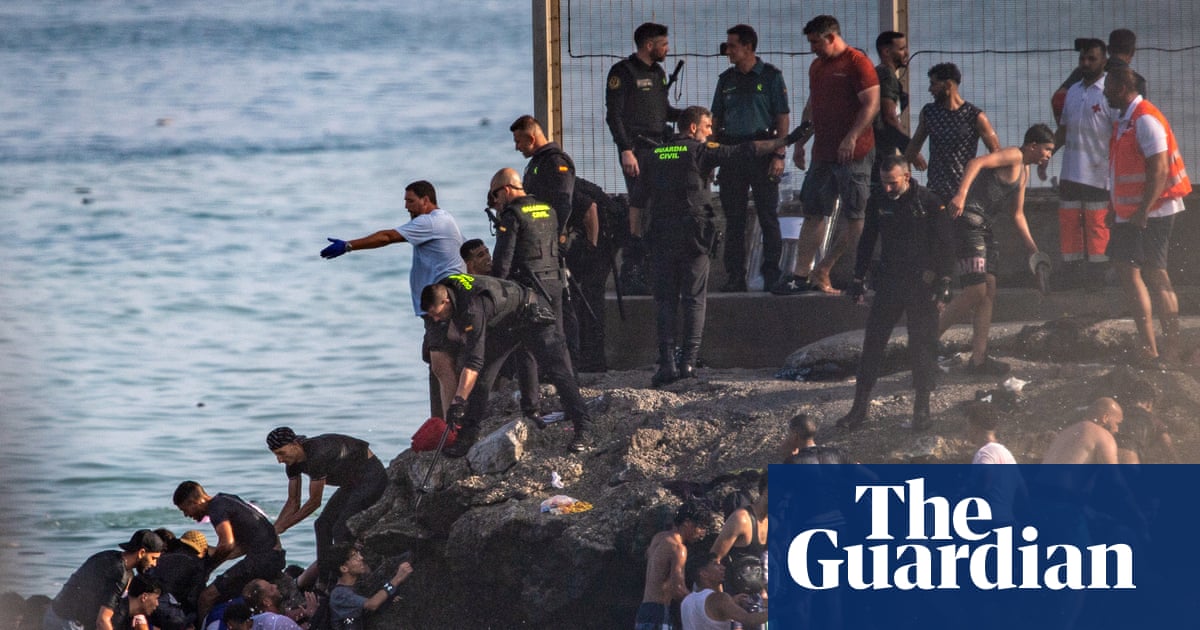
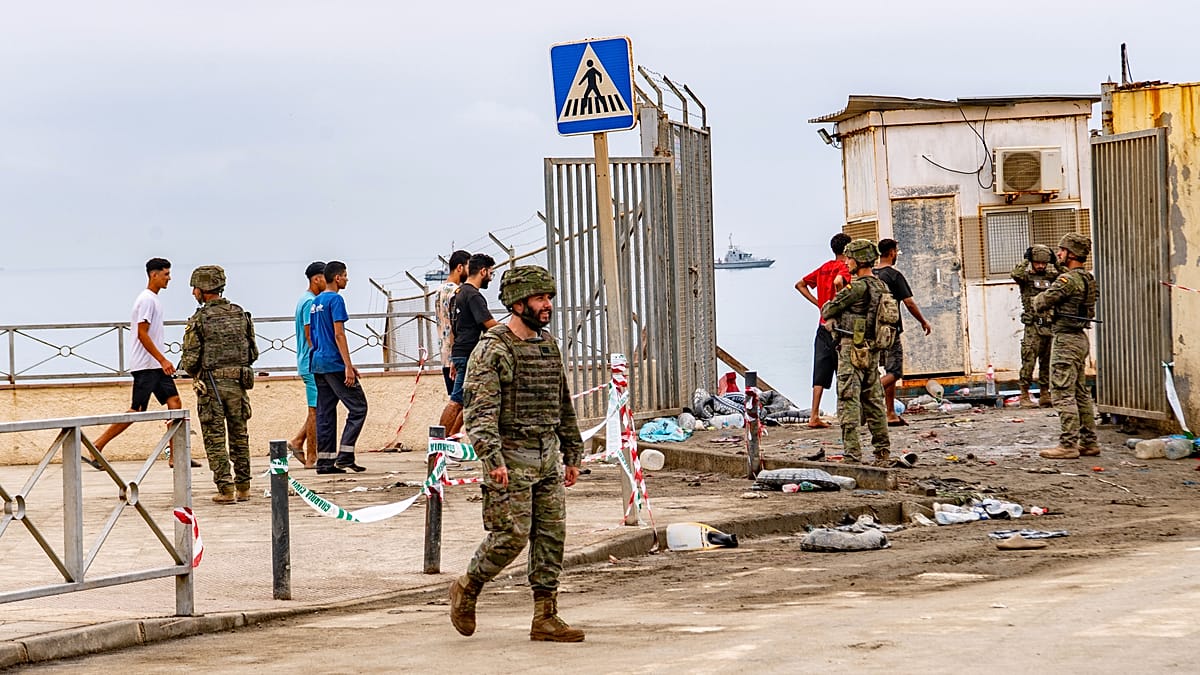
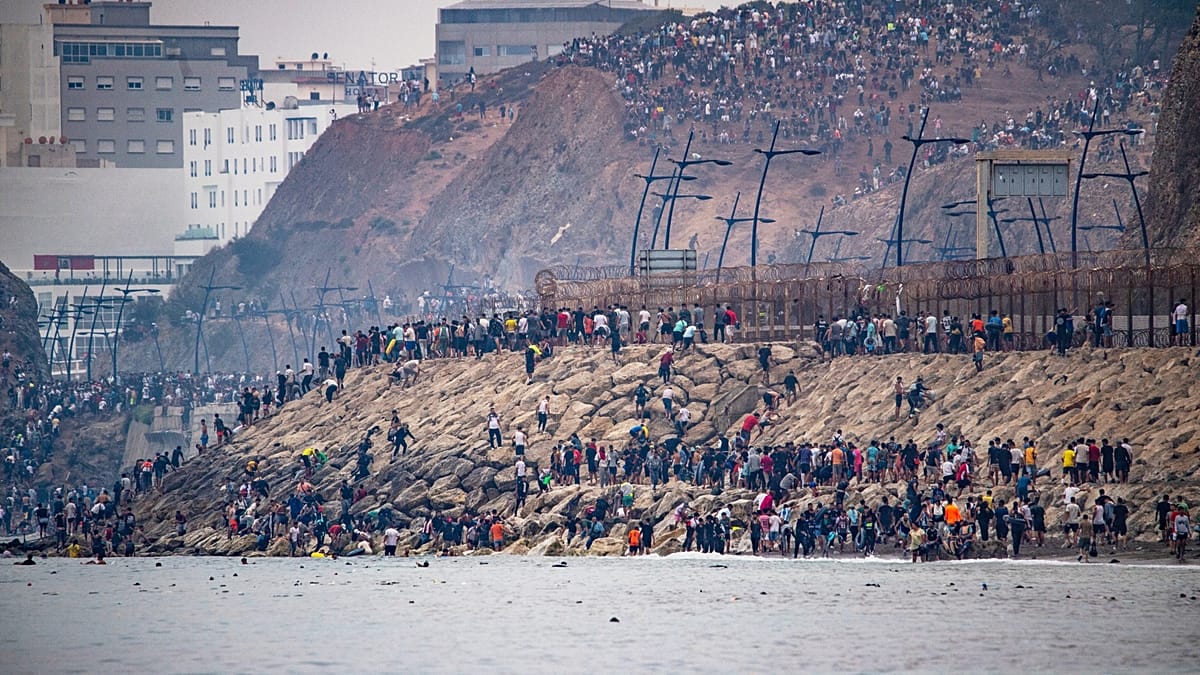
At least 57 people have died trying to reach the Spanish enclave of Ceuta after as many as 50,000 migrants entered the tiny territory from Morocco in what Spain’s prime minister, Pedro Sánchez, called a “a...
At least 57 people have died trying to reach the Spanish enclave of Ceuta after as many as 50,000 migrants entered the tiny territory from Morocco in what Spain’s prime minister, Pedro Sánchez, called a “a violation of Spain’s territorial integrity”.
The huge influx, which took place over the course of just 24 hours, overwhelmed the city of 85,000 people, triggered a political crisis for Madrid and led to a barrage of criticism from other EU countries, including calls for Spain to be suspended from the Schengen free-movement zone.
Sánchez, who arrived in Ceuta on Friday morning, said he would use all the resources at his disposal to guarantee the safety of the people of Ceuta.
He attributed the mass crossing to “human trafficking mafias” that had taken advantage of a decision by Spain’s supreme court, which recently ruled that those intercepted at sea while trying to enter Ceuta, or Spain’s other north African enclave of Melilla, could not be summarily returned under special rules.
Sánchez said: “That has spread like wildfire during these last few hours through the networks of mafias that traffic in human beings and has produced an avalanche of the characteristics and dimension that we experienced yesterday.”
Sánchez said a temporary reception centre would be established to facilitate the documentation, registration, triage and “expedited” expulsion of people with no legal claim to be in Spain.
He also said the government would erect a visible barrier – a line of buoys – near the breakwater at Ceuta’s Tarajal beach to make it clear where the border was, to legally comply with the court’s ruling.
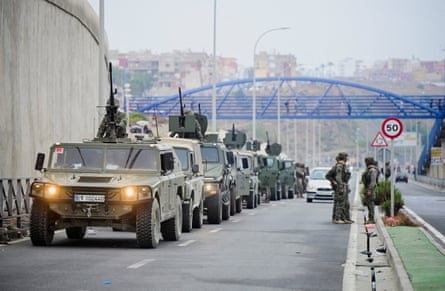
Spain’s interior ministry, which has deployed more police officers and soldiers to the enclave, said more than 37,500 people had voluntarily crossed the border back into Morocco by Friday afternoon.
The latest incident dwarfs the last mass border crossing in May 2021, when 10,000 people entered the territory over the course of two days by taking advantage of a loosening of border controls by Morocco.
That crossing came amid heightened tensions between Madrid and Rabat over Spain’s decision to allow the leader of the Western Sahara independence movement, the Polisario Front, to be treated for Covid-19 in Spain. Morocco and the Polisario Front both lay claim to Western Sahara, which was under Spanish rule until 1975, when colonial authorities handed over the territory to Morocco and Mauritania.
That diplomatic crisis ended in 2022 when Madrid reversed its longstanding policy of neutrality and backed Morocco’s plan for Western Sahara – a move that had caused a diplomatic rift between Spain and Algeria, which had supported the Polisario group.
Sánchez visited Algiers on 20 July – the first such visit by a Spanish head of government in four years – marking a thaw in relations with Algeria.
Moroccan government sources told the Europa Press news agency that the surge of people entering Ceuta was down to “criminal organisations”, and insisted that Rabat’s cooperation with Spain remained “exemplary”.
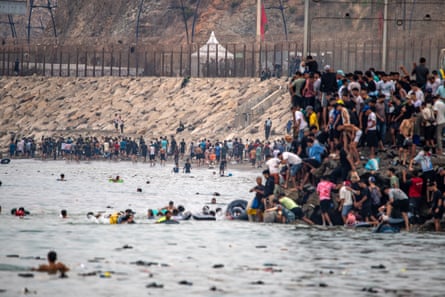
Rachid Sbihi, who leads a local workers’ association representing Spanish Guardia Civil officers – which patrol Spain’s borders – described the situation as a “serious humanitarian crisis”.
Without shelter, thousands of people, including unaccompanied children, had been left sleeping in parks and on pavements, while others roamed the streets aimlessly. “It’s chaotic,” said Sbihi.
Among those who died, many drowned, but some were killed in a crush to cross the breakwater fence at Tarajal beach, Sbihi said.
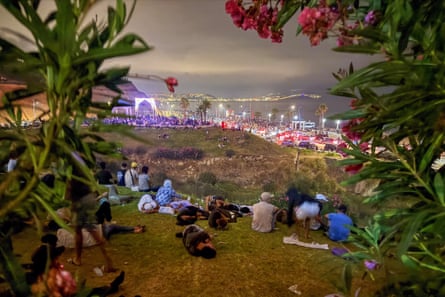
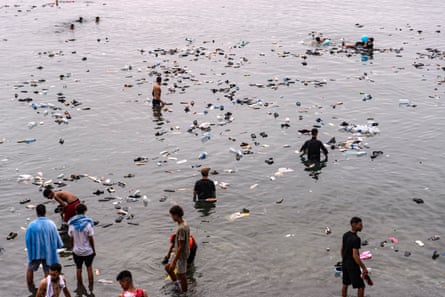
Video footage on Thursday showed crowds of people walking around the breakwaters at Tarajal beach on to local roads. While most appeared to be young men, there were also families with women and small children.
Ceuta and Melilla have the EU’s only land border with Africa. Both cities periodically experience surges in attempted crossings by people seeking to reach Europe.
after newsletter promotion
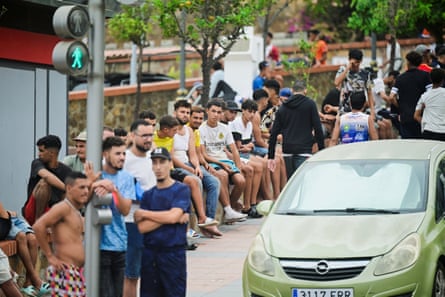
The events in Ceuta led some EU countries to issue strong threats or rebukes.
Spain’s foreign minister, José Manuel Albares, summoned Italy’s ambassador to Madrid on Friday after Giorgia Meloni’s far-right government called for Spain to be suspended from the Schengen free-movement zone.
Italy’s foreign minister, Antonio Tajani, blamed the situation in Ceuta on the Sánchez government’s decision to offer a now-closed scheme to regularise the status of more than 1 million undocumented migrants and asylum seekers. He said the programme had incentivised human trafficking and was “profoundly wrong”.
Tajani’s remarks prompted a sharp response from Albares, who said the comments were “unbecoming” and accused Italy of “partisan demagoguery”.
The Swedish prime minister, Ulf Kristersson, urged Spain to “act swiftly to regain control of the situation and fulfil its commitments within Schengen cooperation”.
The Finnish interior minister, Mari Rantanen, said that as Spain had “completely failed to protect the Schengen area’s external border”, all EU countries should support Italy’s proposal to suspend its Schengen status.
However, in a statement later on Friday, the European Commission said Ceuta and Melilla were subject to special Schengen rules that prevented onward movement within the zone.
The EU’s migration commissioner, Magnus Brunner, called the situation in Ceuta “unacceptable” and said he was in close contact with the Spanish authorities. But he also confirmed there was no onward route from Ceuta given the enclave’s unique status under the Schengen rules.
He said: “The Schengen borders code provides for special rules that apply to Ceuta and Melilla. Border checks on persons departing from Ceuta and Melilla remain in force.”
In Spain, the opposition People’s party (PP) called on Sánchez to come up with a tough response, saying the military and police reinforcements announced on Thursday night were insufficient.
In a post on X, the PP’s leader, Alberto Núñez Feijóo, wrote: “People have continued to arrive in Ceuta throughout the night, and those on the ground describe an occupied city, with nothing sufficient being done to prevent it.”
The far-right Vox party called the incident “an invasion”.