Wednesday briefing: How Canada has turned a trade dispute into a defence of its sovereignty
Good morning. When the Guardian asked Canadian readers whether they planned to boycott US products after dramatic escalations in the ongoing DC/Ottawa trade war, we received more than 2,000 responses within...
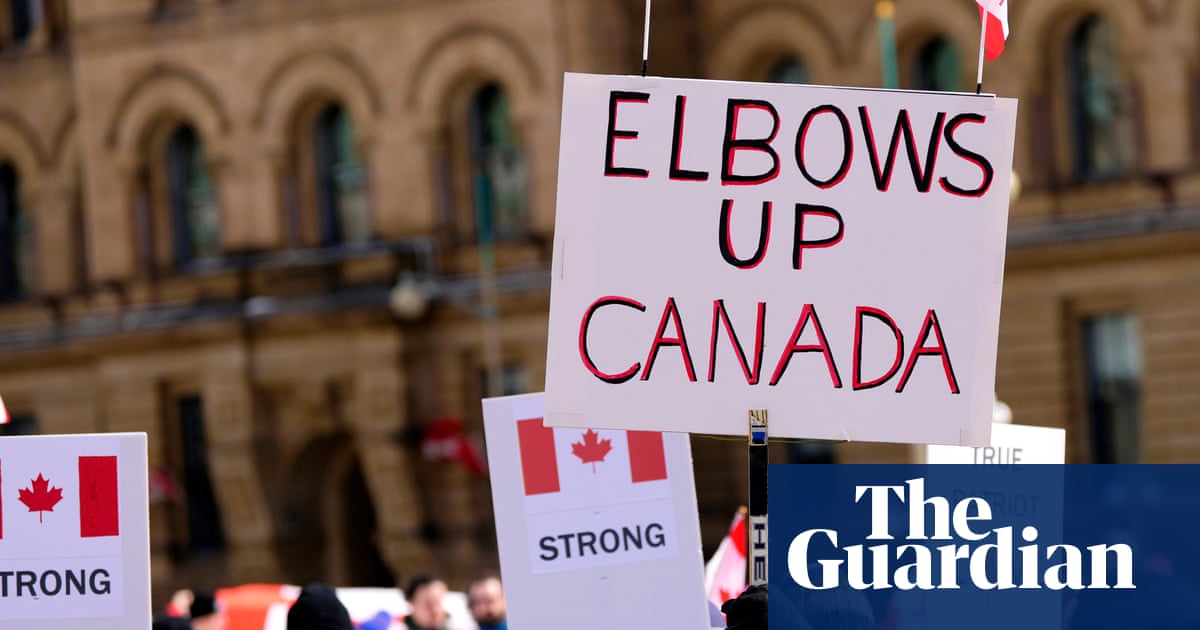
Good morning. When the Guardian asked Canadian readers whether they planned to boycott US products after dramatic escalations in the ongoing DC/Ottawa trade war, we received more than 2,000 responses within 12 hours.
This inundation is perhaps evidence of the existential crisis many Canadians feel they now face, something often lost in the granular reporting of trade negotiations: this is about so much more than the price of lumber.
Assailed by a US president who has repeatedly expressed a desire to consume Canada into a supersized 51st state, the country has felt perpetually on the brink of war – albeit an economic one – since Donald Trump’s early second-term tariff salvo in February 2025. This culminated in Canada’s finance minister announcing tit-for-tat tariffs on key American industries yesterday, further incensing the US president.
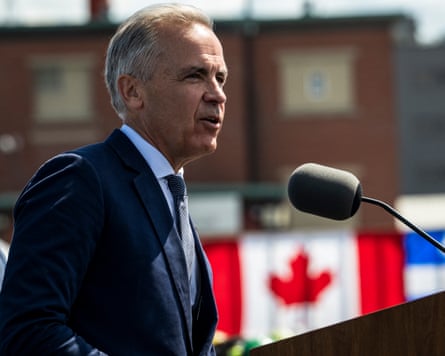
Canadian PM Mark Carney has emerged as a leader whose refusal to be dominated by Trump is underpinned by an ambition to reorder global politics. For today’s First Edition, I spoke to the Guardian’s Canada correspondent Leyland Cecco about trade narratives, Carney’s grand plan and the price of fruit in his local grocery store. But first, the headlines.
Five big stories
-
US news | Dolly Parton, one of the greatest singer-songwriters in country music who was also much cherished for her philanthropy, has died aged 80.
-
UK news | UK citizens will be told to stock up on tinned food and take steps to ensure they are prepared for national emergencies as part of a new government campaign to improve the nation’s resilience.
-
UK politics | Andy Burnham will face an immediate test of his backing for electoral reform in his first week in parliament as prime minister, with almost 100 Labour MPs supporting a bid for a new national commission.
-
Ukraine | A man from South Yorkshire is believed to be the first British citizen to die fighting for Russia in its war against Ukraine.
-
Climate crisis | The carbon emissions from just two planned datacentres in England will exceed all of the fossil fuel company ExxonMobil’s UK emissions, analysis has revealed.
The United States and Canada have enjoyed one of the strongest bilateral relationships in recent history. They share the longest unprotected border in the world, along with deep trading, security and cultural ties.
But the second Trump presidency has brought about a fundamental breach in the shared values and understanding that once united the two nations. Trump has repeatedly threatened to annex Canada, as he yearns to access its critical minerals.
Carney, a former Governor of the Bank of England, was sworn in as prime minister last year in the midst of Trump’s tariff wars, having never held elected public office before. He has since become the first western leader to openly acknowledge the hazard Trump poses to the global order. In a high-profile January speech at the World Economic Forum in Davos, he urged “middle powers” like Canada to “act together, because if we’re not at the table, we’re on the menu.”
Tariffs appear to have become a proxy for this political rupture. The ongoing US/Canada trade war began in February 2025, when Trump then (briefly) imposed tariffs of 25% on almost all imports from Canada and Mexico. Canada retaliated in kind, and the bitter dispute had just been rumbling on.
Against this backdrop, Leyland tells me, reporters like him are “trying to figure out the magnitude of what’s happened.”
What’s the latest?
Last Tuesday, in a late night Truth Social post (is there any other kind?) Trump declared a “DEAL” with Canada was in its final stages.
Trump delayed for three days the swingeing import taxes he was threatening to impose, which would have affected everything from anoraks to Christmas ornaments. The White House said in July that these 50% tariffs were in retaliation for “discriminatory treatment” by Canada. Still with me?
On Friday, Canadian officials agreed a deal was still close, yet 24 hours later the whole thing fell apart. Canada walked out of negotiations hours before the 50% tariffs on roughly $20bn (£14.6bn) of Canadian goods kicked in on Saturday, with Carney accusing the US of using “economic integration as a weapon”.
Yesterday, Canada pledged to roll out “dollar-for-dollar” retaliatory tariffs on hundreds of US goods next month, prompting Trump to denounce the nation as “difficult and unreasonable”. Precisely how this all unravelled depends on whose narrative you follow.
Carney’s position was that the US was breaching a red line on French language protection. Currently, Canadian rules require companies operating in Quebec, its predominantly Francophone province, to provide French-language goods and services to help protect its cultural identity. These stipulations have frustrated US negotiators.
There’s also a counter narrative, that Canada’s negotiators were conceding so much – for example, accepting tariffs on the auto sector, steel and aluminium – that a number of senior Canadian politicians had urged Carney to harden his resolve.
Meanwhile, US officials accused Canada of collapsing the deal by seeking additional last minute concessions.
In the concurrent war of communications, Carney emerges the winner, says Leyland, “because he can defend the decision to walk way to Canadians”, while the US is hampered both by Trump’s ego and top officials pushing their own agendas.
How Carney won this round
Polling over the weekend found strong majority support for Carney’s stance in every Canadian province, and a mood of steadfast defiance can be read across Canada’s media. “The coming period will be hard and the damage may be awful but no one should ignore what is at stake. A free Canada is worth the sacrifice,” declared an editorial in the Globe and Mail.
“What we see now is near uniform support for the prime minister ,” says Leyland, “and immense feelings of national unity”. This even extends to successionist Quebec, where support for independence from the rest of Canada is at its lowest level in decades.
Carney – who has consolidated support for his previously ailing Liberals – is enjoying “a key political win” Leyland says, defending totemic language rights that are seen as integral to Canada’s cultural fabric.
But his refusal to bow to US demands is part of a broader strategy. “What we’re seeing right now is the logical extension of that [Davos] speech, which was a warning and also laying the groundwork for how Canada would conduct itself”. For now, Carney is strengthening trade ties with China and the EU, to the chagrin of US negotiators.
“The message is that Canada has long enjoyed a very beneficial relationship with the US and that’s over,” says Leyland. “Now we will walk away from the table if there is any erosion of our sovereignty.”
Compare this Canadian unity with the domestic reaction south of the border: with the midterms looming, Trump is reportedly heading for a tariff-shaped clash with Senate Republicans.
As venerable economist Paul Krugman pointed out yesterday: “The US is far more dependent on Canadian goods than most Americans realise.”
The mood in Canada
“There’s an asymmetric aim in this war,” says Leyland, “which is that Canada is fighting for its sovereignty, its national identity.” The US, meanwhile, is just “fighting for cheaper goods”.
This perhaps explains why boycotting US goods has such visceral and consistent support among Canadians. A grassroots boycott has emerged as a consumer-driven response to the tariff war, with supermarket scanning apps like Maple Scan springing up to help users buy Canadian.
Leyland is a parent of two young kids who like to eat berries – now he analyses every package in the grocery aisle to work out where they were grown. “I remember there was a period when US berries were on the steepest discount because they just weren’t selling.”
And the decline of cross-border tourism has had a fairly devastating effect on American businesses. After Canadian visitor numbers fell by 26% in 2025, New York state launched a “NY loves Canada” promotional campaign this month to woo back its northern neighbours.
“Every Canadian knows that this is not a fight that they want to be in”, says Leyland “but right now they believe it’s a fight worth having”.
Weekend polling revealed a public who feel “frustrated”, “angry” and “exhausted” after 18 months of tariff turmoil. But, like their premier, they have no intention of backing down.
after newsletter promotion
Have your say
We’d like to hear your thoughts about the newsletter – what you enjoy, what we could do better, subjects you’d like to read more of – so we’ve created a short survey. It should take around five minutes to fill out, and your feedback will help us shape First Edition for the future.
What else we’ve been enjoying
-
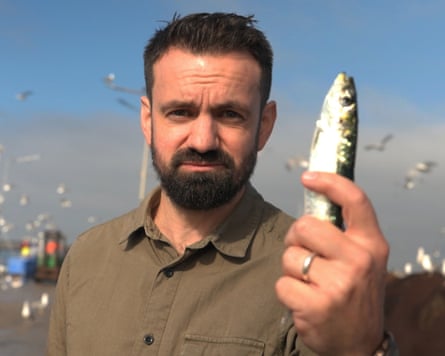
Richard Sprenger’s On The Ground film about the explosion in popularity of the once-humble sardine is an interesting look at what the viral food trend means for supply chains, sustainability, and the communities built on their catches. Sam Coare, newsletters team
-
This gripping investigation from Oliver Bullough reveals how organised crime has been using high street Post Offices to launder money in plain sight Libby
-
Remember to bookmark this look at Rotterdam’s ROCKS!, the latest architectural befuddlement from MVRDV, so you can one day compare computer-rendered fantasy with head-scratching reality. Sam
-
I was cheered to read this round-up of our most hopeful environmental coverage, as part of the Guardian’s annual climate support campaign. Libby
-
I spent yesterday sending round the news of this Venetian island going up for sale to everyone in my phone book, in the vain hope of somehow crowdfunding the ultimate timeshare. Lesson: I need friends with deeper pockets. Sam
Sport

Football | Celtic threw away a four-goal lead in Austria as they missed out on the Champions League for the second year running.
NFL | At least one in four former NFL players who died between 2016 and 2021 was found to have had chronic traumatic encephalopathy, according to a recent study.
Rugby league | Sir Billy Boston, the Wigan Warriors legend who last year became the first rugby league player to be awarded a knighthood, has died at the age of 92.
The front pages
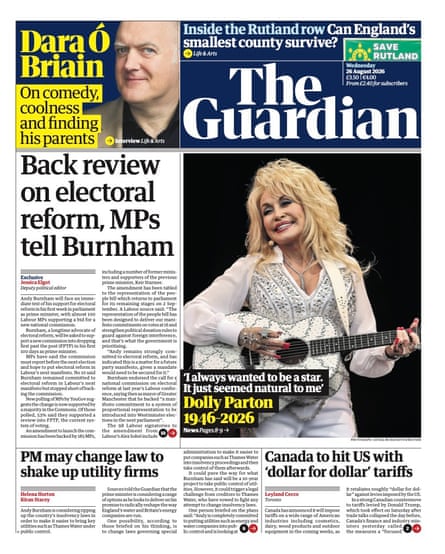
“Back review on electoral reform, MPs tell Burnham”, is the Guardian’s front page today. The Times says “‘Boycott’ fears over Burnham’s Israel plan”, the Mail writes “Burnham warned of impending Russia UK ‘attack’”, and the Express has “Britain must prepare for Putin’s threat”.
The Telegraph splashes “Birminghan set to be first 20mph city”, the i Paper has “Future of UK state pension triple lock in doubt – with older population growing faster than workers”, and Metro writes “Switching to vapes better than puffing”. The FT says “Beijing threatens to strike back if US sanctions on Iran hit China’s interests”.
On Dolly Parton, the Sun and the Mirror both write “We will always love you, Dolly”,
The Latest

‘Economic D-day’: How desperate is Trump to end Iran war?
The White House has threatened sanctions on any country that trades with Iran in another bid to economically isolate the country, as US military efforts falter. Launching what he called Operation Economic Outcast, the US Treasury secretary, Scott Bessent, compared it with D-day. China, Iran’s biggest trading partner, has already signalled that it will not cooperate with Trump’s attack on the Iranian economy. Lucy Hough speaks to Julian Borger, senior international correspondent.
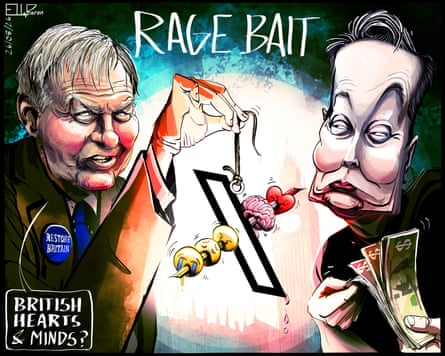
Cartoon of the day | Ella Baron
The Upside
A bit of good news to remind you that the world’s not all bad

Poland’s rural folk music has a turbulent history. Once a mainstay of celebrations and rituals, passed down by ear, its continuity across the country’s regions was disrupted by war and migration, before the communist era brought a different, state-sanctioned version of folklore.
But now, the music of the oberek, a traditional dance in which couples whirl around the dancefloor, is being reconfigured by a new generation of artists: the band Tercet Imperial weave traditional melodies and lyrics into contemporary production, replacing violins with synthesisers.
Nowadays, traditional music is increasingly “treated as part of our own heritage and the forgotten history of the majority of society,” says Tercet Imperial’s drummer Gary Gwadera. “It has become a response to the need for a sense of community.”
Sign up here for a weekly roundup of The Upside, sent to you every Sunday
Bored at work?
And finally, the Guardian’s puzzles are here to keep you entertained throughout the day. Until tomorrow.