What counts as ‘Made in Europe’? France, Germany and Spain are divided
Published on 24/09/2026 - 17:43 GMT+2 France, Germany and Spain are split over what should count as “Made in Europe”, as the EU prepares new rules designed to favour...
Published on 24/09/2026 - 17:43 GMT+2
France, Germany and Spain are split over what should count as “Made in Europe”, as the EU prepares new rules designed to favour European industry amid growing competition from China.
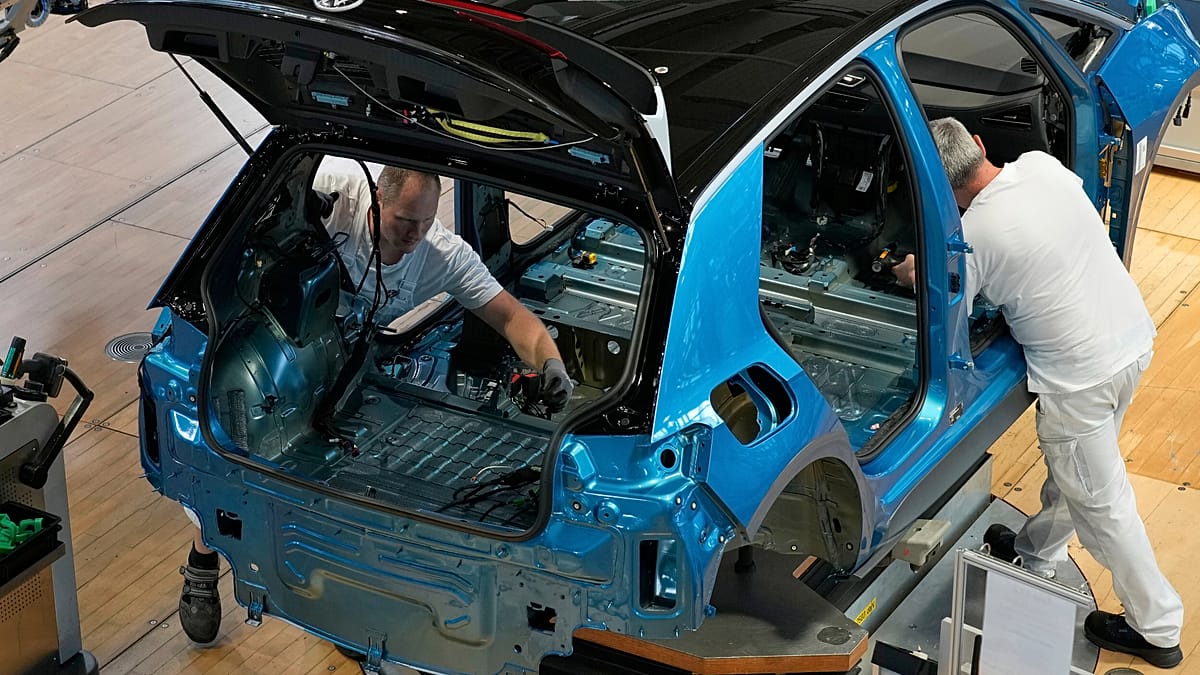
The European Commission's proposed Industrial Accelerator Act would give European-made products, including cars, steel and green technologies, preferential treatment in public contracts.
But EU governments disagree over where Europe ends: France wants a strict EU preference, Germany wants to include trading partners, while Spain is proposing a compromise between the two.
Strict approach
France is pushing for a strict EU approach but Germany wants a more open model, allowing products made “with” Europe.
Berlin said in a position paper that rules of origin should be extended to the bloc’s trading partners, provided those countries grant European companies equivalent access in return.
This could include signatories to the WTO Agreement on Government Procurement (GPA), as well as countries with a free trade agreement or customs union with the EU.
“The Industrial Accelerator Act, from our point of view, must follow a principle – made with Europe,” German Minister for Economic Affairs Katherina Reiche said on Thursday ahead of a meeting of EU industry ministers. She added that countries such as Norway and Switzerland could be included, as well as “partner countries” like Canada, “which the Commission President has offered a particularly privileged partnership.”
Last week, European Commission President Ursula von der Leyen proposed during her State of the Union speech that Canada be granted the status of “associate” member of the EU, as Ottawa seeks closer links with the Europeans amid a trade war with the US.
Bridging France and Germany
Spain has also issued a position paper, offering a compromise between the French and German approaches.
“We have made a proposal that establishes without a doubt the reinforcement of the European Union of the 27, as the specific area where it is necessary to reinforce the productive capacity in Europe,” Spain’s Industry Minister Jordi Hereu i Boher said.
He added: “But at the same time, I believe that we perfectly delimit what we call open strategic autonomy, in cooperation and in collaboration with other areas of the world and other countries.”
The paper proposes dividing the European preference into three groups: a core of the EU's 27 members; a second group including European Economic Area countries such as Norway and trusted partners that offer reciprocal access to public procurement; and a third covering countries with free trade agreements or customs unions with the EU, as well as signatories to the WTO Agreement on Government Procurement.
The third group could also include third countries producing components that are “critical” for the EU’s economic security, where this is justified by the “current lack of sufficient Union manufacturing capacity” or alternative sources of supply.
Italy, the EU's third largest economy, has yet to take a clear stance, with Minister for Enterprises Adolfo Urso on Thursday only saying he favoured a European preference open to “strategic partners.”
“We believe we need to start from the industrial base of the 27 member states, with an inclusive and balanced approach, both in terms of safeguarding industrial value chains and with regard to the strategic partners of our continent, whom we need to include in our industrial policy strategy,” he said.
Ireland, which holds the rotating EU Council presidency until the end of the year, hopes to broker a compromise among the 27 member states by December.