

IBM adds market value of Adidas after Trump’s quantum computing push
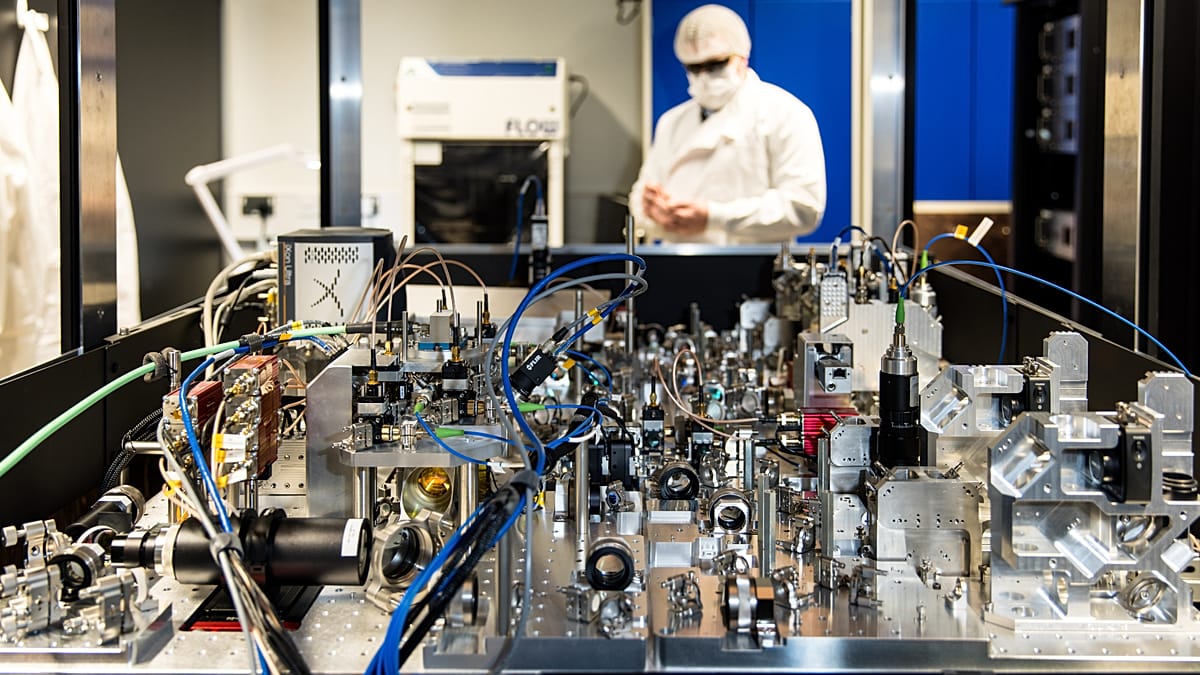
Quantum computing stocks surged after the Trump administration announced more than $2 billion (€1.7bn) in federal support for the sector. IBM received the largest investment and shares rose over 12% adding more than $27 billion (€23.2bn) in market capitalisation.
IBM shares climbed sharply on Thursday after the Trump administration unveiled a more than $2 billion (€1.7bn) federal investment programme targeting quantum computing companies, a move that triggered a broader rally across the sector.
The funding package, called the CHIPS Act initiative, focused on quantum computing and domestic manufacturing, will distribute $1 billion (€861mn) to IBM to build a foundry for producing quantum computing chips. This comes as part of a broader strategy to bolster US leadership in the quantum industry.
The other half of the grant will be awarded to eight other quantum companies, including GlobalFoundries, which received $375 million (€322mn). Most of the remaining companies were tied to proposed awards of about $100 million (€86mn) each, including D-Wave Quantum, Rigetti Computing, Infleqtion, Quantinuum, PsiQuantum, Atom Computing and Diraq, which is expected to receive up to $38mn (€32.7mn).
In return, the US federal government is taking equity stakes of varying sizes in every company mentioned, similar to public investments previously made by the Trump administration, such as those in Intel last summer.
The shares of the publicly traded companies on the list surged significantly on the news. IBM climbed more than 12%, adding over $27 billion (€23.2bn) in market capitalisation, which is approximately equivalent to Adidas’ entire size, to put this into perspective.
Other big winners among the publicly traded companies were Rigetti Computing, D-Wave and Infleqtion, all of which surged more than 30% as traders piled into quantum-related stocks after the government funding news.
A major step in the global race for quantum computing?
Under the agreement with the US Department of Commerce, IBM is creating a standalone company, called Anderon, which will be "America's first pure-play quantum foundry," according to IBM's statement.
Headquartered in Albany, New York, the new company is set to manufacture advanced quantum wafers at scale.
"This initiative represents one of the most significant commitments by the US Government to date in quantum R&D to position the United States to manufacture most of the world’s quantum wafers," said IBM in a statement.
IBM also announced plans to invest an additional $1bn (€861mn) of its own capital into the project.
Betting on quantum computing’s economic and strategic potential
Quantum computing is widely viewed as one of the next major technological frontiers because of its potential to process certain calculations dramatically faster than conventional computers. According to Boston Consulting Group (BCG), the quantum industry is estimated to generate up to $850bn (€732bn) in economic value globally by 2040.
Bill Frauenhofer, Executive Director of Semiconductor Investment and Innovation at the US Department of Commerce, said in the IBM statement, “Quantum computing has significant implications for national defence, advanced materials and biopharmaceutical discovery, financial modelling and energy systems.”
Proponents argue that quantum technology could accelerate drug discovery, optimise supply chains and improve the training of advanced AI systems.
At the same time, one of the biggest strategic concerns is encryption as quantum computers could eventually become powerful enough to break some of the cryptographic systems currently used to secure banking networks, communications and government infrastructure.
Europe has developed several prominent quantum technology companies, although funding levels remain significantly below the scale now emerging in the US and China.
Finland-based IQM Quantum Computers has raised more than €200mn through private investment and public backing, while France’s Pasqal has secured roughly €140 million in funding.
The UK company Oxford Quantum Circuits has also attracted capital exceeding £100mn (€115.6mn), according to company statements.
The EU has invested heavily in quantum research through programmes such as the Quantum Flagship initiative, but analysts have repeatedly argued that Europe’s commercial ecosystem remains fragmented compared with the more centralised strategies adopted by the US and China.
The latest US investment package could put pressure on European governments to increase support for domestic quantum firms as global competition grows.