Bird flu has been evolving and migrating for 30 years. It is a far more deadly virus that has now arrived in Australia
In 1996, geese in poultry farms in the Guangdong province of southern China started to get sick with a virus causing “bleeding and neurological dysfunction” and then death.A strain of avian influenza had...
In 1996, geese in poultry farms in the Guangdong province of southern China started to get sick with a virus causing “bleeding and neurological dysfunction” and then death.
A strain of avian influenza had likely arrived as a relatively harmless virus in migrating wild birds but had morphed into something “highly pathogenic”, killing about 40% of infected geese.
Now, after appearing and disappearing, evolving and mutating and traversing the planet – leaving millions of dead birds and mammals in its wake – a descendant of that same H5N1 virus is, 30 years later, killing wild birds in Australia.
“Right from the beginning there was great concern about the emergence of this virus,” says Dr Frank Wong, a virologist and avian influenza expert at the CSIRO’s Australian Centre for Disease Preparedness.
But why the concern?
Many avian influenza viruses are known as “low pathogenicity” because they cause only mild symptoms, or none at all. High pathogenicity viruses cause serious illnesses and death.
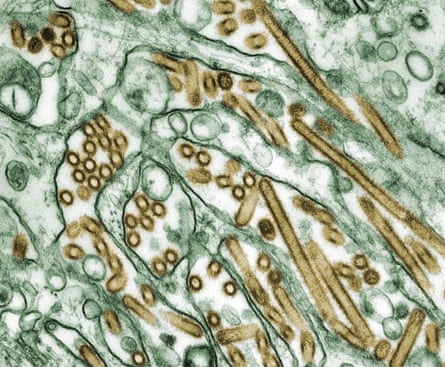
Avian influenza viruses are also classified by the two types of proteins on their surface – hemagglutinin that has 16 sub-types and neuraminidase, which has nine.
These are important because the proteins are what the virus uses to latch on to the cells of a host. The only versions of these avian viruses to have evolved into deadly strains are H5 and H7.
Wong says until 1996 a H5 virus had never been seen before spilling into domestic geese to then become highly pathogenetic in domestic birds.
“That was an immediate flag,” he says.
Evolving and mutating
From the H5N1 virus detected in 1996, variants were seen in markets and farms in Hong Kong the next year.
In 2002, almost a million poultry birds in Hong Kong were culled after H5N1 detections.
“All the ducks and geese were free ranging and in the 1990s we get these outbreaks of HPAI (highly pathogenic avian influenza). This H5N1 Guangdong goose virus was isolated but they couldn’t control it,” says Prof Marcel Klaassen, a bird flu expert and ecologist at Deakin University who has been researching the H5N1 strain for 20 years.
“It circulated in Hong Kong and east Asia and it was not until 2005 that it was found in wildlife. By 2005, the virus has evolved into something that survives in some wild birds.
“Something that does not kill a bird instantly gives the virus wings that takes it to Europe and Africa.”
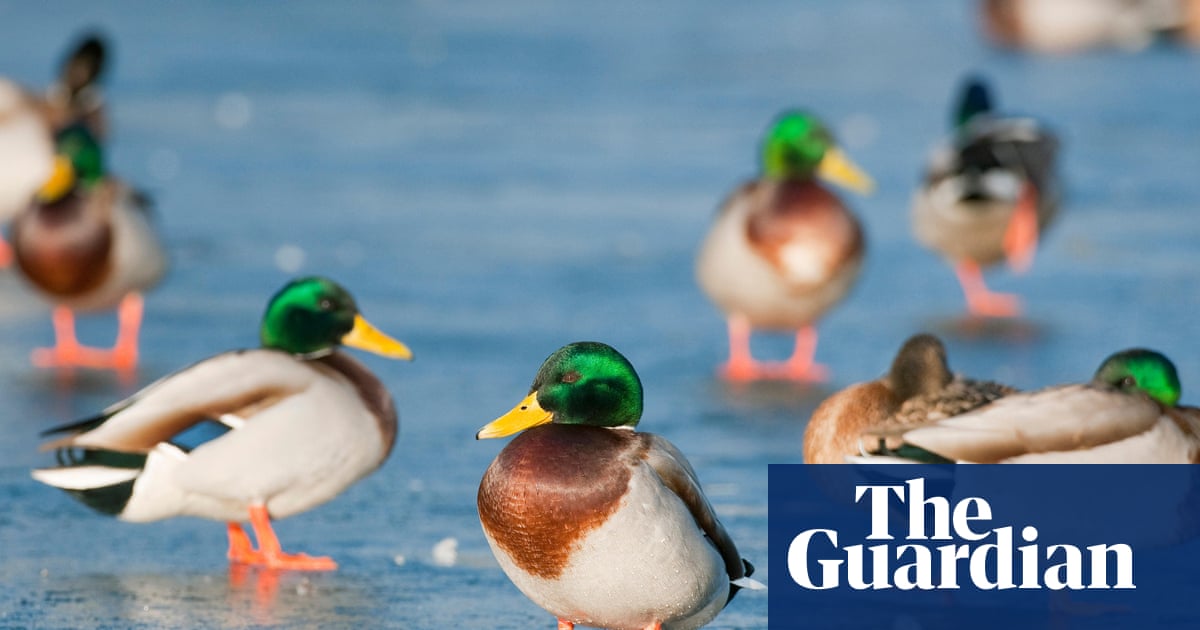
Wild ducks have been described as the “Trojan horses” of the H5N1 story. Waterfowl have evolved with the viruses and so can carry them around without being affected themselves.
The virus re-emerged again in Europe in 2021 and the current lineage of concern has swept across the continent, through North and South America, to Antarctica and now Australia.
Since appearing in 1996, H5N1 viruses have infected more than 400 bird species and more than 100 mammal species, in particular seals and sea lions and also dairy cattle in the US.
“Influenza viruses and how they impact different hosts is really a numbers game,” Wong says.
“The more types of host animals that it is allowed to infect without there being some control, the more chances it has to pick up new traits.
“It’s most successful trait is adaptability. So you want to give it as hard a time as you can to minimise its opportunity to become even more adapted to environments where you don’t want it.”
Avian influenza viruses can evolve quickly because they are prone to errors when their genes are being continually copied.
“Most mutations are not successful but, given the right environment and situation, some mutations might give an advantage,” Wong says.
Farming poultry in dense populations for human consumption has helped new versions of the viruses to emerge.
“In a way, it’s like an incubator for highly pathogenic avian influenza that you don’t see in the wild environment,” Wong says.
“In the wild it is not to the virus’s benefit to kill its host. But in a domestic chicken flock, if a virus mutates from low pathogenicity to high, it selects for that trait because the infection burns through that population.”
Klaassen goes even further. “This is a man-made virus,” he says. “Did these viruses evolve in wildlife? No, they did not.
“Low pathogenic viruses come in and, with high densities of birds and large numbers, you have an ideal environment for a virus to evolve. All of the high pathogenicity influenza viruses evolve in poultry.”
Jump to mammals
Since 1997, there have been about 500 human deaths from H5N1 – almost all of the cases recorded among people working in close quarters with infected poultry.
Health authorities say the risk for humans is low, and there have been no recorded cases of human-to-human transmission of the virus.
But H5N1 has infected mammal species – in particular, pinnipeds like seals and sea lions that tend to share the same spaces as infected wild waterbirds.
“At one beach we saw a line of dead elephant seals – a whole tideline of dead animals,” remembers Dr Rachael Gray, a veterinary scientist at the University of Sydney.
Gray was monitoring for the disease in Antarctica in late 2023 – “essentially picking up poo” – when she witnessed the tide of death.
“It was devastating,” she says. “In birds you see respiratory symptoms – nasal discharges. But what we are seeing more of are these neurological signs. In pinnipeds, they can’t walk properly. They have seizures and you see this clouding of their cornea. It is distressing to see.
“When it sweeps through a colony, you are talking two to four days [of symptoms before death] in birds and a little longer for mammals.
“The virus has become well adapted at getting into mammal cells.”
Tens of thousands of pinnipeds have died of the virus in South America and Antarctica, and Gray holds grave fears for what could be in store for Australia’s three resident pinnipeds – the New Zealand fur seal, the Australian fur seal and the endangered Australian sea lion.
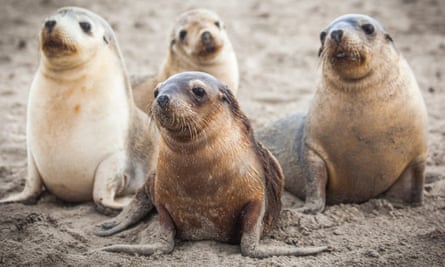
“On the first incursion, it will be awful,” she says. “Some might develop immunity, and hopefully that gets passed on to their offspring, but I don’t think we know enough yet [on how the virus response will evolve].
“The virus can survive for extended periods of time on different surfaces, particularly in cool conditions. That gives the virus a better chance to survive [in Australia] because it has arrived in our winter.”
H5N1 arrived in Australia in migratory seabirds from the sub-Antarctic and genetic testing of the birds showed the virus was the same type that had killed thousands of elephant seals pups at Heard Island.
“Every year we got through without it we thought, ‘maybe Australia’s geographic isolation will help us’,” Gray says.
“But that was a naive hope and now, maybe, I have naive hope that it won’t hit our sea lions and fur seals. History is telling me the opposite.”