Graphene opens new way to detect brain damage after stroke
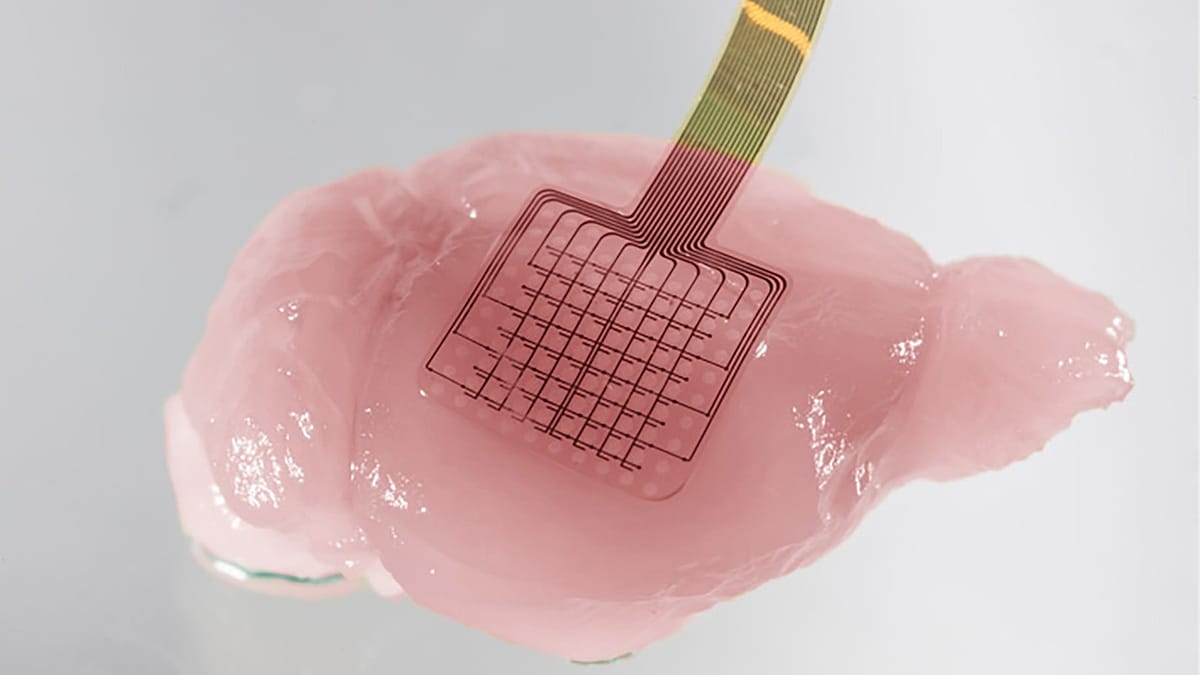
An international team of scientists involving Spain's CSIC has developed graphene sensors that pinpoint the brain regions most vulnerable after a stroke, tested in mice, opening the door to preventing further damage and improving treatment.
Published on 09/10/2026 - 7:03 GMT+2
An international team of scientists has developed a graphene-based technology that makes it possible to monitor brain activity and identify the areas at greatest risk of sustaining additional damage after a stroke. The breakthrough, tested in mice, could help drive the development of more precise treatments for stroke.
The research, published in the scientific journal "Brain (source in Spanish)", involved the participation of Spain's National Research Council (CSIC), the University of Manchester, the Catalan Institute of Nanoscience and Nanotechnology (ICN2) and the German company Multi Channel Systems.
When a person suffers an ischaemic stroke, a blockage interrupts the blood flow to part of the brain. However, the lesions can continue to spread because of waves of disturbed electrical activity, known as spreading cortical depolarisations, which move through the affected brain tissue.
Until now, accurately detecting these signals has been a challenge, as conventional technologies struggle to record the extremely slow electrical changes that occur during this process.
Graphene helps identify the brain's most vulnerable areas
Using high-sensitivity graphene sensors placed on the brains of mice, the researchers succeeded in recording these electrical waves with an unprecedented level of detail. The results showed that the characteristics of the signals made it possible to distinguish between relatively healthy brain tissue, tissue at risk and tissue that had already suffered severe damage.
The scientists also found that these signals could anticipate the blood-flow response. While in healthier areas it increased to support recovery, in vulnerable regions it could fall even further, worsening the injury.
The team also discovered that a low dose of ketamine, a drug already used in medicine, reduced the duration of the harmful electrical waves, improved the blood-flow response and reduced the extent of brain damage in animal models. These findings point to a possible neuroprotective effect of ketamine after a stroke, although it has not yet been shown to offer the same benefits in humans.
A potential tool to improve treatments
"In broad terms, the study shows how cutting-edge technologies can not only improve the way brain activity is measured, but also reveal new and important information about how brain lesions develop and how they might be treated", explains Rob Wykes, a researcher at the University of Manchester.
For his part, Anton Guimerà-Brunet, a CSIC researcher at the Institute of Microelectronics of Barcelona, stresses that recording low-frequency brain activity is still a challenge for current technologies. "We have been developing our graphene-based technology for years, with our first results published in 2018, and the challenge has been to standardise and refine it for use in relevant preclinical studies", he says.
The breakthrough is part of a scientific collaboration launched years ago between institutions in Spain and the United Kingdom to develop graphene devices capable of recording brain signals.
Although the technology is still at the preclinical research stage, the scientists believe that in future it could make it possible to monitor in real time the condition of brain tissue during a stroke, identify patients at greatest risk of additional injury and contribute to the development of new treatments.