Sanctions showdown leaves a bad taste as Latvia cautions against 'normalising' Russia
Good morning. This is Mared Gwyn, authoring today’s newsletter along with my colleague Angela Skujins, who’s live on your screens this morning. Today: how a Russia sanctions showdown is leaving a bad taste, and why Brussels is facing mounting pressure to address the energy crunch.
David vs Goliath: Latvian Prime Minister Andris Kulbergs has criticised the EU for “cherry-picking” sanctions on Moscow in a move he says “normalises Russia”, after his small Baltic nation showed its teeth yesterday while opposing a push to remove two oligarchs from the EU’s blacklist.
Reminder: EU heavyweight France had stunned EU diplomats by pushing to remove Uzbek-Russian oligarch Alisher Usmanov from the sanctions list as part of a prisoner release deal with Azerbaijan. Slovakia had also been lobbying to remove a second businessman, Mikhail Fridman, from the list.
Latvia fiercely opposed the move hours before a looming deadline on the sanctions’ renewal yesterday. The Baltic nation finally allowed both men to be delisted to avoid torpedoing the entire deal, which was needed to renew sanctions on some 2,600 individuals. My colleague Jorge Liboreiro has the details.
Speaking exclusively to my colleague Angela Skujins, Prime Minister Kulbergs said he had eventually dropped his opposition because "we all understood it is not worth risking" the whole EU sanctions package.
Sending the wrong message: “I’m worried about the playbook which it leaves,” Kulbergs cautioned, however, adding: “This is normalising Russia.” Watch.
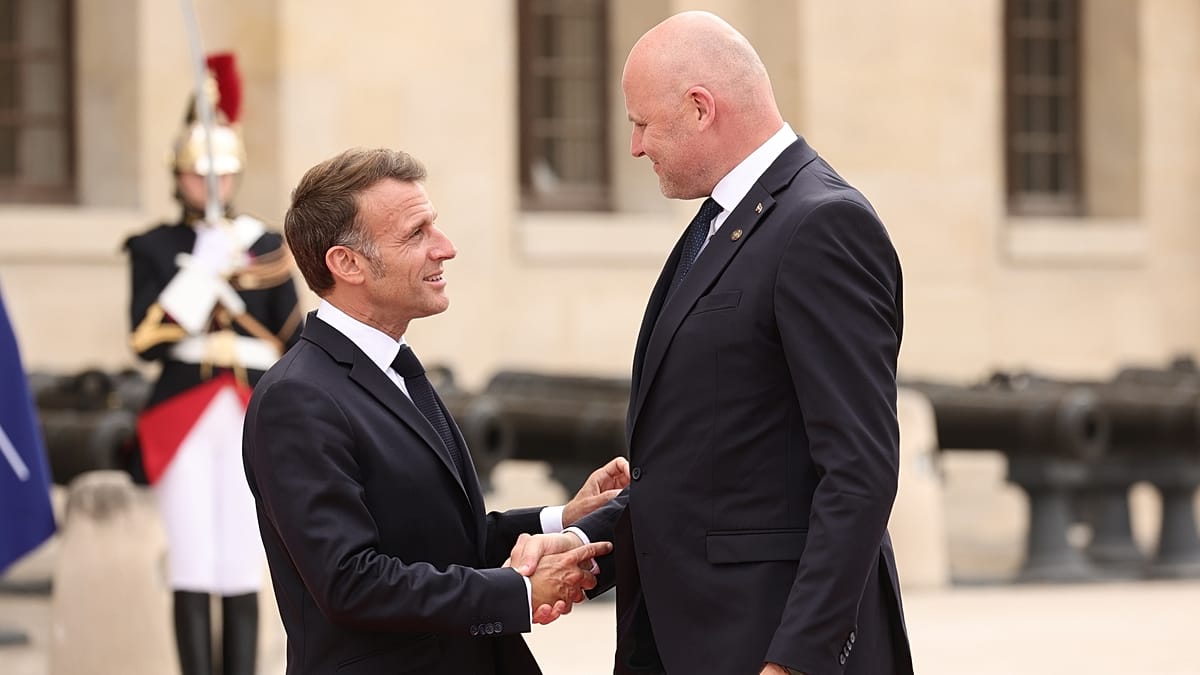
Low energy: Meanwhile, French President Emmanuel Macron has asked Brussels to take emergency steps to boost Europe’s diesel and jet fuel supply, according to a letter seen by Euronews’ energy reporter Marta Pacheco.
The communiqué comes as the prolonged closure of the Strait of Hormuz and renewed attacks on energy infrastructure in the Middle East threaten to further tighten global oil markets.
"In recent weeks, international supply has deteriorated once again, driven by the combined impact of the targeting of energy infrastructure — in Russia and the Middle East — and the recovery of consumption in Asia," reads the letter addressed to European Commission President Ursula von der Leyen and sent on 18 September.
The EU executive in Brussels acknowledged yesterday it had received the letter, but stayed silent on which measures it would be tabling.
EU holds firm on Chinese power inverter phase-out: Meanwhile, the Commission will not extend its 1 November deadline for phasing out Chinese-made power inverters from EU-funded energy projects, despite calls from investors and the renewable energy industry for more time, my colleague Luca Bertuzzi writes this morning.
Industry groups and institutional investors had hoped Brussels would delay the deadline amid concerns over the availability and cost of alternatives. But EU officials told Euronews the Commission intends to stick to its timetable.
Today in New York: European Commissioner for the Mediterranean Dubravka Šuica is set to announce the signing of two recovery projects for Gaza worth a total of $50 million (€43.7 million), my colleague Eleonora Vasques reports. The announcement will be made on the margins of the UN General Assembly.
UN agencies will implement the projects to provide essential services (water, sanitation and waste management) in the Strip. The projects are part of the “Team Gaza Initiative,” launched by the European Commission in July at the Palestine Donor Group meeting, which raised $1 billion (roughly €875 million) to support Gaza.
Greenland deal: Meanwhile in New York on Tuesday, US President Donald Trump, Danish Prime Minister Mette Frederiksen, and Greenland PM Jens-Frederik Nielsen signed a deal allowing the US to expand its military presence on Greenland through the modernisation and enlargement of its current Pituffik Space Base and the establishment of new defence areas at Narsarsuaq and Mestersvig.
‘Win-win-win’: The deal has been described as a win for all sides, and a crucial step in assuaging trans-Atlantic tensions that flared in the wake of Trump’s threats to annex the Arctic island. Nathan Rennolds has the details.
Morocco elects: Some 15.8 million registered voters are expected to head to the polls today to elect Morocco’s new parliament. This is the first political contest in the North African kingdom since locals protested against corruption in 2025.
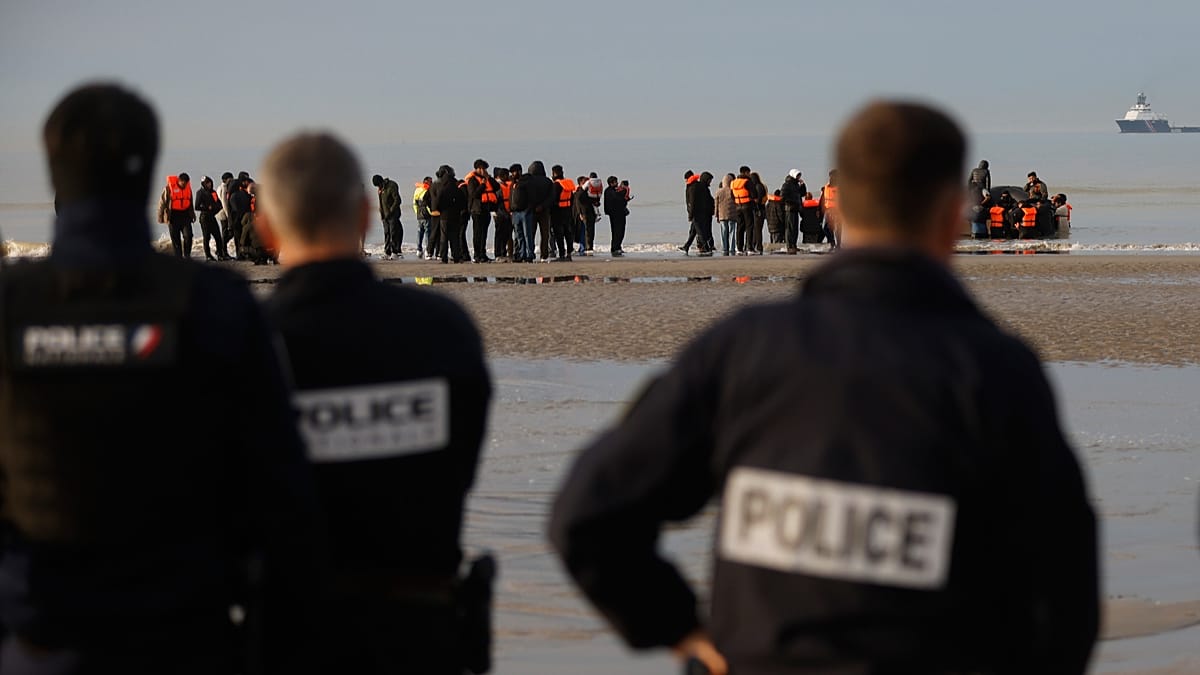
What is on the ballot: Political commentators are watching to see how locals cast their ballots regarding issues such as the economy, the country’s plans to host the 2030 FIFA World Cup, and whether they will be swayed by July's 80,000-person mass border crossing into the Spanish territory of Ceuta, which saw over a hundred people lose their lives.
The vote comes a day after one of the EU’s most powerful parliamentarians, Manfred Weber from the centre-right European People’s Party, lashed out while visiting Ceuta, calling on the Moroccan government to take back all irregular migrants.
On Monday, Spain's Youth Minister Sira Rego said most underage migrants who entered Ceuta will not be returned. It’s estimated that of the 5,000–10,000 Moroccans whi remain in Ceuta, half are unaccompanied minors.
Exclusive: EU countries sound alarm over weapons brought back from Ukraine front line
Soldiers returning from the front line in Ukraine are bringing back weapons and military equipment, raising concerns that battlefield components could start circulating within the European Union, according to a confidential EU document seen by Euronews. The risk of firearms being diverted from the battlefield will be discussed by EU ambassadors on Wednesday, as European authorities step up efforts to track weapons entering the bloc.
"Member states have reported weapon components and military equipment in the possession of returning combatants," reads the EU Council document, which focuses on the war in Ukraine's impact on EU internal security.
"While not necessarily connecting these individuals to organised smuggling activities, these detections demonstrate a potential risk of military components or other battlefield equipment being transported from Ukraine into the EU," the document continues.
Luca Bertuzzi has this exclusive piece of reporting.
More from our newsrooms
ECB calls for tougher EU crypto rules and wider ban on stablecoin interest. Europe's central banks want the EU's crypto rules tightened, calling for a wider ban on interest payments on stablecoins, new powers to curb tokens pegged to foreign currencies such as the US dollar, and EU-level supervision of crypto firms. Quirino Mealha and Eleonora Vasques have the latest.
British Prime Minister Andy Burnham declines to rule out rejoining EU. The 2016 Brexit vote has proved tricky to shake off for many in the United Kingdom, including among the new British Prime Minister Andy Burnham. According to UK media reports, he has declined to rule out including a pledge to rejoin the European Union in Labour's next election manifesto. Nathan Rennolds has the story.
Weber warns Morocco of 'obvious consequences' over Ceuta border crisis. European People’s Party (EPP) leader Manfred Weber warned that Morocco could face “obvious consequences” if the border with the Spanish exclave of Ceuta could not be stabilised, raising the prospect of further “uncontrolled situations” following the arrival of around 80,000 irregular migrants at the end of July. Vincenzo Genovese has the story.
We're also keeping an eye on
- European Commissioner for Trade Maroš Šefčovič meets with US Ambassador to the European Union Andrew Puzder.
- European Commissioner for the Mediterranean Dubravka Šuica attends a briefing of the Board of Peace at the United Nations General Assembly in New York City.
- European Commission Executive Vice-President Roxana Mînzatu meets Acting US Secretary of Labor Keith Sonderling.
- EU Foreign Policy Chief Kaja Kallas speaks at the UN Security Council meeting on Ukraine in New York City.
That’s it for today. Luca Bertuzzi, Jorge Liboreiro, Marta Pacheco and Eleonora Vasques contributed to this newsletter.