Flotilla video: Ben-Gvir’s template of televised abuse was honed on Palestinians
Israel’s far-right national security minister, Itamar Ben-Gvir, has made abuse of detained Palestinians something of a macabre calling card, celebrating cruelty publicly and often on video.During his time in...
Israel’s far-right national security minister, Itamar Ben-Gvir, has made abuse of detained Palestinians something of a macabre calling card, celebrating cruelty publicly and often on video.
During his time in office, violence including rape, extreme hunger and humiliation have been normalised in Israeli jails. Rights groups say detention centres have become “torture camps” for Palestinians.
Ben-Gvir likes to boast of presiding over a “prison revolution”, telling lawmakers in 2024 “I am proud that we have changed all of the conditions”. He has repeatedly shared footage of visits where he showcases or participates in abuse.
These grotesque displays have become normalised in Israel and were largely ignored internationally until this week, when he extended the template of televised mistreatment to foreign activists.
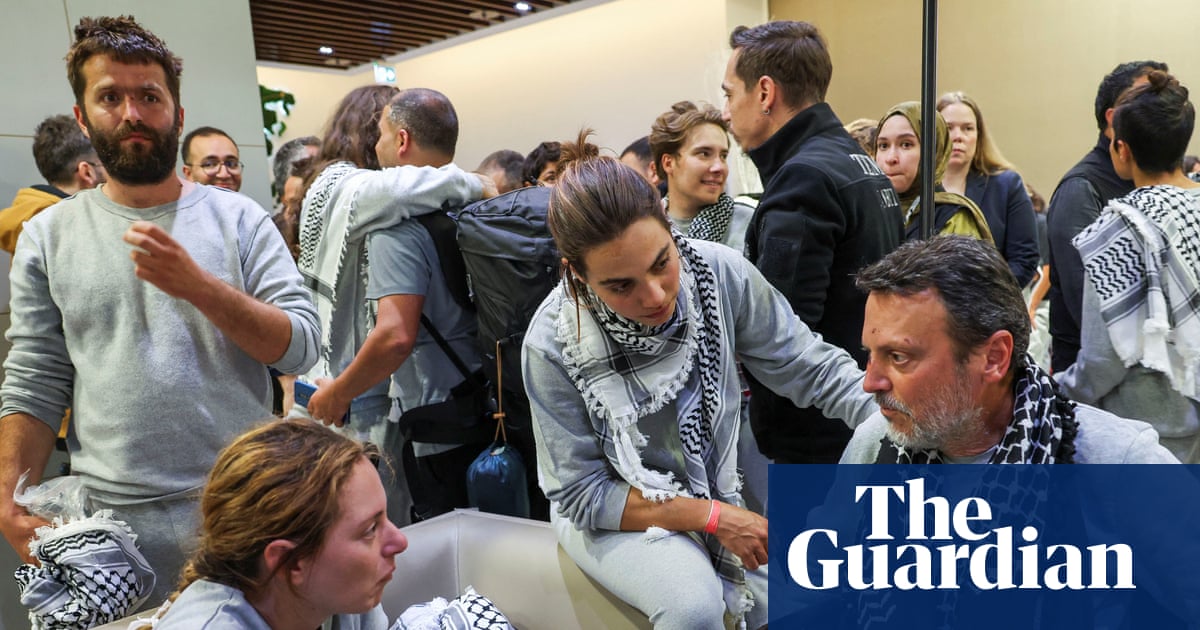
More than 400 men and women from 44 countries were intercepted by the Israeli military in international waters as they tried to sail to Gaza with aid supplies.
The next day Ben-Gvir posted a video of security forces abusing detainees. It also included footage of him waving an Israeli flag and taunting rows of activists who had been forced to kneel with their hands bound and foreheads to the ground.
Captioned “Welcome to Israel”, it prompted an immediate and overwhelming flood of condemnation from around the world, including from the leaders of Italy and Canada, foreign ministers across Europe and – perhaps most unusually – the US ambassador to Israel, Mike Huckabee.
The scale of global outrage pushed the Israeli prime minister, Benjamin Netanyahu, to issue a public rebuke. Ben-Gvir’s behaviour was “not in line with Israel’s values and norms”, Netanyahu said – although it fits the well-documented track record of his nearly four years in office.
“Ben-Gvir’s video publicising the abuse of captured flotilla activists in Israeli detention should surprise no one – not if you’ve listened to Palestinians for even a fraction of a minute,” said Yara Hawari, a co-director of Al-Shabaka, the Palestinian Policy Network, posted on social media.
Israeli data shows at least 98 Palestinians have died in custody since October 2023, including a 17-year old probably killed by starvation. Israel’s supreme court has repeatedly ordered the government to end food deprivation.
Documented abuse of detainees includes an assault and rape filmed on security cameras and reported to police by Israeli medics. Netanyahu described the alleged perpetrators as “heroic” and a failed attempt to prosecute them as “criminal”.
The “harrowing and unjustifiable” forms of abuse captured in Ben-Gvir’s video are routinely used against Palestinian prisoners in Israel, from the stress positions to the derogatory filming, said Tal Steiner, the executive director of the Jerusalem-based human rights group HaMoked.
“We welcome the international attention to [the abuse of activists] and to Ben-Gvir’s punitive policies generally but must not forget that this is what happens to Palestinians, as well as much worse forms of torture and abuse.”
Netanyahu has never criticised extreme abuse of Palestinian detainees and denounced a recent New York Times investigation into rape of Palestinians, including in prisons, as a “blood libel” and threatened to sue the newspaper.
His attempt to distance himself from Ben-Gvir’s video appeared designed to deflect global outrage by framing the abuse as an extremist aberration, said Guy Shalev, the executive director of Physicians for Human Rights–Israel.
“Crimes are framed as the actions of rogue settlers, abusive prison guards, or soldiers acting outside orders. Systematic violations are thus detached from policymakers and from the Israeli state itself,” Shalev said.
“Israel’s legitimacy remains intact, while performative condemnations allow the ‘international community’ to preserve its moral self-image without confronting the structural nature of the violence.”
Many countries responded to the mistreatment of their citizens by summoning Israeli ambassadors for a formal dressing down. That measure is unlikely to worry Ben-Gvir, given that he is already embroiled in a public slanging match with the Israeli diplomats’ ultimate boss, Saar.
Israel’s foreign minister, Gideon Saar, described the video as a “disgraceful display” that harmed the country. Ben-Gvir hit back by accusing Saar of being soft on “supporters of terror”, adding that Israel had “stopped being a pushover”.
There have also been international calls for sanctions against Ben-Gvir over the video. Several countries had already targeted him in this way last year, including the UK, Canada and Australia, citing incitement to violence against Palestinians.
Since then surging attacks in the occupied West Bank have prompted the former Israeli prime minister Ehud Olmert to call for the international criminal court to intervene “to save the Palestinians and us [Israelis]” from state-backed settler violence.
As Israel prepares for elections this autumn, many see Ben-Gvir’s video as early campaign material, designed to appeal to the type of far-right voters who share grim jokes on social media about illegal starvation rations for prisoners, calling them the “Ben-Gvir weight-loss plan”.
As polling day approaches, racist rhetoric and actions from Ben-Gvir and other extremist politicians are likely to escalate. Their more mainstream rivals rarely discuss Palestinian rights or the occupation of Palestine.
Israel’s closest allies and trading partners have political and financial leverage that can exert real pressure for change inside the country.
When Israeli soldiers vandalised a crucifix and desecrated a statue of the Virgin Mary in Lebanon, the international community mobilised. Four soldiers responsible for the incidents were jailed for several weeks, and Israel apologised.
State-sanctioned abuse of Palestinians has not produced equivalent demands for action. The EU, Israel’s biggest trading partner, has spent over a year considering proposals to suspend parts of its free trade agreement over violence in occupied Palestine, without progress.
“It is deeply telling that strong international condemnations only came after Israeli officials publicly boasted about this abuse,” said Suhad Bishara, the legal director of Adalah, the rights group which represented the flotilla activists.
“Statements are not enough: as long as Israel faces no concrete consequences for crossing one red line after another, abuses against Palestinians and international civilians alike will continue to escalate.”