Inside an Uzbek wedding: traditions, family and the start of married life
In Uzbekistan, a wedding is a major family occasion, bringing relatives, friends and several generations together. Before the celebrations begin, however, the couple first make their marriage official at the...
In Uzbekistan, a wedding is a major family occasion, bringing relatives, friends and several generations together. Before the celebrations begin, however, the couple first make their marriage official at the civil registry. Traditional customs can start earlier, with families gathering for meals, blessings and ceremonies that prepare the couple for their wedding day.
From the registry office to the wedding table
On the wedding day, preparations take place separately in the two families’ homes. The groom gets ready with relatives and friends, while the bride prepares at her family home.
The groom later arrives with his friends as part of ‘Kuyov Navkar’, a traditional procession or gathering accompanying the groom to the bride’s home.
Food is central to the celebrations. At the bride’s home, guests gather around a table for wedding plov, Uzbekistan’s signature rice dish, typically cooked with meat, carrots and onions.
Before leaving for the main wedding reception, the bride and groom receive blessings from their parents and older relatives.
For the groom, Abbos Sabitov, the day marks a new stage in his life.
“Seeing all my loved ones together in one place is a great happiness for me. I'm starting a new chapter in my life. I feel a great sense of responsibility, and I'm fully aware of everything that comes with it.”
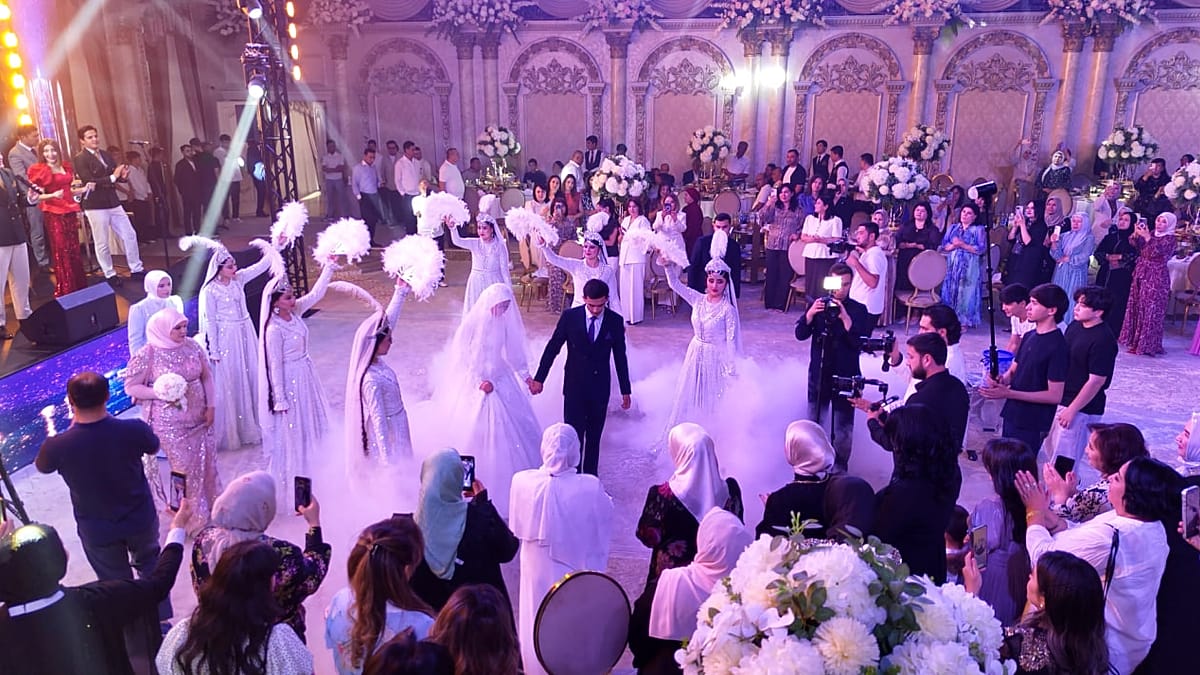
The gathering then moves into the main celebration, where music, dancing and food bring the two families together.
A celebration for two families
Flowers are exchanged between the newly joined families as relatives and friends take part in the festivities. For Feruza Avazova, the groom's sister, these gatherings provide an opportunity for relatives to meet, share a meal and offer their wishes to the newlyweds.
Uzbek weddings can involve hundreds of guests, with friends and relatives taking part in dances, games and other activities during the reception.
The celebrations also extend beyond the wedding day. Avazova mentions Challar, a post-wedding gathering hosted by the bride’s family for the newlyweds and the groom’s relatives, as well as Beshik Toy, a later celebration held after the birth of a child.
At the end of the wedding, the couple's mothers come forward to offer their blessings. For many families, this is one of the most emotional moments of the celebration.
Welcoming the bride into a new family
The celebrations continue at the groom's home, where his mother welcomes the bride and wishes the couple a happy life together.
For Dildora Adilova, the groom's mother, modern family life also comes with changing expectations.
“I think modern brides should be well-rounded in every way. She should be able to manage the household, have a career and continue her education.”
One of the most recognisable customs that follows is Kelin Salom, a formal greeting performed by the bride as she meets members of her new family.
For Muslima Sabitova, the bride, the ceremony carries a personal meaning.
“Performing the Kelin Salom and meeting the members of my new family gave me a different kind of emotion. I expect love and kindness from my new family, and that they will treat me like their own daughter.”
Wedding customs in Samarkand
Wedding traditions vary between regions. In Samarkand, some ceremonies take place before the main celebration and are closely connected with the first moments of married life.
One such custom is chimildiq, a private space prepared for the bride and groom in the bride's home. Among the rituals associated with it, the couple look at themselves in a mirror and feed each other honey, symbolising wishes for a sweet married life.
After these intimate customs, the wedding becomes public again, with photographs, music, food and gatherings involving both families.
Samarkand's historic architecture provides a backdrop for wedding photographs, with couples often visiting landmarks and studios as part of the day's preparations.
The groom's friend Bobojon Ergashev describes his own role as part of the wedding party.
“My role here is to take care of any problems or issues the groom might have during the wedding, to make sure everything runs smoothly.”
Traditions that begin long before the wedding
For the families involved, preparing for a wedding can take years. Relatives plan the ceremonies, organise meals, prepare clothing and coordinate gatherings involving large numbers of guests.
The customs may differ between families and regions, but many centre on the same elements: family participation, blessings from elders, shared meals and the formal welcome of a new member into the family.
By the time the celebrations end, the wedding has marked more than a single ceremony. It has brought two families together and set the couple on the next stage of their life together.