Swedish researchers create an ‘AI scientist’ that designs and runs its own experiments
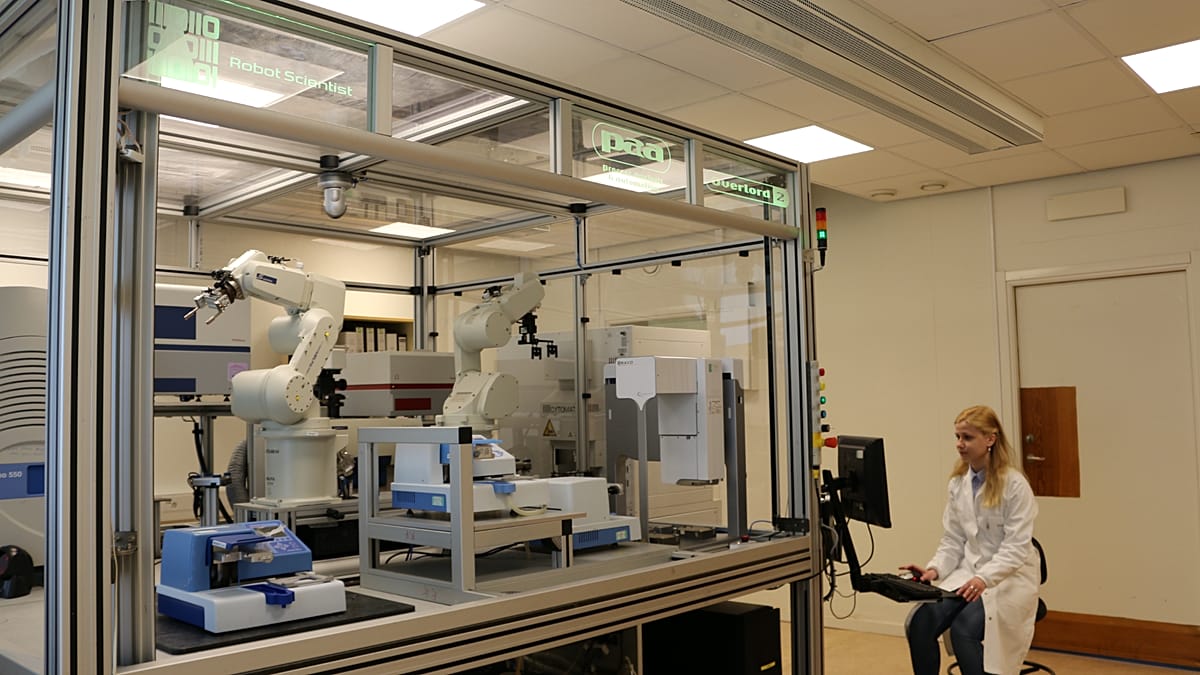
Researchers in Sweden have developed an AI scientist capable of generating scientific hypotheses, designing experiments and interpreting results. The team combined multiple Large Language Models (LLMs),...
Researchers in Sweden have developed an AI scientist capable of generating scientific hypotheses, designing experiments and interpreting results.
The team combined multiple Large Language Models (LLMs), large databases and physical laboratory robotics into a closed-loop system that can run the full cycle of scientific discovery.
“It is too much information for a human to analyse, but our AI scientist could identify promising biological questions, recommend experiments to test them, evaluate experimental outcomes and iteratively refine its understanding based on new evidence,” said Ievgeniia Tiukova, a researcher at Chalmers University of Technology, and one of the authors of the new study that examined the AI scientist.
The AI scientist analysed a database of approximately 60,000 phenotypical, physiological and metabolic relations for S. cerevisiae — a species of yeast also called brewer’s yeast or baker’s yeast. Then the system formed nearly 2,000 testable predictions about how nutrients impact cell growth and stress resistance.
Then these hypotheses were evaluated, selected comparison controls and converted the ideas into step-by-step, machine-readable instructions for lab equipment.
Once tests were finished, the AI analysed the data, determined whether predictions were correct and automatically updated or refined refuted hypotheses for future cycles.
“Rather than serving solely as decision-supporting tools, the AI scientist actively generates new scientific knowledge,” Tiukova said.
The authors noted that the future of scientific research lies in automation; advances in robotics, AI and high-throughput technologies are transforming the scientific process.
“AI Scientists will collaborate with human scientists to accelerate discoveries across biology, medicine and biotechnology,” said Ross King, senior author of the study at the University of Gothenburg.
“Such AI systems have the potential to reduce the time required to explore complex scientific questions, and optimise the use of laboratory resources,” King said.
Humans will still be essential
Researchers said such AI solutions could minimise human bias, accelerate research cycles and reduce variation caused by human error, incomplete recording of experimental protocols, environmental conditions and other factors that can affect outcomes and reproducibility.
However, the authors stressed that humans will still be key in scientific research.
“Humans will remain essential for setting priorities, interpreting broader contexts, developing research programmes and ensuring compliance with ethical rules,” King said.
“Future generations of autonomous laboratories will become increasingly capable of collaborating with humans and will be valuable partners in efforts to solve the most challenging questions in biology and medicine”.
As AI use in research advances, international bodies are moving to set out how it should be governed.
The World Health Organization (WHO) recently published a report with recommendations for researchers, ethics committees, regulators, funders and policymakers “to help ensure that AI-enabled health research is conducted responsibly and for the benefit of all”.
"Artificial intelligence is creating unprecedented opportunities to accelerate health research and improve people's lives,” said Meg Doherty, director at WHO’s Department of Science for Health.
“At the same time, innovation must be guided by strong ethical safeguards that protect human dignity, rights and equity”.