Europeans are exercising more. But who gets to take part?
More Europeans are playing sports and doing so more often than four years ago. However, disparities remain across countries, from how regularly people play sports to how well their cities support active living.
The European Commission's Eurobarometer survey on sport and physical activity shows that Europeans are, overall, doing more sport than they were in 2022. Yet significant differences remain between countries and socio-economic groups, even as many Europeans say physical activity benefits their physical and mental well-being.
“More Europeans are getting active, but the opportunity to take part still depends too much on income, age and education,” said Roxana Mînzatu, Executive Vice-President for Social Rights and Skills, Quality Jobs and Preparedness.
Nearly half of the 26,508 people surveyed, representing a range of social and demographic groups, said they exercise or play sport daily or several times a week. Meanwhile, 39% said they never exercise or play sport, down from 45% in 2022.
Finland and Denmark top the charts for daily exercise, with 21% and 20% of respondents respectively saying they exercise every day. In both countries, a further 59% said they exercise several times a week.
At the other end of the scale, 68% of respondents in Portugal said they never exercise or play sport, while Greece and Romania followed closely, both at 66%.
The reasons people give for exercising — whether for less than an hour a week or more than three hours — ranged from maintaining physical health to relaxing and improving mental well-being.
Nearly all respondents believe that being active contributes to improving mental health. Most also agree that it helps to build communities and improve the wellbeing of marginalised groups.
However, for those who don't exercise as much as they would like, time is the biggest barrier, cited by 37% of Europeans. Others named lack of motivation or interest 26% and health problems or injury 15%. Cost is also a factor for 12% of respondents.
Education and financial circumstances track closely with participation.
Some 59% of people who continued their education until at least age 20 exercise or play sport several times a week, compared with 23% of those who left education at 15 or younger. Those who have the most difficulty paying their bills are also twice as likely to say they never exercise as those who rarely or never struggle financially — 54% versus 26%.
“Everyone should have access to affordable sport and safe places to exercise, close to home," said Mînzatu. "This means opening doors to children whose families cannot afford club fees, older people and people with disabilities.”
The age divide is stark. Nearly three-quarters of 15- to 24-year-olds exercise or play sport at least several times a week, compared with just 25% of those aged 75 and over. Among the oldest respondents, health problems or injury is the most commonly cited barrier, while younger and middle-aged Europeans are much more likely to point to a lack of time.
The survey also looked at how often people engage in physical activity for other reasons, such as for commuting or gardening.
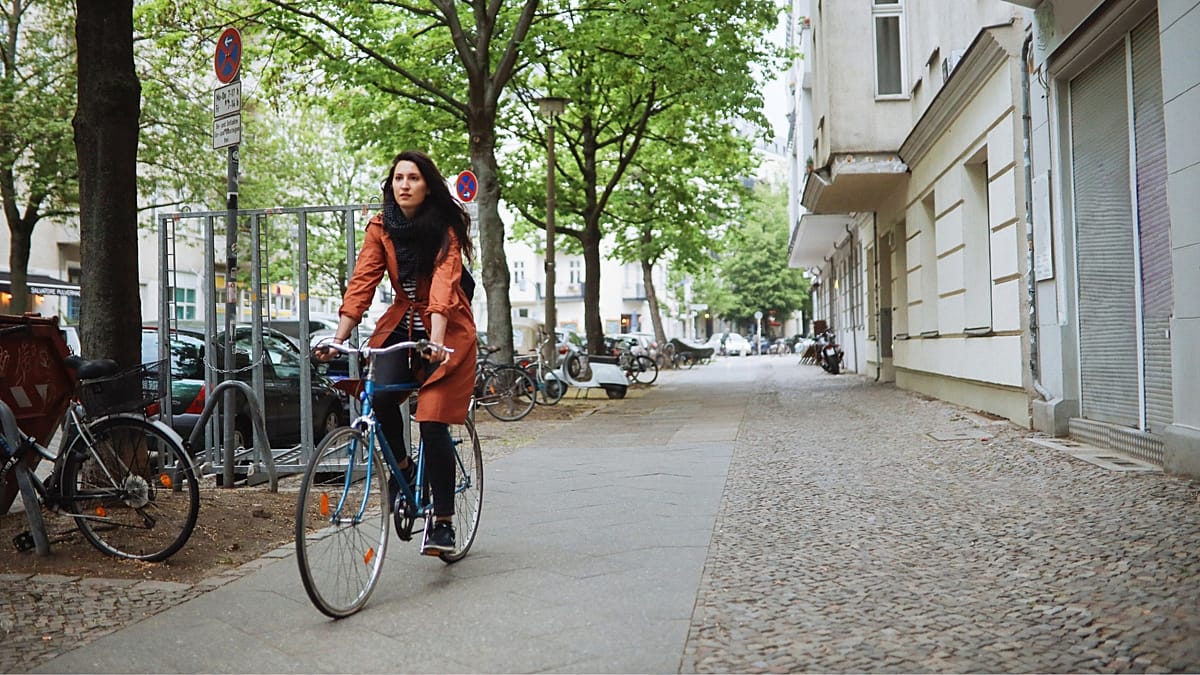
The share of people actively commuting increased the most across all surveyed categories, from 24% in 2022 to 37%. Walking for at least 10 minutes at a time is now reported by 72% of citizens, a significant increase compared to 16% in 2022.
However, not all Europeans feel that their neighbourhoods are well suited to walking or cycling, potentially limiting opportunities for active commuting.