Hantavirus outbreak: Spain agrees to take in MV Hondius doctor in serious condition
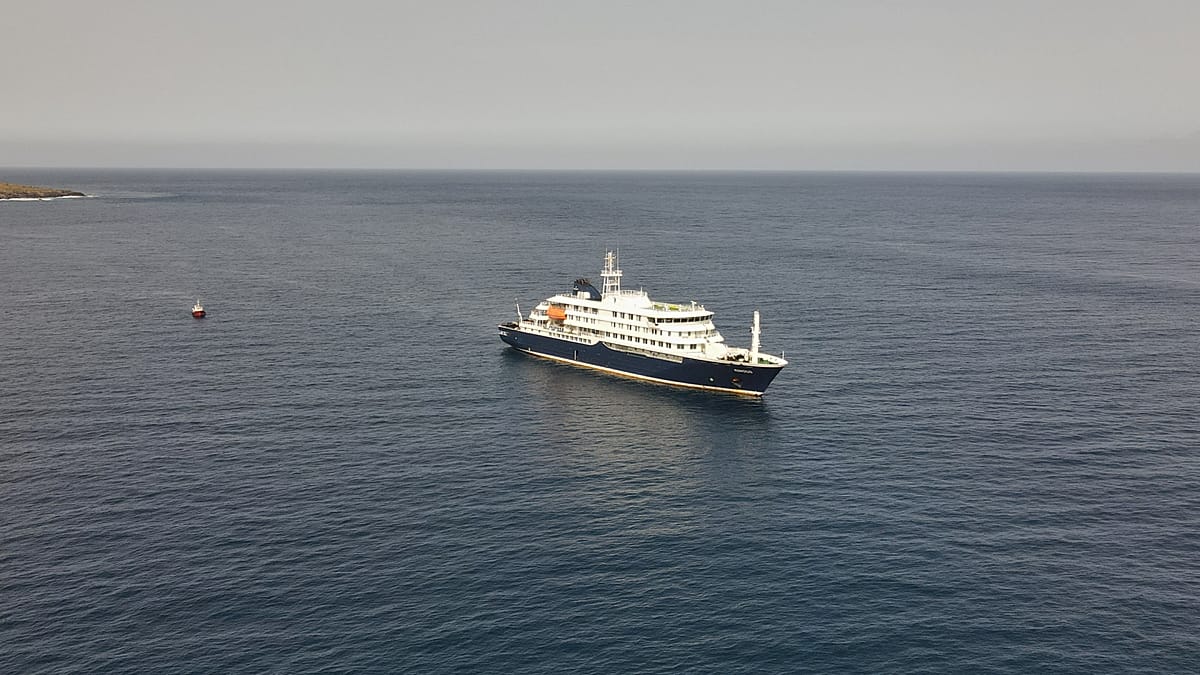
The Spanish government accepted the urgent transfer to the Canary Islands of the doctor from the MV Hondius, in serious condition due to hantavirus, as part of the operation coordinated with the WHO and the EU to treat the ship, which is currently sailing in the waters off Cape Verde. The doctor will be transported in a "hospitalised aircraft".
The Spanish government has agreed to take in the doctor from the luxury cruise ship MV Hondius, who is in serious condition due to an outbreak of hantavirus detected on board, as part of the humanitarian operation activated for the ship in the Canary Islands.
The doctor will be transferred the same day in a medicalised plane, following a formal request from the Dutch government, according to the Ministry of Health.
"As part of the operation, the government has also accepted the request from the Dutch government to take in the doctor from the MV Hondius, who is in a serious condition, and who will be transported to the Canary Islands today in a hospitalised plane," the health ministry announced via the X platform.
The decision comes after the World Health Organisation (WHO), in coordination with the European Union, asked Spain to receive the ship in compliance with international law and the "humanitarian spirit". The Hondius, which departed from Argentina, is currently in the waters of Cape Verde, where it arrived after detecting several cases of hantavirus during its Atlantic crossing.
Health has stressed that Cape Verde does not have the necessary capacity to manage an operation of this magnitude and that the Canary Islands are the closest point with sufficient resources.
In parallel to the transfer of the doctor in serious condition, the European Centre for Disease Prevention and Control (ECDC) is carrying out a thorough assessment of the boat to determine which people should be evacuated urgently in Cape Verde itself and which will continue to the Canary Islands.
The WHO reports that 147 passengers and crew are on board the ship and that, so far, seven cases linked to the outbreak have been identified: two laboratory-confirmed and five suspected cases. The toll includes three deaths, one patient in critical condition, and three people with mild symptoms.
According to the international agency, the first symptoms appeared between 6 and 28 April and were characterised by fever and gastrointestinal disorders, with a rapid progression in some cases to pneumonia, acute respiratory distress syndrome, and shock.
Apart from those with symptoms, the remaining passengers and crew will be examined and treated according to a common protocol developed by the WHO and the ECDC, once the ship arrives in the archipelago in an estimated three to four days.
This procedure includes specific health and transport circuits, "avoiding all contact with the local population and guaranteeing the safety of health personnel at all times", according to an official statement from the Ministry of Health.
The government has stressed that it will provide timely information on the details of the protocol and its implementation. The operation also includes the subsequent repatriation of passengers and crew members to their countries of origin, including several Spanish citizens, once the medical and epidemiological evaluations have been completed.
Tracking of a hantavirus-contacted flight
The WHO is tracing more than 80 passengers following a case of hantavirus on a flightto Johannesburg that included a woman who subsequently died from hantavirus. The victim, a Dutch national, had previously been evacuated from the island of St Helena after developing symptoms.
The international health agency confirmed that the 69-year-old woman was flown on 25 April on a plane operated by Airlink, carrying 82 passengers and six crew members. She died the next day in hospital, her infection with the virus was confirmed days later.
How is hantavirus transmitted?
Hantavirus is a group of viruses carried by rodents and transmitted to humans mainly by inhalation of particles from dried droppings, urine, or saliva. The risk increases when these materials are stirred up and become airborne or by direct contact with infected animals.
Infection can lead to hantavirus pulmonary syndrome, which starts with symptoms such as fever, headache, muscle aches, dizziness, chills, and gastrointestinal disorders. In later stages, it can progress to severe respiratory distress and hypotension, making severe cases a medical emergency.
The incubation period is usually between two and four weeks after exposure, but can range from one week to eight weeks.
There is no specific treatment and the virus can occur in different variants, with the American variant being the most severe. Human-to-human transmission is very rare and, when it has been described, requires very close and prolonged contact.