Is global warming supercharging El Niños? New study may reveal the answer
A new study suggests that El Niños – the natural climatic chaos agent that pops up periodically and spikes global temperatures – are getting stronger because of human-caused climate change. El Niños are more...
A new study suggests that El Niños – the natural climatic chaos agent that pops up periodically and spikes global temperatures – are getting stronger because of human-caused climate change.
El Niños are more than 36 per cent stronger than they were before the industrial age began in the mid 1800s, with a 16 per cent jump in just the last 40 years showing that the increase is accelerating, according to a study published on 27 August in journal Science.
The findings come as a strong El Niño that formed a couple of months ago is forecast to be the biggest on record in the coming months. El Niños, which are a temporary warming of parts of the equatorial Pacific, warp weather worldwide and increase extreme events, including heatwaves, floods in some places and droughts in others. They can cost trillions in damage.
“That’s important because strong El Niños have much stronger impacts on climate hazards and extremes worldwide," says study lead author Julia Cole, a paleoclimate scientist at the University of Michigan in the US.
"When we set out to answer the question of why this might be happening, we set our data up against a record of global temperature, and we found that the increase in El Niños' strength closely parallels the rise in global temperature that is due to human causes such as the burning of fossil fuels."
Her study looks back at El Niños going back around 900 years.
Aggravating already nasty El Niños
“El Niño is the most violent aspect of climate variability worldwide, with effects ranging from local fisheries collapse, to widespread coral die-offs to severe droughts and food shortages around the world,” says Dalhousie University marine scientist Boris Worm, who wasn't part of the study.
Worm quotes the late climate scientist Wallace Broecker who warned “the climate system is an angry beast and we are poking it with sticks.” And then Worm adds: “Human emissions are the stick and El Niño is [one] of the ‘angry’ outbursts that can be so threatening to our collective safety.”
An El Niño's strength is determined by measuring water temperature in a region of the central Pacific around the equator and comparing a three-month average to normal. If it's 0.5 degrees Celsius warmer than normal, it's becomes an El Nino. The top of the scale is 2 degrees Celsius and is called “very strong".
The most recent weekly El Nino figure is at 2.7 degrees and is expected to keep growing for another two to four months, according to Columbia University's El Niño tracker.
Scientists have long theorised that as the world warms, El Niños would get stronger because they are based on ocean temperature differences compared to average. But observational records only go back about 75 years, so scientists have previously said the data is too spotty for a trend.
So scientists have looked for clues that indicate an El Niño without measuring water temperatures directly. Scientists, for example, have looked back at historical records of changes in weather around the world and figured out past El Niños – such as the super-sized one in 1877 – due to the changes they cause across the globe.
Using coral fossils to study temperature
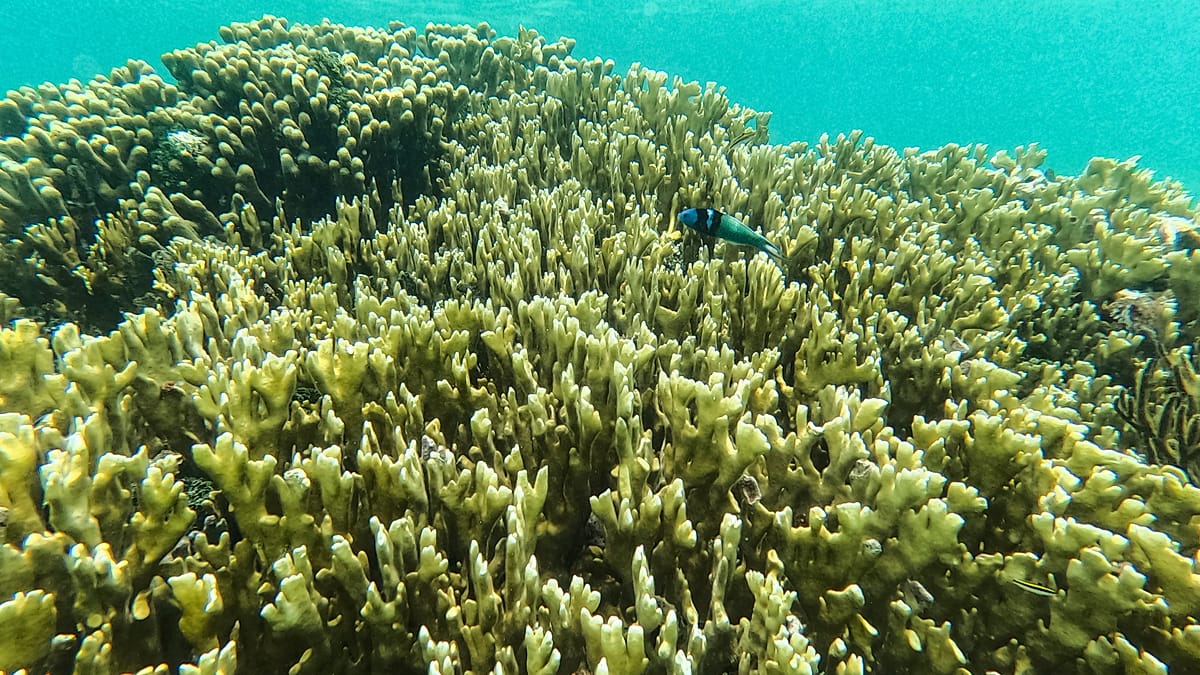
Cole's team took a novel approach by looking at at what happened to coral over the centuries to act as “a time machine to look into the past”, she says. Cole says measurements of the ratio of calcium and strontium in coral skeletons and of different oxygen isotopes create two independent readings of the seawater in which the coral formed. Another measurement of uranium and thorium tell when those skeletons were formed.
Cole looked at 29 coral fossils in the Galapagos Islands – 14 from before the industrial era, 14 after the modern era began and one more from about the time the industrial era was starting up. The oldest was from around the year 1100.
The temperatures she derived from the fossils over more than 900 years are patchy, with gaps, but when charted, she says it looks like a hockey stick, the same description used for a 1990s landmark study of past global temperatures.
She and other scientists say it's only going to get worse.
“It raises the spectre of a future where larger El Niño and La Niña events are dialling up the pace and severity of weather and climate extremes,” says Kim Cobb, a coral and climate scientist at Brown University, who wasn’t part of the study.
Outside scientists split on the research
Outside scientists are split on the research with some hailing it as important and trustworthy and others saying they don't buy it because it clashes with some recent observations.
“Corals are the gold standard for El Niño reconstruction, and this brings a goldmine of new material to the table,” Cobb says. “We can either wait many many decades for the instrumental record to get long enough to detect a shift in El Niño properties, or we can use centuries of El Niño reconstructions provided by paleoclimate records. Taken together, the paleoclimate data that we have, from across the Pacific, is fairly consistent in pointing to an intensification of El Niños with global warming.”
Both University of Pennsylvania climate scientist Michael Mann – originator of the temperature hockey stick – and University of North Carolina marine scientist John Bruno say that the coral data conflicts with recent observations of water temperature in the Galapagos. Data shows “a substantial decline in recent decades” of El Niño related variations near the Galapagos during the time greenhouse gases increased temperatures the most, Mann says.
What’s being reflected by the coral is not a change in El Niño as much as the warming from greenhouse gases, Bruno says.
Cole says the huge 1997-1998 El Niño and then small ones until 2023-24 created a situation where it seems like El Niños aren't strengthening because measurements are based on a 20-year time period and there were a few years that fell between super El Niños that skewed data. She says El Niño varies in strength so much and that up-and-down nature doesn’t go away just because it is responding to warmer conditions.
But the scientists all agree that climate change is a problem, with or without El Niño worsening.
“It's important to point to this as one more reason why we need to get off fossil fuels,” Cole says. “There isn't a magic bullet that's going to slow El Niños down.”