Smart meters save money and prevent wasting renewables: Which country is leading Europe’s rollout?
With the rise of renewable energy, Europe’s electricity systems have undergone a fundamental shift. In the past, electricity demand was largely met by controllable generation from coal, gas, nuclear and...
With the rise of renewable energy, Europe’s electricity systems have undergone a fundamental shift.
In the past, electricity demand was largely met by controllable generation from coal, gas, nuclear and hydropower, which could be adjusted to match changing consumption.
But wind and solar don’t operate on a fixed schedule – they are dictated by the weather. Solar, for example, is generated during daylight hours – but energy consumption is lower in the day due to people being out of the house at work or school.
Adapting to these fluctuations is one of the biggest challenges facing Europe’s energy system today and smart meters are a key part of the puzzle.
To maintain stability on the electricity grid, supply and demand must be kept in a delicate balance. This is more complex to achieve as a greater share of electricity comes from variable renewable sources.
At present, Europe’s wind and solar capacity has grown faster than many forms of grid flexibility, including battery storage, making smarter management of the grid essential to prevent mismatches in supply and demand.
The International Renewable Energy Agency (IRENA) says that battery storage, when combined with wind and solar power, can provide reliable 24/7 electricity even when weather conditions aren’t optimal. However, the EU needs to scale its battery storage systems by tenfold to meet its 2030 targets.
How do smart meters work?
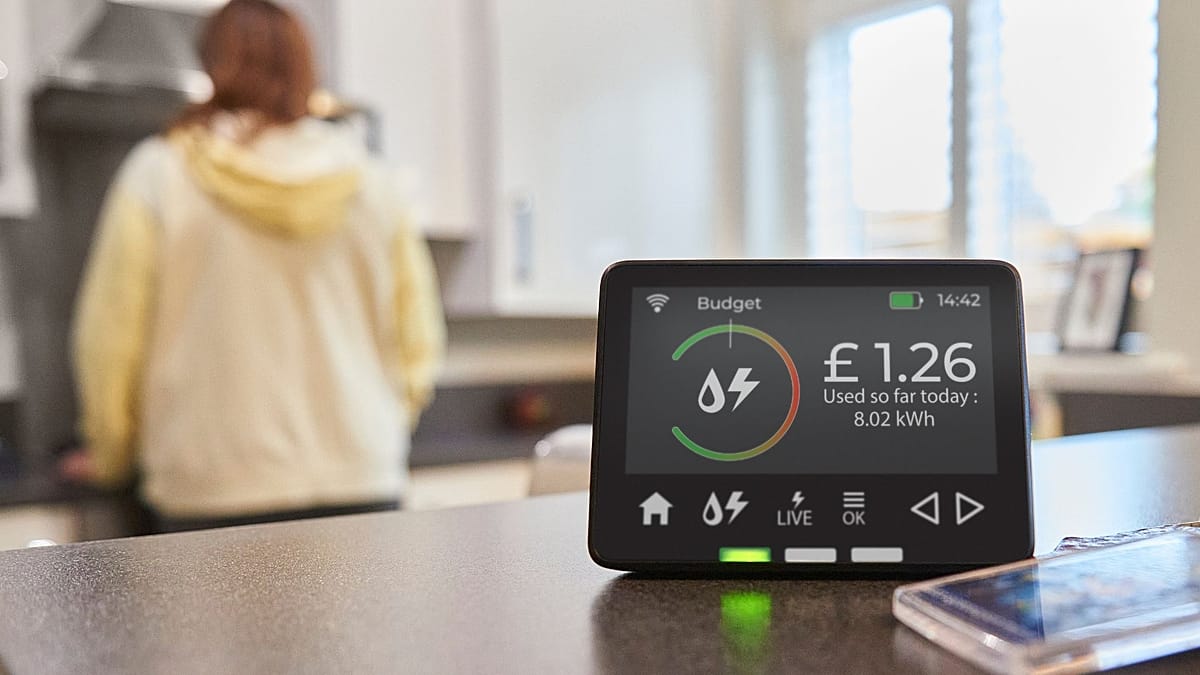
Smart meters automatically send electricity usage data to your energy supplier or network operator, removing the need for manual meter readings and enabling more accurate billing.
They also give you more control over your energy use and allow you to take advantage of flexible ‘time of use’ tariffs, which offer lower prices when demand is low or renewable energy generation is high.
This makes smart meters an important enabler of integrating intermittent renewables like wind and solar into the grid. By supporting flexible tariffs that encourage households to run energy-intensive appliances like washing machines when renewable generation is abundant, they help to better align electricity demand with supply.
This reduces the need for curtailment – when renewable generators are paid to reduce output or temporarily switch off plants because there is more electricity being produced than the grid can accommodate.
As more households adopt electric vehicles, heat pumps and home battery systems, smart meters will play an increasingly important role by helping to shift these much larger sources of electricity demand to periods when renewable energy is plentiful.
Europe’s delayed smart meter rollout
Despite this, the European Union’s rollout of smart meters has been fraught with delays and setbacks.
Back in 2009, the EU’s Third Energy Package required Member States that found a positive cost-benefit case for smart meters to aim for at least 80 per cent of households to have one installed by 2020. It’s now six years past that deadline, and rollout across the bloc stands at around 60 per cent.
New EU-wide rollout targets proposed in June are less ambitious: at least 50 per cent of end consumers should be equipped with smart meters by 2030 and 65 per cent by 2033, if adopted.
Across the EU and UK, households are generally not charged upfront for smart meter installation, although responsibility for rolling them out varies between countries. In some, including the UK, suppliers face penalties for missing rollout targets, while in France households that refuse installation may face charges for manual meter readings.
The costs are typically recovered through regulated network charges or other components of consumers’ energy bills, although the exact approach varies between countries.
How much money can a smart meter save you?
According to the European Commission, demand-side flexibility could save EU consumers more than €71 billion a year by 2030 in a best-case scenario – though that figure comes from an industry-commissioned 2022 study modelling widespread uptake of flexibility, rather than savings from smart meters alone.
More conservative EU estimates put typical smart-meter-enabled savings at two to 10 per cent of a household’s bill, particularly when combined with time-of-use tariffs.
Smart meters can also help reduce grid management costs by giving network operators better information to plan investments and manage demand. They can also reduce the need for renewable curtailment, the costs of which are ultimately borne by consumers through the electricity system.
In 2025, Germany paid around €435 million to renewable energy producers for curtailment, while the UK paid around £363 million (€424 million).
Smart meters also allow households to participate in energy communities and energy-sharing schemes by recording who generated, shared or consumed electricity.
These citizen-led initiatives allow communities to collectively generate and consume renewable energy, giving participants access to cheaper, greener electricity that is less exposed to the volatility of wholesale fossil fuel prices.
Which European countries are leading in the rollout of smart meters?
Around 60 per cent of European households had a smart meter installed as of 2024, according to the EU Agency for the Cooperation of Energy Regulators (ACER). In 15 EU countries, that figure exceeded 80 per cent.
Sweden and Italy were among the earliest movers. Italy began installing digital meters in 2001, reaching nearly universal coverage by 2011, while Sweden mandated monthly meter readings in 2003 and achieved virtually universal smart metering by 2009.
Denmark had also reached 100 per cent coverage by 2024; Estonia, Finland, Latvia, Luxembourg, Norway, Portugal and Spain had each reached around 99 per cent; Austria and Slovenia 97 per cent; France 94 per cent; Malta 93 per cent; the Netherlands 90 per cent; Ireland 84 per cent; Great Britain 70 per cent; and Lithuania 51 per cent.
Lagging behind were Belgium at 46 per cent; Poland (36 per cent); Croatia (34 per cent); Romania (27 per cent); and Hungary (11 per cent). At the time, Cyprus stood at zero per cent, but the island began a mass rollout in 2025.
Most striking of all, though, is Germany: just two per cent of households had an advanced smart meter installed as of 2024. Despite making smart meters mandatory for certain consumers in 2025, rollout has remained slow.
Stay tuned for an explainer on why later this month.