Iran remains in peace talks despite first US strikes since ceasefire
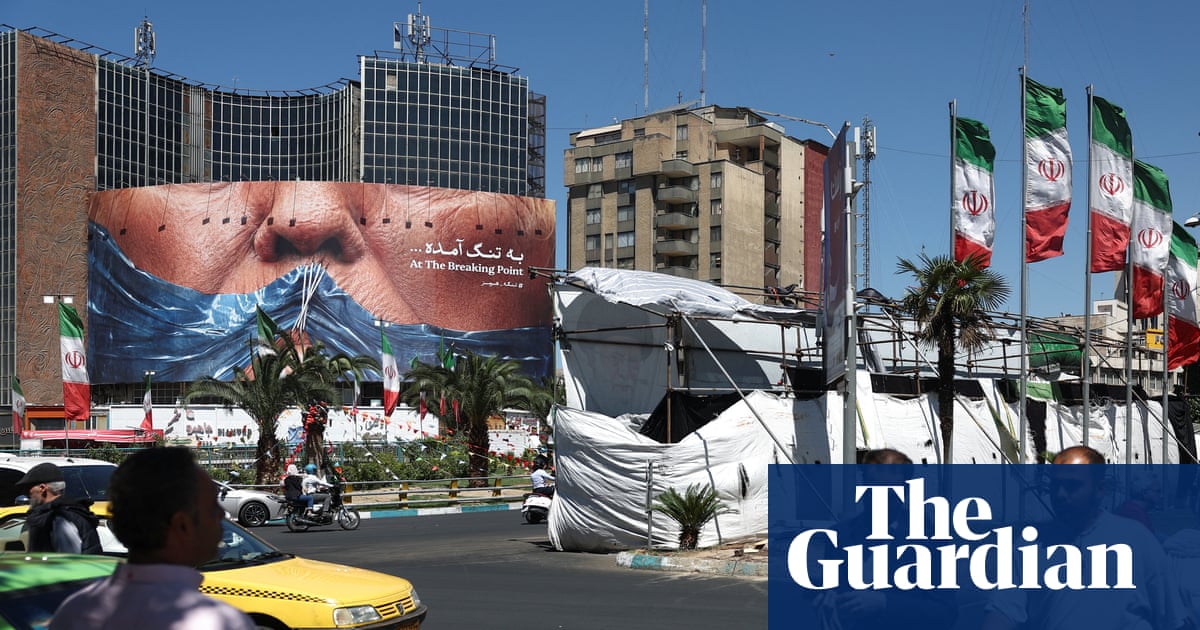
A proposed peace agreement between Iran and the US seemed to still be in prospect on Tuesday despite US bombings of Iranian targets – the first military action by Washington since the 8 April ceasefire.The...
A proposed peace agreement between Iran and the US seemed to still be in prospect on Tuesday despite US bombings of Iranian targets – the first military action by Washington since the 8 April ceasefire.
The Iranian foreign ministry denounced the US attack – aimed at missile launchers and efforts to lay fresh mines in the strait of Hormuz – as “an act of bad faith” and “a definitive violation of the ceasefire”, adding that it would not leave aggression unanswered. But it conspicuously did not pull out of the talks that were continuing under the joint mediation of Pakistan and Qatar.
The Iranian military also announced no specific reprisals at this stage, suggesting it did not want the attack – which killed four Iranian soldiers – to disrupt the delicate last steps towards an agreement that it intends to hail as one of the great milestones in Iran’s history of resistance. Brent oil futures climbed 4% after news of the renewed fighting.
In a sign that the US president, Donald Trump, recognises the conflict has reached a decisive point, he is convening a rare cabinet meeting at Camp David, the presidential retreat in Maryland. It will be only the second time Trump has visited the compound in his second term.
Iran’s parliamentary speaker and chief negotiator, Mohammad Bagher Ghalibaf, remained in Doha for a second day on Tuesday trying to agree the means by which more than $12bn (£9bn) in frozen Iranian assets could be unlocked and sent to an Iranian account. He is also seeking sanctions relief for Iran’s oil and petrochemical exports for the 60-day period set aside to negotiate fresh constraints on Iran’s nuclear programme.
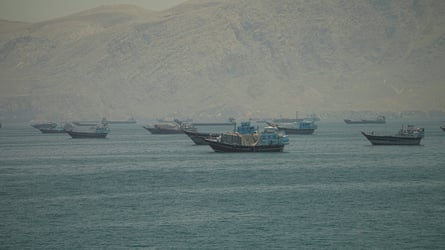
A separate 30-day timeframe has been allocated in the agreement for the US to lift the blockade of Iranian oil ports and for Iran to allow commercial shipping through the strait of Hormuz, restoring maritime traffic to levels before Israel and the US launched the war on 28 February.
The brief agreement, which would end the war but not delineate the peace, is fraught with political sensitivity as all sides know they must try to emerge with one they can exhibit to their respective constituencies as proof that the sacrifice was worthwhile.
Hardliners in Washington, Tehran and Jerusalem are all putting pressure on their negotiators not to make more concessions, such as Mahmoud Nabavian, a member of Iran’s parliamentary national security and foreign policy commission, insisting no agreement should relinquish Iranian control of the strait.
But Ghalibaf, overwhelmingly re-elected as speaker this week, can for the moment marginalise this opposition.
Reports said he was focused on the method of accessing frozen Iranian assets, described as the last serious dispute between Tehran and Washington.
Owing to the accumulated lack of trust, no further negotiations over the future of the strait or the nuclear programme can take place without the prior transfer of frozen Iranian funds, his allies said.
The consultations in Qatar have resulted in progress toward resolving the issue of frozen Iranian assets, but one Iranian MP, Ahmad Bakhshayesh Ardestani, claimed a plan for $12bn to be transferred from Qatar to a Russian account before being sent to Iran had been thwarted by the US at the last minute.
He warned that if the war restarted, Iran knew the whereabouts of the hotels in Doha and Dubai used by Trump’s lead negotiators, Jared Kushner and Steve Witkoff, and “next time they would be hit”.
Apart from the issue of Iran’s frozen assets, Tehran is trying to strengthen the section committing Israel to a ceasefire in Lebanon. With Israel admitting it was launching operations north of the yellow line to hit Hezbollah’s missiles, the was appeared to be escalating, not winding down.
Iran’s supreme leader, Mojtaba Khamenei, who succeeded his father after he was killed by US-Israeli strikes on the opening day of the war, claimed the tide of history was moving in Iran’s favour and called for unity among Muslim countries in a statement that marked the start of the hajj, the annual Muslim pilgrimage to Mecca.
Khamenei, who has not been seen in public or issued any recorded audio since his elevation in March, projected confidence as he predicted the elimination of Israel by 2040.
He said: “What is certain is that the hands of time will not turn backwards and the nations and lands of the region will no longer serve as shields for American bases. The United States not only will no longer have a safe haven for its mischief and for establishing military bases in the region but, day by day, it is growing more distant from its former status.”
He added: “The shaken Zionist regime and the cancerous tumour of Israel are approaching the final stages of their wretched existence.” His remarks put into perspective Trump’s much-derided claim that Arab states, as well as Turkey and Iran, should normalise relations with Israel.