Kazakhstan wants crypto miners to use power generated by excess oil field gas
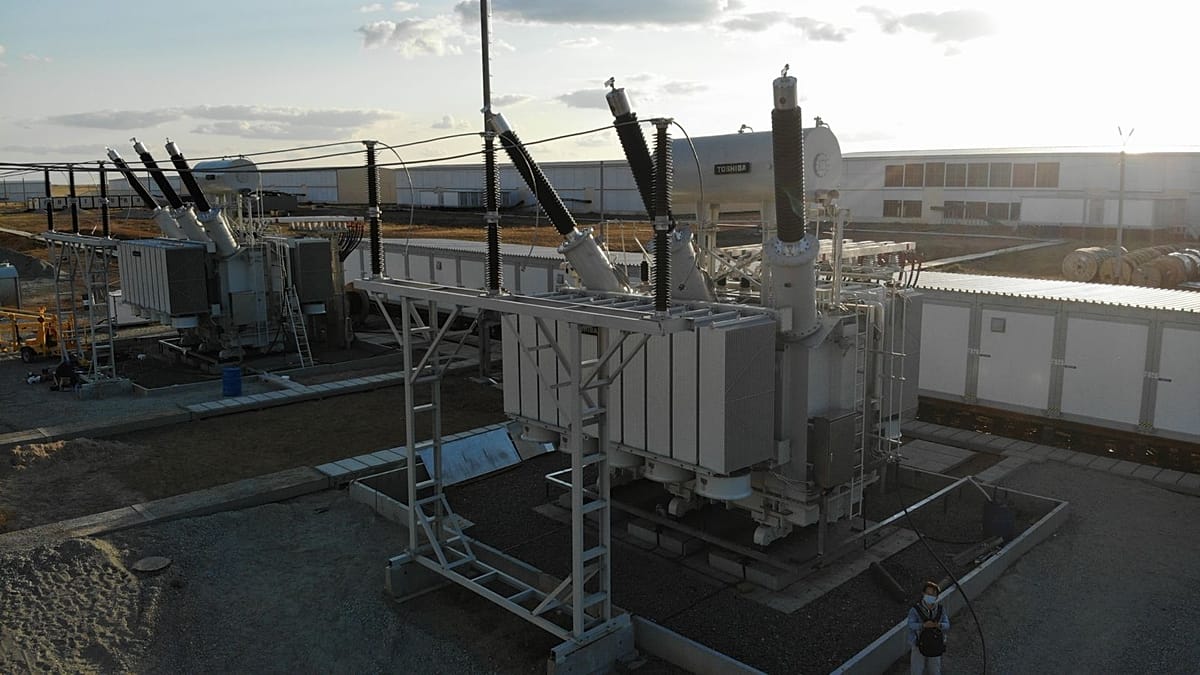
Kazakhstan is allowing crypto miners to use excess associated gas from oil fields to generate their own electricity, in a bid to reduce gas flaring and increase oil output while attracting miners back to the country.
Although acquiring cryptocurrencies is called mining, the process has little in common with extracting natural resources. Crypto mining requires large amounts of electricity to run specialised computers that solve complex mathematical equations in exchange for digital coins.
Kazakhstan's government is bringing the two together with a new project, where crypto miners will be able to use excess associated gas from oil fields to generate electricity at their own power plants.
Kazakhstan experienced a major crypto mining boom in 2021, exposing weaknesses in its ageing power infrastructure, much of which was built during the Soviet era.
The influx of crypto miners added pressure to the system, contributing to power shortages and blackouts in some areas.
In response, the government began restricting miners' access to electricity and later introduced an auction system, under which mining companies could purchase only surplus electricity through a dedicated platform. In practice, there was often little or no surplus available.
Combined with tax, licensing and other restrictions, the measures pushed many miners either out of Kazakhstan or into the grey market.
Last year, the government's approach began to shift, with authorities introducing incentives and programmes aimed at bringing legal crypto mining back to the country.
Turning associated gas into electricity
One of the government's latest initiatives connects the crypto miners with oil fields that flare associated gas.
Associated petroleum gas is released during oil extraction. It contains methane, making it highly flammable and harmful to the environment.
When an oil field is located far from existing infrastructure, transporting the gas or storing it in compressed form can be economically unviable.
Instead, it is commonly flared — burned to convert methane into carbon dioxide. While carbon dioxide still contributes to the greenhouse effect, methane has a much higher warming potential. As a result, some oil producers flare the gas and pay environmental fines.
The new model benefits both the crypto miners and subsoil users. The miners would get a more stable and cheap source of electricity without putting additional pressure on the national power grid.
"Crypto mining is a major industry in its own right, characterised by high volatility and a high cost of entry, which is why access to cheap electricity is absolutely critical ," said Batyr Bauyrzhan, Technical Director of WES LLP, a technology partner providing an integrated solution that encompasses gas conditioning, power generation, and a mining farm/data center.
He noted that with the personal power plant, the miners can lock in the cost of electricity for years and not depend on grid tariffs or power capacity limits. For mining, this is the "key factor determining the payback period."
Stability of the power supply also matters a lot, for crypto mining equipment operates around the clock, and every hour of downtime translates into direct losses.
The oil fields, in turn, would make a profit from selling the gas, while also saving millions on environmental fines.
"For years, associated gas was a problem for us: we had to flare it, pay for emissions, and limit oil production. For us, the gas that was previously flared has no alternative cost, so we are prepared to sell it at a price significantly lower than the market price of commercial-grade gas," said Bauyrzhan.
According to him, the primary economic benefit lies not in saving on fines, but in removing oil production constraints that are directly linked to gas disposal. It also will come at no cost to the oil companies, as the necessary infrastructure is paid for by crypto miners.
How will this work?
The volume of associated gas generated on oil fields depends on the gas-oil ratio and the level of oil production, and varies for each field.
To understand possible output let's take an example of an oil field producing 100,000 m³ of gas per day. If a gas-piston unit generates approximately 3–3.5 megawatt-hour (MWh) of electricity from 1,000 m³ of associated gas, then a 100,000 m³ of gas can supply a power plant with a capacity of around 13–15 MW.
An average industrial farm consumes between 5 and 20 MW, while large ones consume 50 MW or more, which means that one oil field can power one full-scale industrial mining farm.
"According to available data, approximately 300–340 million cubic meters of associated petroleum gas were flared in Kazakhstan in 2024. If converted into electricity, this would have yielded an estimated 1.2–1.3TWh (Terawatt-hour )," said Daniyar Mubarakov, Head of the Blockchain and Digital Mining Association.
He added that large-scale mining operators consider oil fields with a gas capacity enough to generate 5 MW and more. This is driven by the need to cover infrastructure and equipment maintenance costs. Miners also evaluate potential sites based on internet connectivity and the availability of water for cooling systems.
Mubarakov explains that miners are prepared to invest in the purchase and installation of power generation equipment, but building their own station from scratch is economically unattractive.
Bauyrzhan agrees, saying that building a power plant requires a lot of expertise, which is why both sides prefer working through a specialised engineering company.
"The processing of associated petroleum gas, gas-piston units, their servicing, and the securing of permits and approvals from the subsoil user constitute a distinct engineering specialisation. A mistake at this stage costs more than the services of a professional contractor," he explains.
Mubarakov notes that to build a new power station would cost around €1.7 million to €2.2 million per MW and would take more than three years.
The Kazakh Ministry of Energy says currently around 40-60 oil fields flare associated gas.
According to Gizzat Baitursynov, Kazakh Vice Minister of AI and Digital Development, both ministries are working on a legal framework to make rules clear, as both kinds of miners showed interest to the arrangement before.
He also highlighted that the mechanism is highly beneficial for Kazakhstan, as it will be able to make profit on increased oil production and improve environment.