Can travel solve the loneliness epidemic? WeRoad's co-founder Fabio Bin thinks so
Speaking to Euronews in Cannes after being shortlisted for the European CMO of the Year Award, Fabio Bin explained he turned a personal frustration into a fast-growing social travel brand.
Making friends as an adult is not always easy. With busy schedules, remote working, shrinking social circles and lives increasingly lived online, many people are finding it harder to form new, genuine connections than ever before.
The trend has become significant enough that in 2023 the World Health Organization declared loneliness a global public health concern, estimating that one in six people worldwide is affected.
For Fabio Bin, co-founder and CMO of WeRoad, that challenge presented an opportunity. What began as a solution to the simple problem of finding people to travel with has grown into one of Europe's best-known social travel brands.
Euronews Culture spoke with Bin during the Cannes Lions International Festival of Creativity, where he was shortlisted for the inaugural European CMO of the Year Award.
In the interview, Bin shares the journey of building a travel community focused on connecting solo travellers, the importance of stepping outside of your social bubbles, and how WeRoad is continuing to evolve.
Euronews Culture: Tell us about WeRoad - for people who might only know it from online or social media. How do you define what you do?
Fabio Bin: We organise trips for small groups of people who don’t know each other before leaving.
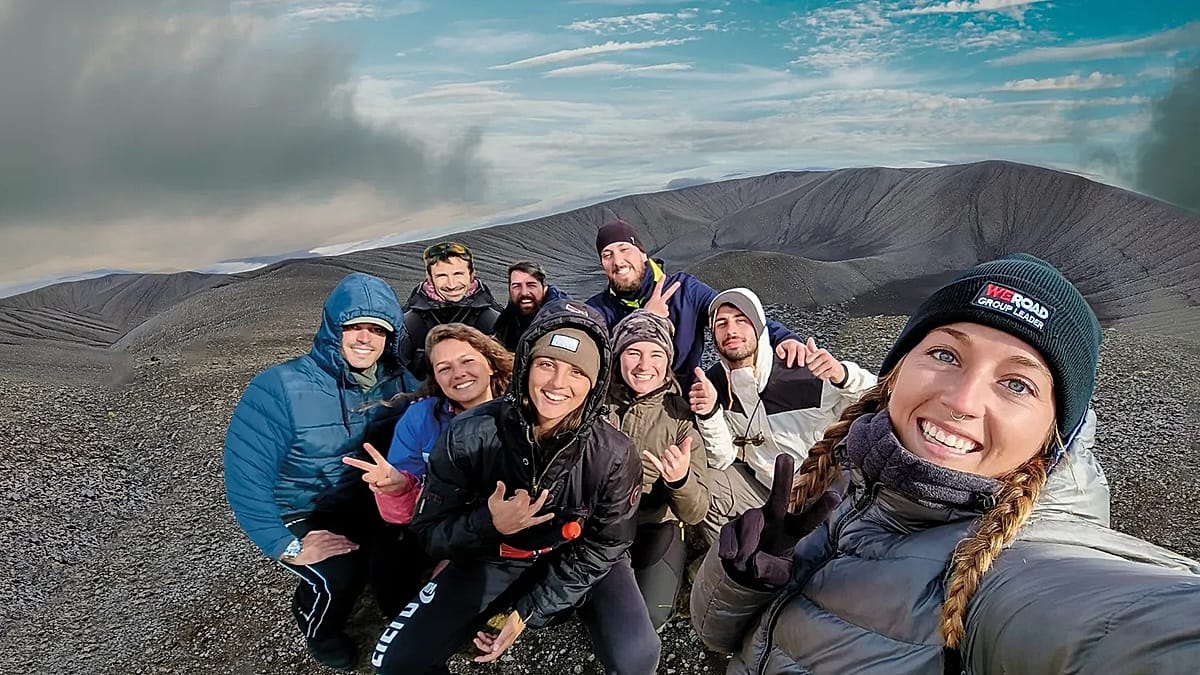
The idea is to create a context for people to mingle while travelling. You pick a destination - it can be Indonesia, Peru, Iceland, whatever - and you depart and meet around 15 to 50 strangers from the same age group.
The idea is that you can travel, experience the destination like a local, and at the same time make friends from your own country.
Can you tell us a bit more about the experience you’re trying to offer, and how the company began?
We came up with the idea from a personal need, actually. My business partner and I were in our 30s - I was about 40 - and it became difficult to find people to travel with.
People’s lives are different, and in today’s world things are complicated. Your job, your holidays, or even your destination preferences don’t always match with your friends. For example, I might want to go hiking, while a friend prefers something completely different.
It’s very difficult to match those needs with friends.
And beyond that, I think the last social institution where you can really make friends is university. After university, it becomes very difficult in modern life to build authentic new friendships. At work, for example, some people don’t want to socialise with colleagues. So it’s difficult to establish real, authentic relationships with new people.
That’s why we thought: we need someone to travel with. But what we didn’t understand at the beginning was that the real need was connection. We were interested in travelling and finding travel companions, but then we realised the real reason people travel with us is to make new friends.
Because when you spend ten days with 15 to 50 strangers, something happens. At the beginning it can feel a bit cringey - you think, "Who are these people?" - but after a couple of days it’s like you’ve known them forever. These relationships stick. People come back to travel with us again, sometimes with the same people they met, or just to meet new people. They expand their circle of friends.
That’s interesting - this idea of authenticity. Do you think people are looking to move away from screens and digital life and have something more human?
Absolutely. I think people are desperate for it. We also went through the pandemic and Covid, and there was a boom in dating apps. People got used to staying on their phones.
But now there’s a lot of talk about “dating fatigue” - people are stuck on screens, and when they finally match with someone, they don’t have the energy to meet in real life, so they don’t show up. That’s a problem.
What we try to do is remove that layer of technology. For us, technology is just a tool. You don’t need to match with people - you just browse a trip. That’s very important. People sometimes ask why we don’t use matchmaking algorithms. But I think the most powerful part of WeRoad is serendipity.
Even though people travel within age brackets - 25 to 35 and 35 to 49 - and share a generation, what matters is that once you have that, everything else becomes random. It’s the destination that creates the match for you, and that’s the only way to connect with people outside your usual bubble.
Language could be a barrier - how do you handle that?
That was a strategic decision we made at the beginning. We organise trips in local languages for European travellers. So French people travel with French people, Spanish with Spanish, German with Germans, and so on. We also have the English-speaking market.
We started in the UK, but now we serve the rest of Europe and are expanding into the US.
People can choose a tour in their own language so they feel more comfortable building relationships. Some even choose to travel in another language if they want to experience a different culture.
But in general, English is the common language, so we also have trips with people from all over the world.
Sustainability is a big concern in travel. Did you consider alternatives like trains or lower-impact transport?
Yes, we do. It depends on the destination and itinerary. For example, in what we call self-driving tours - often in Latin or Nordic countries - groups of around 15 people rent cars and drive themselves.
In Iceland, for example, we rent cars and travel as a group. In Vietnam, you might take night trains to move across the country. In Japan, we rely on public transport because fast trains make it easy to move between cities.
So it really depends on the destination.
How do you see WeRoad evolving in the next five years?
We quickly realised that the real need wasn’t just travelling - it was connecting. So we have already expanded into what is now called real-life interaction. We are hosting events in around 40 cities across Europe on a daily basis.
These include hundreds of events hosted by our group leaders or customers - what we call “WeRoaders”. It can be yoga in the park, running clubs, cinema nights followed by drinks, or debates about films. These meet-ups are designed to help people mingle in cities, not just during travel.
Our vision has always been about connecting people, cultures and stories. It’s not just about travel - it’s about connection. In the next five years, I see expansion beyond Europe. We started nine years ago, and we are now the only brand doing this in Europe. We are expanding into the US, and potentially beyond that.
We also want to go beyond trips - into other social activities and experiences that help people connect and break out of their bubbles.
One final question - is there potential to expand the age range, for example into people in their 50s?
That’s a question we get a lot. We are currently discussing it internally. For now, we’ve defined age brackets, but there is strong demand from people in their 50s.
We will probably do something for that group, but likely under a different brand. We’re working on it - so stay tuned. It will happen sooner or later.