The business of peace: US investment push takes the TRIPP corridor from diplomacy to trade
A month after announcing $201 million (€175 million) for a Trans-Caspian investment fund, the US has brought regional officials and business leaders together in New York to explore how the Armenia-Azerbaijan...
A month after announcing $201 million (€175 million) for a Trans-Caspian investment fund, the US has brought regional officials and business leaders together in New York to explore how the Armenia-Azerbaijan agreement could lead to trade and infrastructure projects.
The event, called “Prosperity Through Peace: Investing in the Trans-Caspian Trade Route and TRIPP”, reaffirmed Washington's intention to move from diplomacy towards investment in the region.
It brought together representatives of more than 40 companies in New York, as Washington seeks to transform the Trump Route for International Peace and Prosperity, or TRIPP, into a commercially viable regional corridor.
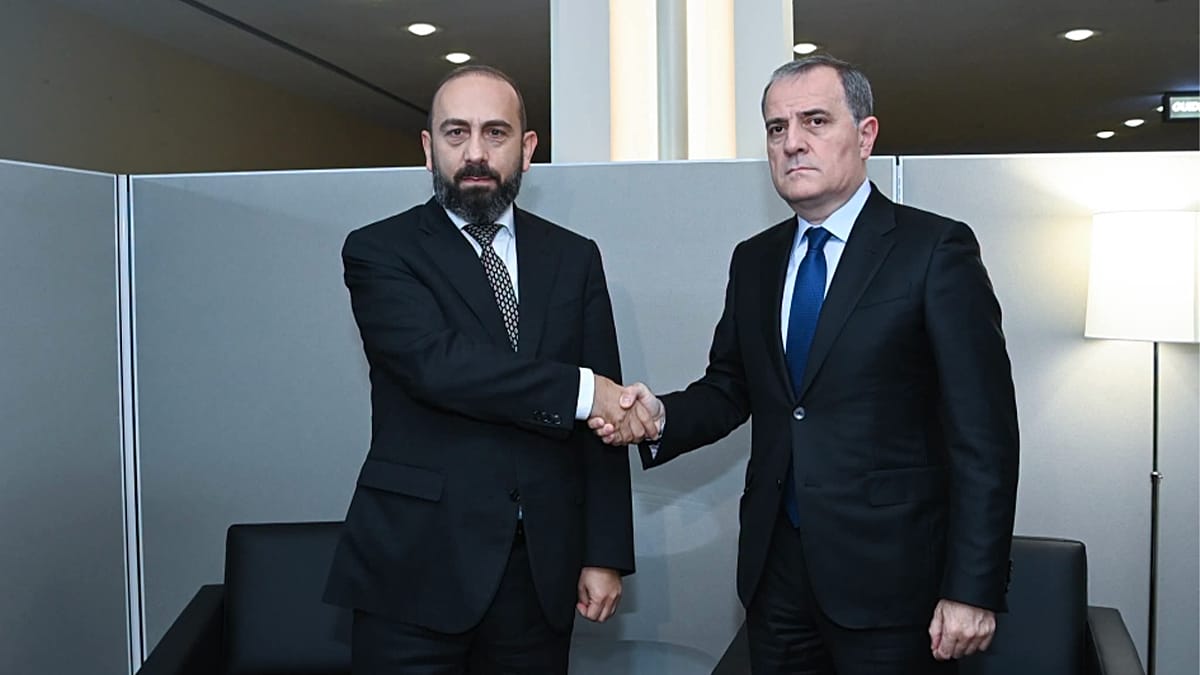
In attendance were Azerbaijan’s Foreign Minister Jeyhun Bayramov and Armenian Foreign Minister Ararat Mirzoyan, together with US Assistant Secretary of State Brendan Hanrahan, US Special Envoy Steve Witkoff, Republican Senator Steve Daines, officials from Georgia and all five Central Asian countries (Kazakhstan, Kyrgyzstan, Tajikistan, Turkmenistan and Uzbekistan).
According to Armenian press, Minister Ararat Mirzoyan highlighted “the historic significance of the August 8 peace summit, held with decisive U.S. involvement, in establishing peace between Armenia and Azerbaijan and unblocking regional communications.”
One of the messages that emerged at the gathering was that Washington wants the political opening between Armenia and Azerbaijan to produce private investment, as well as trade and infrastructure.
From peace agreement to investment opportunity
The meeting has brought the Trans-Caspian Enterprise Fund centre stage.
The fund has $201 million (€175 million) in US government funding to encourage private investment along the Middle Corridor, also known as the Trans-Caspian Route, through the South Caucasus and Central Asia.
The fund was described by Mark Cameron, Deputy Assistant Secretary in the US State Department’s Bureau of South and Central Asian Affairs, as a “private non-profit entity” when he spoke at the 7th Caspian Business Forum in New York, which was held during the United Nations General Assembly.
During his address, he said, "US attention to the region has never been higher, and it’s not hard to see why."
“The common theme is the optimism about what is possible,” he added.
Azerbaijan’s Deputy Minister for Foreign Affairs, Yalchin Rafiyev, attended the forum and said “TRIPP is an important project” that would provide not only economic and commercial value but also serve as “an initiative that brings peace to the region with shared interests for all countries.”
New business of Eurasian connectivity
Part of the significance of TRIPP is how it connects to the Middle Corridor, which links Central Asia across the Caspian Sea, through Azerbaijan and Georgia, to Turkey and the rest of Europe.
Earlier this year, the US Trade and Development Agency told Euronews that Azerbaijan’s geographical position made it an “indispensable hub” on the Trans-Caspian route.
US officials have since explored opportunities in a number of sectors, including electricity transmission, energy, AI infrastructure, cybersecurity, and digital connectivity.
The larger questions now are whether the political agreement can be converted into bankable projects and whether the business of peace is beginning to form an investment strategy.