World Nomad Games open in Bishkek before an audience of world leaders
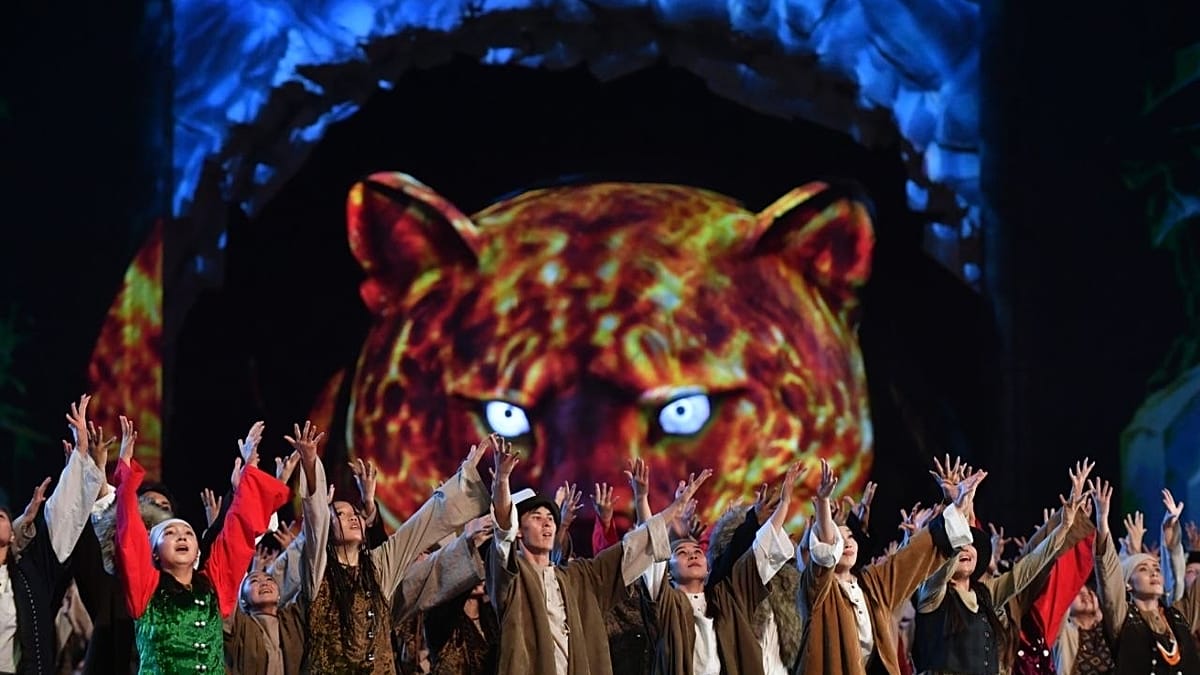
A spectacular performance at the Bishkek Arena opened the sixth edition of the World Nomad Games. This is the biggest competition yet, with more than 100 national teams from every continent. Athletes will compete in 43 disciplines rooted in Asia's ancient nomadic culture.
The World Nomad Games opened in Bishkek on Thursday, drawing delegations from more than 100 countries and 21 heads of state, including the leaders of China, India and Russia, who were attending the Shanghai Cooperation Organisation summit and its presidential session in the Kyrgyz capital.
The SCO summit brought together Chinese President Xi Jinping, Indian Prime Minister Narendra Modi and Russian President Vladimir Putin, among other heads of state, giving the games a high-profile international audience.
The games, often called the "nomadic Olympics," were first held in Kyrgyzstan in 2014. The United Nations has since recognised them as a platform for intercultural dialogue and sustainable development.
This year's edition, which opened on Kyrgyzstan's independence day, features 43 disciplines spanning ancient sports and traditional intellectual contests, most rooted in the cultures of the Central Asian steppe, where they served both as military training and as social events where young men could demonstrate strength, skill and endurance.
Equestrian competitions form the heart of the programme. Races run to six, ten and eleven kilometres — distance valued over speed in Central Asian horse culture, where breeds are prized for their capacity to cover vast ground in a single day.
Jockeys can be as young as 10 — the Nomad Games' official limit — while at some domestic competitions they start at 7.
Finishing is an achievement in itself: horses are often exhausted before the line, and winners receive prizes including livestock or vehicles.
Alongside flat races, competitors ride horses in the tölt, a four-beat gait in which the legs on each side move together, a natural movement for some breeds but trained in most.
Horsemen also compete in wrestling on horseback, team games involving herding animals across a field, and picking objects from the ground at full gallop.
Six styles of national wrestling are represented, from Kyrgyz alysh and Kazakh küresi to Tajik gushtini milli kamarbandi, Turkmen goresh and Turkish ashyrtmaly aba güreşi.
Archery, tug of war, arm wrestling and weightlifting are among the disciplines that have drawn in countries far outside Central Asia's nomadic belt.
Women compete across several disciplines including archery and certain strength events. Organisers stress that women were historically capable riders and warriors in nomadic societies.
The traditional core nations — Kyrgyzstan, Kazakhstan, Uzbekistan, Tajikistan, Turkmenistan, Mongolia, China and Russia, which sends teams from the constituent republics of Bashkortostan, Tatarstan and Tuva — are joined this year by a notably expanded list of newcomers.
Australia, New Zealand, Algeria, Burundi, Gambia, Jordan, Egypt, Cabo Verde, Côte d'Ivoire, Oman, Uganda, Ethiopia and North Macedonia are among those competing for the first time. The UK has sent a team of more than 50 athletes.
Alongside the competition, dozens of presentations, round tables and academic gatherings will examine the history and culture of the steppe.
Ethnographic festivals and reconstructed nomadic villages will celebrate folklore, songs, dances, and handicrafts to show visitors what life was like for nomads.