Real wages are still below 2021 levels in a third of European countries analysed
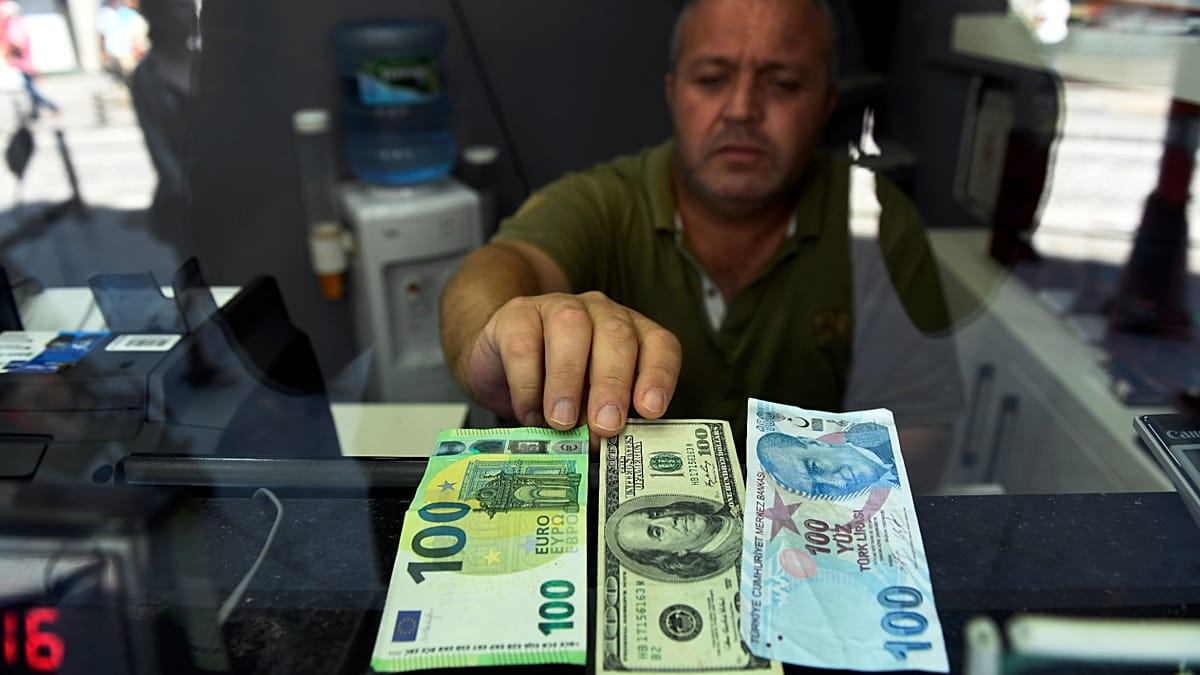
Real wages fell by almost 2% in the eurozone between early 2021 and early 2026, but the impact on workers’ purchasing power varied sharply across Europe. Euronews Business examines where wages gained and lost the most — and why.
COVID-19, Russia’s invasion of Ukraine, soaring energy prices, record inflation, and other factors have all put pressure on wages across Europe. Rising living costs have hit millions of European households hard.
Real wages, which take inflation into account, fell in a third of the European countries analysed over the five years to early 2026.
So, which countries saw the biggest real wage declines between the first quarters of 2021 and 2026? And where did real wages rise most? Why did some countries emerge as outliers in real wage growth while the euro area overall saw a decline?
According to the OECD Employment Outlook 2026, which covers 27 European countries but not all EU members, real wages declined in nine countries cumulatively between the first quarters of 2021 and 2026.
Impact of the 2022–2023 cost-of-living crisis
“Real wages were still affected by the cost-of-living crisis of 2022-2023 even in Q1 2026,” Andrea Bassanini, editor of the OECD Employment Outlook, told Euronews Business.
“As sectoral collective agreement renewals do not take place every year and are usually staggered, negotiated wages have taken much time to recover, and did not do it completely.”
He also pointed out that statutory minimum wages had largely kept pace with prices.
Real wages fell by more than 6% in Italy
Italy saw the largest decline, with real wages falling by 6.1%. Ronald Janssen, former chief economist at the European Trade Union Confederation (ETUC) and the Trade Union Advisory Committee (TUAC), stated that employers systematically delaying new agreements and the weakening bargaining position of trade unions contributed to the real wage decline in Italy.
Michele Bavaro, an economist at Italy’s Scuola Normale Superiore, said Italy’s historically long delays in renewing contracts slowed the recovery in nominal wages following a rise in inflation.
Richard Grieveson and Meryem Gökten from the Vienna Institute for International Economic Studies (wiiw) also pointed to weak productivity, subdued economic growth, and relatively slow nominal wage adjustment in Italy.
Czechia and Sweden recorded declines of 5.8% and 4.8%, respectively. Real wages fell by 2.1% in Denmark and 2% in Spain. Across the eurozone, they declined by 1.8% over this period.
Slovakia, Finland, Ireland, and Switzerland also saw slight declines of between 0.7% and 1.4%.
Acceleration of inflation and job insecurity concerns
Ronald Janssen pointed to the acceleration of inflation in 2021-2022 in the eurozone.
“While subsequent collective bargaining rounds in the years following the great inflation outbreak tried to restore the purchasing power of wages, workers and trade unions saw their bargaining power hampered by the job insecurity concerns resulting from several years of stagnating economic growth, fears of de-industrialisation because of Chinese competition and a US-led tariff war undermining access to a major European export market,” he told Euronews Business.
In Belgium, real wages remained unchanged, while France and Estonia recorded marginal increases of just 0.1%.
Turkey: A significant outlier
Turkey stands out as the most significant outlier, recording the highest real wage growth at 78.6% despite an inflation rate of 32% in mid-2026.
“Turkey's 79% real wage increase is arithmetically correct but overstates the increase in living standards,” Grieveson and Gökten told Euronews Business.
“Real wages started from a low level in 2021, still depressed after the 2018 currency crisis, so part of the rise was actually recovery.”
They also stated that the main driver of the sharp increase in 2022-2023 was the double minimum wage hikes, largely election-driven.
“After the 2023 elections the adjustment returned to once a year and has since stayed below inflation,” Grieveson and Gökten added.
They also questioned the reliability of Turkey’s inflation data, citing opposition parties’ allegations that the official figures are manipulated.
Hungary has the highest growth in the EU
Hungary ranks second at 29.8% and is itself an outlier within the EU. In Poland, real wages rose by 16.5%. The top three countries are all outside the euro area.
“Hungary's strong real wage growth over the past five years reflects a combination of structural labour shortages, government wage policies, and a post-inflation catch-up process,” Péter Virovácz, chief economist at ING, said.
He said that Hungary's exceptional real wage performance reflects not an extraordinary surge in productivity, but rather the combined effects of labour-market tightness, an aggressive minimum wage policy, ongoing wage convergence and workers' efforts to restore purchasing power after the inflation shock.
Within the eurozone, Lithuania recorded the strongest real wage growth, at 14.8%. No other country saw a double-digit increase. Real wages also rose by 7.4% in Latvia, 6.6% in Slovenia, 5.6% in Portugal, 4.7% in Greece, and 4.1% in Luxembourg.
Major economies: UK leads real wage growth
Among Europe's five largest economies, the UK led with an increase of 3.6%. Real wages rose by less than 1% in both Germany and France, at 0.9% and 0.1%, respectively. Italy recorded the steepest fall of all the countries analysed, while Spain saw a 2% decline.
“A first important factor is the growth of statutory minimum wages, which have been higher than inflation by government decision in both Germany and the UK and about the same as inflation in France and Spain,” Bassanini said.
Grieveson and Gökten noted that the UK’s comparatively flexible wage-setting system and persistent recruitment difficulties allowed nominal pay to respond more rapidly to inflation than in several eurozone economies.
The report notes that its figures for the first quarter of 2026 predate the recent surge in energy prices, which followed the joint US-Israeli attacks on Iran and Tehran's response.