

Wednesday briefing: Why are people turning global crises into high‑stakes bets?
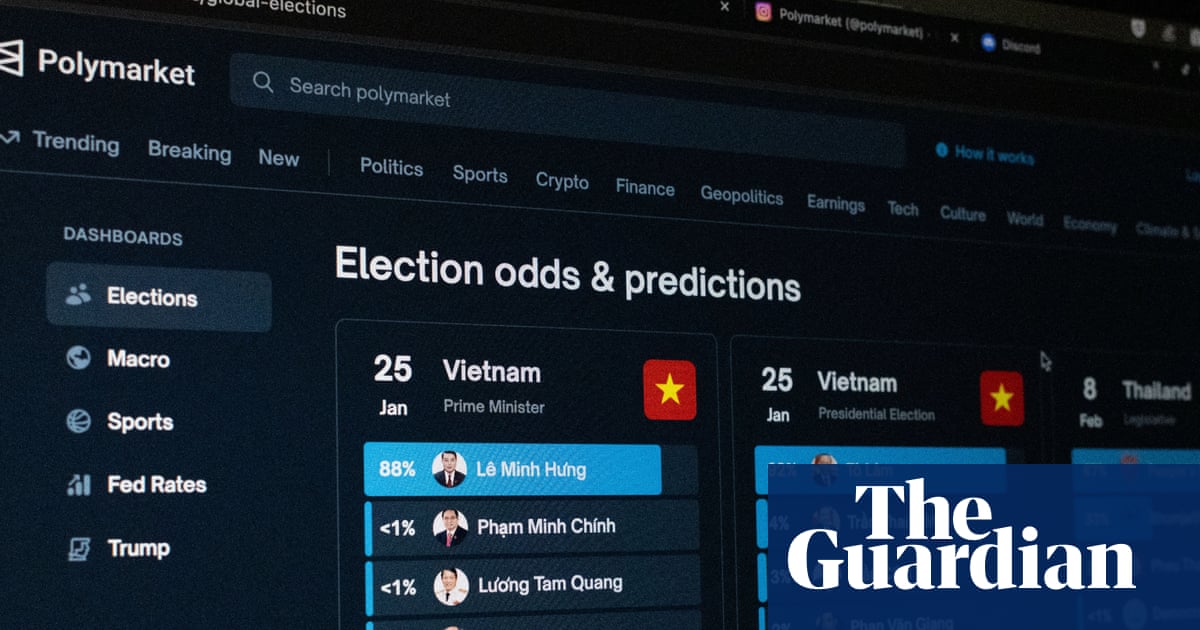
For punters using the online prediction market Polymarket, almost everything is a chance to make money. Want to bet on when the US and Iran will reach a peace agreement? Polymarket will let you. Fancy a...
For punters using the online prediction market Polymarket, almost everything is a chance to make money. Want to bet on when the US and Iran will reach a peace agreement? Polymarket will let you. Fancy a gamble on how many times Elon Musk will post on X by the end of the day? There’s a market for it. Have a hunch that the second coming of Jesus Christ will happen before 2027? Polymarket reckons there is (currently) a 4% chance, and there’s about $57m on the line already.
In just a few years, prediction markets have become big business, with hundreds of millions of pounds traded on platforms like Kalshi and Polymarket each day. For today’s newsletter, I spoke to Aisha Down, the Guardian’s reporter on AI about her recent investigation into the platform and how bedroom gamblers are profiting on anything from the Ukraine war to the number of times President Trump says the word “ballroom” in a speech.
But first, the headlines.
Five big stories
-
Middle East | Donald Trump has said that US-Iranian peace talks could resume in Islamabad over the next two days, and complimented the work of Pakistan’s army chief as mediator.
-
Economy | A further escalation in the Iran war could trigger a global recession, spiralling inflation and a sharp backlash in financial markets, the International Monetary Fund has warned.
-
Spain | Begoña Gómez, the wife of Spain’s prime minister, Pedro Sánchez, has been charged with embezzlement, influence peddling, corruption in business dealings and misappropriation of funds.
-
UK news | The police watchdog is investigating complaints made against 11 officers over their handling of an inquiry into a car crash that killed two schoolgirls in 2023.
-
Health | Wes Streeting has vowed to stop women being “gaslit” by doctors as he relaunches the women’s health strategy for England.
In depth: ‘Organisations have no idea that their reporting is being used to settle bets’
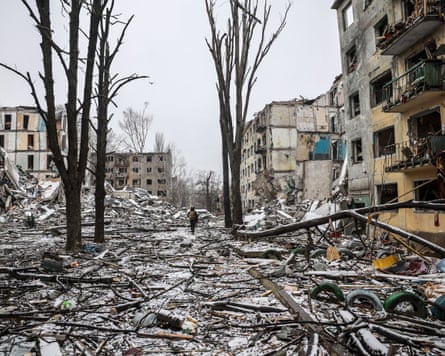
The trenches of eastern Ukraine are a long way from people gambling on the conflict. But right now on Polymarket, there are millions of dollars at stake over the likelihood of Russia or Ukraine capturing contested towns and cities. Gamblers place bets against each other on different outcomes on the platform. It is, in effect, derivatives trading on world events for the masses.
If, say, a user believes that Russia will enter the Ukrainian city of Sumy by 30 June, they can buy a “yes” option at the current market likelihood. Buying at a 1% chance means the gambler stands to make one hundred times their money if it happens. Rival gamblers take the other side of the bet, which are all made anonymously using cryptocurrency. Just like traditional derivative markets, the bets themselves can also be traded.
To critics, the Peter Thiel-backed Polymarket is immoral and should be at least regulated like legalised gambling – or even banned. Some countries have already moved to outlaw Polymarket and its rivals. In the US, the platform’s fortunes have improved remarkably under the Trump presidency, which has thrown its weight behind the rapidly growing industry. Last year, Donald Trump Jr joined Polymarket’s advisory board.
As the size of wagers has grown, updates on global events have gained a new meaning for users. Official announcements over troop movements and developments in Ukraine, for example, are no longer just updates for anxious civilians and people caught in the war, says Aisha. They have also become key evidence for settling lucrative bets.
“A lot of the Russia-Ukraine bets are settled with information published by the Institute for the Study of War, a US thinktank. They produce a daily map of the frontline. But these organisations have no idea that their reporting is being used to settle bets on Polymarket. Sometimes they become targeted,” she says.
A real threat
In March, an Israeli journalist Emanuel Fabian received threatening messages from Polymarket users over a report on a minor missile strike near Jerusalem, which became a key data point over an unresolved bet during the fighting between Israel and Iran.
Fabian had written up an Iranian missile strike in a live blog post, thinking little of it, but was later inundated with messages demanding that he update his story to reflect that missile fragments had hit the earth after an interception instead of a direct hit from a missile.
After investigating the messages further, the reporter realised they were coming from Polymarket users who stood to profit from a $23m stake over whether or not Iran would strike Israel on 10 March. A “strike” had to involve a bomb or a missile, non-intercepted, hitting Israeli soil. The people getting in touch with him stood to win if it was determined that a direct strike had not taken place.
There have been many other examples, she says.
“A famous bet dispute was whether Volodymyr Zelenskyy would wear a suit to the World Economic Forum last year. Millions of dollars were bet on it. He wore something that was kind of like a suit, but millions of people said it wasn’t because it had cargo pockets on it,” Aisha explains.
“When something is contested, it goes to a group of anonymous adjudicators who vote to resolve the bet,” she says.
Insider trading
There are big questions about corruption risks on Polymarket, says Aisha. Before the US-Iran ceasefire was announced last month, several newly opened accounts on the platform bet a total of nearly $70,000 on a pause in the fighting just before President Trump made that exact announcement. Experts said this suggested inside knowledge, with similar incidents happening before the US and Israel attacked Iran in February.
“Right before the US-Israeli strikes in early March, there were six wallets that were all created basically on the same day. They were wagering that the US would attack Iran. And they all correctly bet on the strikes. People think they are insiders because they are not regular bets,” says Aisha.
Frequent Polymarket users have started after the accounts, she says, setting up alerts for when they make a trade so others can copy it.
“One of them is apparently an insider in the US Federal Reserve. So an alert comes out whenever that insider bets on the Fed interest rate,” she says.
Beyond ethics
In her conversations with users, Aisha has pressed Polymarket gamblers on the ethics of gambling on war and other world events where lives are at stake. They pushed back strongly, she said. Users say that there is an inherent value in the predictions themselves, arguing that the platform is a source of truth.
“For many, it’s a free speech thing. If you’re on the frontline in Ukraine in the fog of war, maybe the government is lying to you. Maybe the news is lying to you. But bets on Polymarket are an open source of information,” she says.
“Some longtime users feel that it has become a casino. There are thousands of people who are tracking arbitrage opportunities or new ways to make money on geopolitical events that are spilling into the wider world,” she says. “Goldman Sachs now cites Polymarket sentiment in market updates. But it’s so opaque, it’s really hard to know what’s happening.”
Polymarket did not respond to requests for comment.
What else we’ve been reading
-
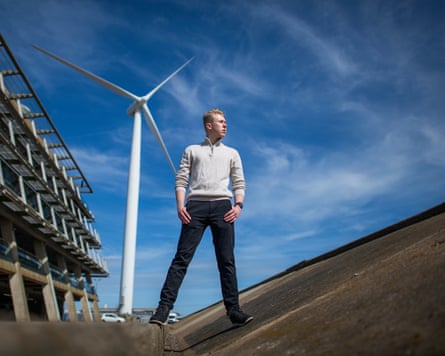
I was saddened by Antonia Shipley’s excellent piece about the young people being encouraged to train for careers in the green energy sector, only to leave college with no job prospects. Lucinda Everett, newsletters team
-
Ahead of a sweltering summer of sport, the Guardian has launched the fortnightly Hotspot newsletter, which covers how the climate crisis intertwines with all of the sports we love. Sign up here. Patrick
-
Lucy Knight has spent a month consuming all things trad wife to understand what it is about the jam-making, couture-wearing women people can’t get enough of. An entertaining, illuminating read. Lucinda
-
I was gripped by this tale from mountain climber Lucy Shepherd about how she learned to trust her gut while on a climbing trip in Tajikistan. Patrick
-
A fascinating read on how large language models could change the way humans speak, and even think – “encouraging us to talk like bosses barking orders”. Lucinda
Sport

Football | Lauren Hemp scored the sole goal in England’s 1-0 win against Spain as the Lionesses maintained their perfect record in the 2027 Women’s World Cup qualifiers.
Football | A second-half Ousmane Dembélé double gave PSG a 2-0 win at Liverpool, and a 4-0 victory on aggregate, in the Champions League quarter-final second leg.
Cricket | England Test captain Ben Stokes has played down suggestions of a disagreement between himself and head coach Brendon McCullum.
The front pages
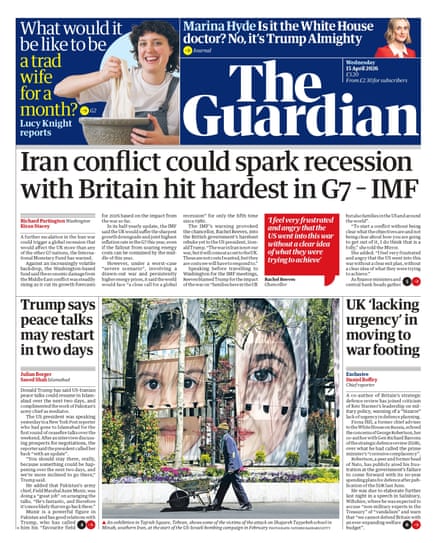
“Iran conflict could spark recession with Britain hit hardest in G7 - IMF,” is the splash on the Guardian on Wednesday. “No exit plan, no idea,” says the Mirror. “UK economy takes triple hit from Iran war,” has the i, while the FT runs with: “Wall St bank earnings shatter records as traders thrive on Iran war volatility.” “‘We cannot defend Britain with an ever expanding welfare bill’” is the lead story at the Mail, as the Times opts for: “Reeves dashes hopes of boost to defence funding.”
“‘Wake up’ PM and honour heroes hurt in line of duty,” says the Express. “Labour set to lose control in Wales,” has the Telegraph. “Yes yes yes Minister,” writes the Star, while the Sun asks “Who wants to be a billionaire?” Finally, the Metro with: “Cheers, Timmy!”
Today in Focus
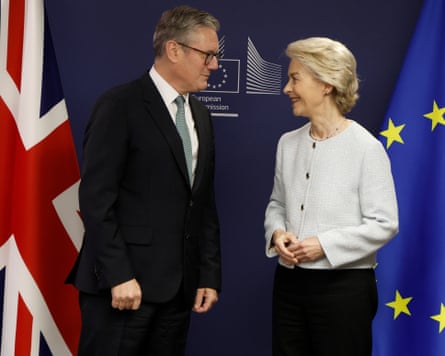
Is the EU back in vogue?
This week, the Guardian reported that Labour is planning to bring in new legislation that will forge closer ties between the UK and the EU. Nearly 10 years on from the Brexit vote, the Guardian’s senior correspondent Lisa O’Carroll speaks to Helen Pidd about what a UK-EU reset would look like.
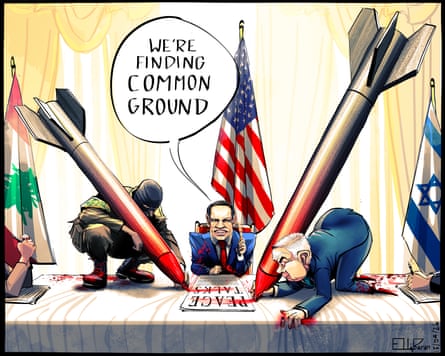
Cartoon of the day | Ella Baron
The Upside
A bit of good news to remind you that the world’s not all bad

In 2024, artist and film-maker Steve McQueen visited the Chelsea flower show’s Grenadian pavilion. The beautiful plants he saw, from an island that has experienced such trauma, “felt like camouflage to questions that should be asked”.
That summer, he travelled to Grenada and photographed the island’s plants as a way of exploring their connection to that trauma. He has now published them in a book, Steve McQueen’s Bounty.
“[These plants] have been constant witnesses of turmoil and upheaval,” says McQueen. “Sometimes the most horrific things happen in the most beautiful places. That’s the perversity of life.”
Sign up here for a weekly roundup of The Upside, sent to you every Sunday
Bored at work?
And finally, the Guardian’s puzzles are here to keep you entertained throughout the day. Until tomorrow.


