What the new US sanctions on Iran mean for European businesses
The US has unveiled a sweeping expansion of secondary sanctions intended to sever Iran's remaining links to the global economy, warning that companies anywhere in the world that keep trading with Tehran risk losing access to the dollar system.
Washington is effectively asking every firm on the planet to choose between Iran and the American financial system.
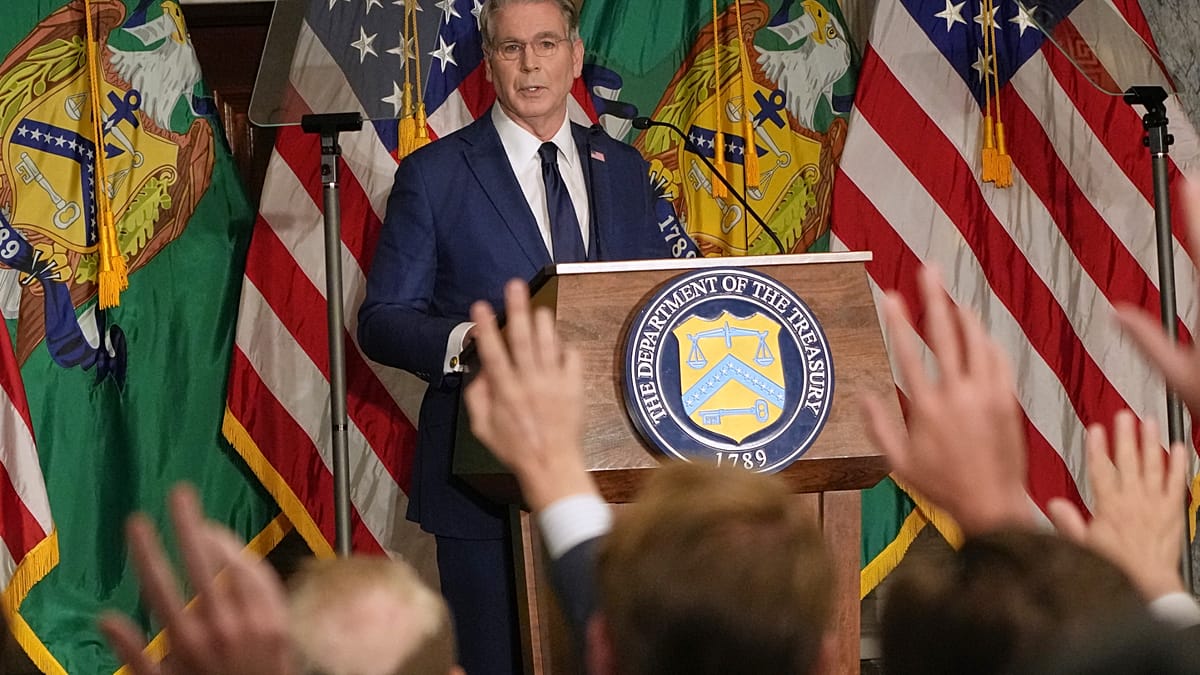
At a US Treasury press conference on Monday, Scott Bessent laid out a campaign he called an "economic onslaught" against Iran's financial connections, and said he already expects "an announcement of a major financial institution being sanctioned by the end of this week".
The plan, dubbed Operation Economic Outcast, follows Bessent's warning on Sunday of an "economic D-Day" for Tehran.
The US Treasury designated close to 60 companies, individuals and vessels across several jurisdictions, including Chinese nationals, and suspended licences that had permitted limited dealings with Iran.
More significant for foreign businesses is the widening of secondary sanctions into shipping, aviation, gold, technology and digital assets, alongside the existing focus on oil.
Any entity laundering money on Iran's behalf will be removed from the dollar system, Bessent said, adding that "no one is above" the measures when asked whether they would extend to China.
The US Treasury Secretary declined to set a compliance deadline but said Washington does not have infinite patience, while US President Donald Trump telephones world leaders with requests to halt trade with Iran.
Crucially, the US Treasury stopped short of penalising any third country outright, holding the toughest blow in reserve during what it called a "cure period".
Iran vowed to retaliate and said it expected major trading partners to resist Washington's pressure.
Europe's direct exposure is very modest
European companies have little left to lose in terms of trade with Iran.
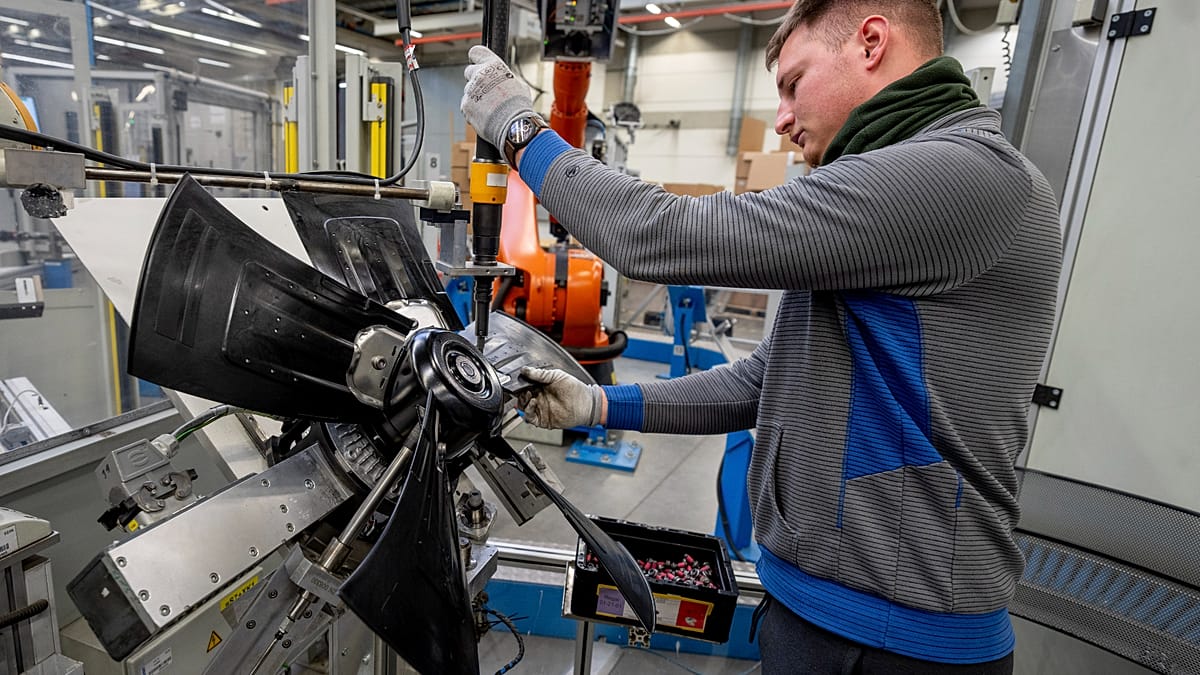
According to Eurostat, EU trade volume in goods with Iran was worth only €3.72 billion in 2025, of which €2.97 billion were European exports, about 0.1% of what the bloc sells abroad and down from a peak above €27 billion back in 2011.
However, what remains is concentrated.
Germany accounts for roughly 32% of EU-Iran trade, Italy 16% and the Netherlands 15%.
European exports are mostly pharmaceuticals, machinery and medical equipment, categories often covered by humanitarian exemptions, while imports are dominated by pistachios and other food products.
For these reasons, European markets took the news calmly on Tuesday morning.
At the time of writing, both the Euro Stoxx 50 and the broader pan-European Stoxx 600 traded around 0.2% higher.
The UK's FTSE 100, Germany's DAX 30, France's CAC 40, Italy’s FTSE MIB, the Netherlands' AEX and Switzerland's CH20 were all up between 0.1% and 0.3% with the German index leading.
The real risk for Europe sits in the 'plumbing'
The greater danger is not Iranian trade but the reach of US enforcement itself.
Banks, insurers, shipping companies and commodity traders handle transactions for clients across dozens of countries, and it is exposure to a sanctioned counterparty elsewhere, rather than business directly in Tehran, that tends to trigger penalties.
The precedent is unforgotten in European boardrooms.
BNP Paribas paid a record $8.9 billion (€7.6bn) in 2014 and pleaded guilty to criminal charges for processing transactions involving Iran, Sudan and Cuba, then lost the right to clear dollars through its New York office for a year.
European firms are also caught in a legal bind.
The EU's Blocking Statute bars companies from complying with US sanctions on Iran unless the Commission authorises it, and the European Court of Justice has ruled that firms terminating Iranian contracts must justify the decision on grounds other than American pressure.
In practice, most have chosen the US dollar since 2018, and this week gives them little reason to reconsider.