
German economy grows faster than estimated as exports rebound
Europe's biggest economy expanded by more than expected between April and June, driven by strong exports, despite the disruption caused by the Iran war. Business sentiment also improved across every major sector.
Published on 25/08/2026 - 12:07 GMT+2
The German economy expanded more than previously thought in the second quarter.
According to revised data from the Federal Statistical Office, gross domestic product grew by 0.3% from April to June compared with the first three months of the year. An initial estimate in July had put growth at 0.2%.
Year on year, GDP increased by 1%, revised up from a preliminary estimate of 0.9% and up from a 0.8% in the first quarter.
The revision suggests that the German economy is coping with the energy shock unleashed by the Iran war and the closure of the Strait of Hormuz better than expected.
“The German economy is maintaining the growth momentum seen at the start of the year," said Ruth Brand, president of the Federal Statistical Office. "As in the first quarter, growth was primarily driven by the positive development of exports," she added.
Exports rose by 2.0%, while imports increased by 1.5% compared with the previous three months. Household and government consumption were both subdued, edging up by just 0.1% from the previous quarter.
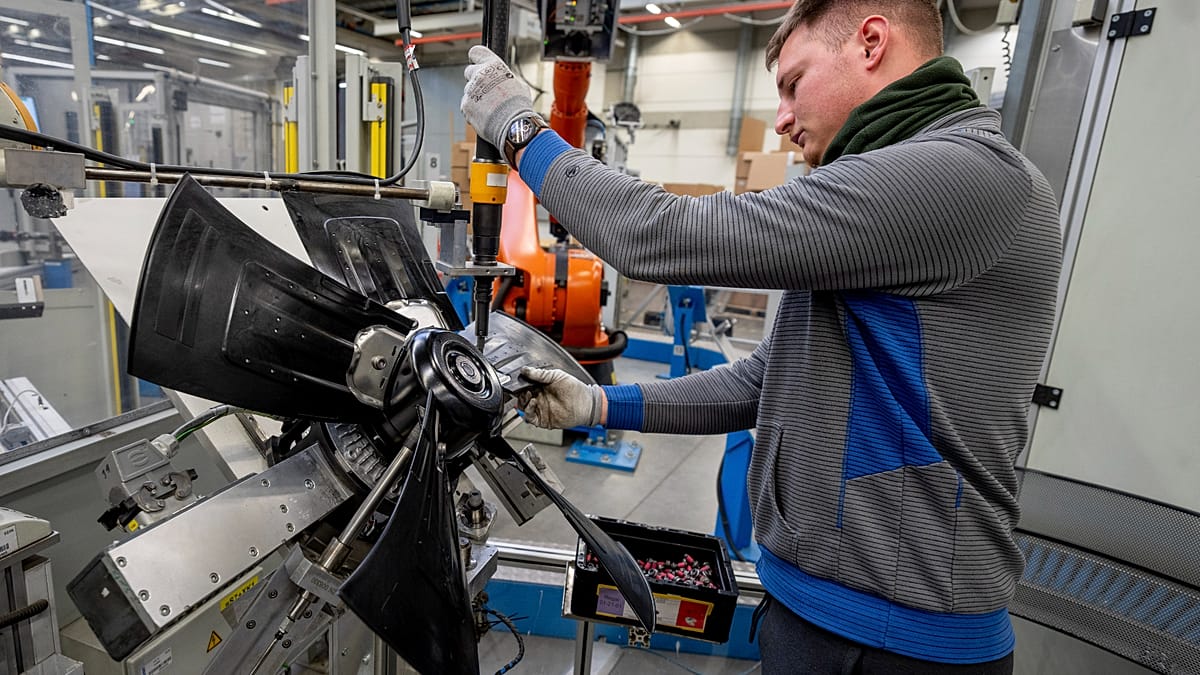
Manufacturing output increased by 0.9%, driven by activity in the chemicals and electrical-equipment industries. Activity also grew in most service sectors, while construction was broadly unchanged.
Financial and insurance services were the main exception, recording a 0.7% decline. Investment fell slightly, dragged down by a 1.4% decline in spending on machinery and equipment.
Separately, Germany’s Ifo Business Climate Index suggests that sentiment is improving across every major sector. The figure rose to 88.8 in August, from 86.7 in July, and was well above economists’ forecast of 87.2.
Together, the two releases offer stronger evidence of a recovery, although high energy prices and weak domestic demand remain important risks.
Germany’s economy has struggled to grow in recent years, held back by high energy costs, stronger competition from China and US tariffs.
There had been hopes of a stronger recovery this year, supported by Chancellor Friedrich Merz’s plans to increase spending on defence and infrastructure.
However, the war in Iran and the resulting rise in energy prices have weakened the outlook. The government now expects the economy to grow by just 0.5% in 2026, down from its previous forecast of 1%.