Tame the water or let it flow? New Zealand grapples with how to protect its braided rivers
When British settlers started building Christchurch city 170 years ago, they largely ignored the nearby Waimakariri River, which twists from the South Island’s alps towards the eastern shore.But rain and...
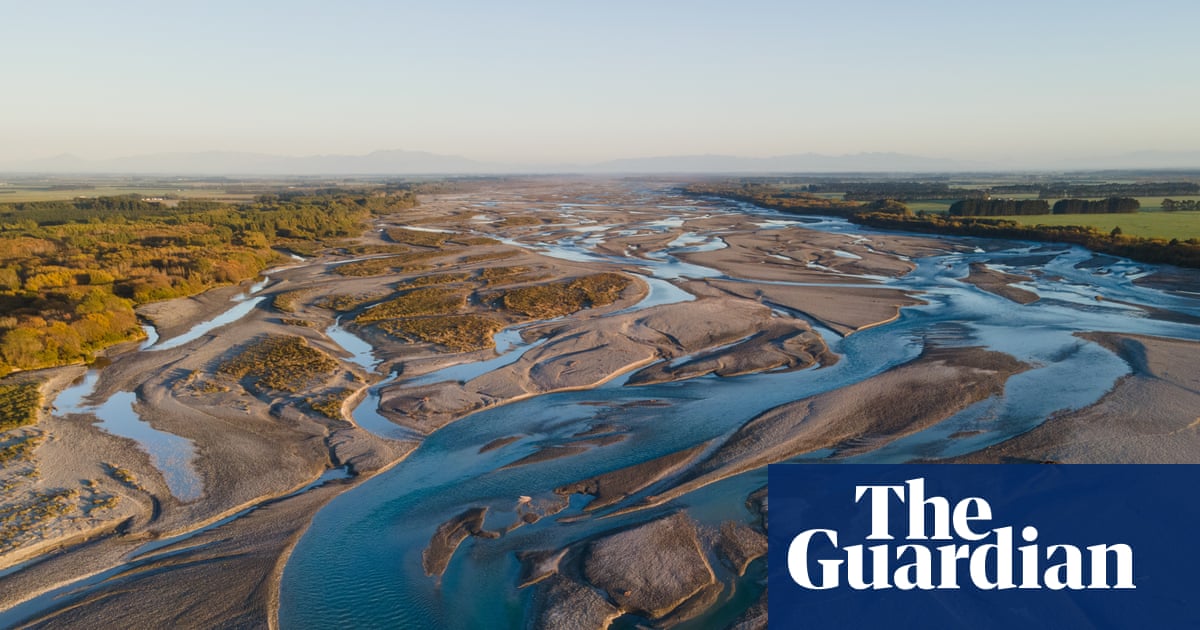
When British settlers started building Christchurch city 170 years ago, they largely ignored the nearby Waimakariri River, which twists from the South Island’s alps towards the eastern shore.
But rain and glacial shifts compelled the braided river – a globally rare form of river with many woven channels – to take on a new shape, occasionally flooding land and depositing tonnes of shingle in its wake.
By the 1920s, the Waimakariri was described as a “flood menace” in a report to authorities, one that showed a “deficiency of nature, which must be made good by the art of man”.
With that, the river was brought into submission, slowly hemmed in with stopbanks, exotic tree planting and gravel extraction. Now it requires endless maintenance to tame the river and prevent the risks of flooding to homes, infrastructure and the nearby airport.
“People say you shouldn’t be interfering with the river; the outcome if we don’t is worse,” Fred Brooks, a river engineer with the local regional council, Environment Canterbury, says.
“It has been intervened in so much at this point, you have to keep intervening.”
The Waimakariri is one of about 150 braided rivers across New Zealand, 60% of which are concentrated in the South Island’s Canterbury region. The unique river systems are found in just a handful of other places around the world, including Alaska, Canada and the Himalayas.
These systems face – and also pose – a complex set of challenges. They have been disrupted to make room for farming and allow communities to develop, but those changes are damaging ecosystems and species, affecting water quality and exposing communities to flood risk.
Concerns are growing over the future and resilience of braided rivers, prompting questions over how the country can live alongside them while preventing their further decline.
“Braided rivers are iconic – we use their iconography all over the place,” says Jo Hoyle, a river geomorphologist at Earth Sciences New Zealand. “And yet, are we really looking after them?”
Changing the course
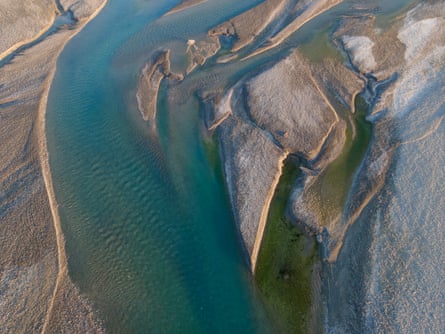
Unlike single-channel rivers, braided rivers are dynamic. They begin in alpine ranges, rushing down slopes towards the plains, where they carry gravel and carve out channels that split, weave and fan out into numerous strands. A braided river may forge out new channels across wide areas, while retreating from existing paths. A large dumping of rain might compel the river to return to its former ground.
Over time, Canterbury’s braided rivers have been deliberately narrowed. Their gravel beds have been gouged out for flood protection and to build roads, and water has been taken to feed intensive dairy farming.
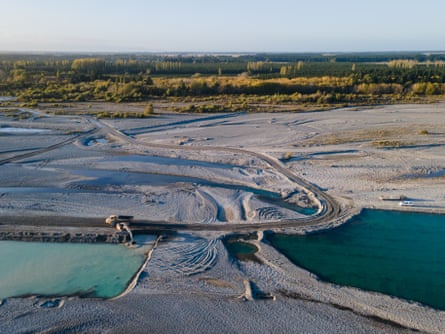
In the Waimakariri, diggers and trucks extract gravel most days to stop the river breaching the stopbanks and flooding tens of thousands of homes.
Due to the interventions, the Waimakariri may struggle to return to its natural state. But for the region’s many other rivers, a question looms: should the rivers be given more room to flow naturally?
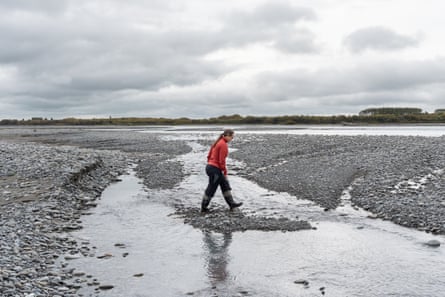
“It’s not an easy question to answer,” Hoyle says, as she wades through a small channel on the edges of the Rakaia – a large braided river, south of Christchurch.
“It’s not a feasible concept to just let rivers roam – so what we are asking is: how much room do these rivers actually need to be a river, to support ecological life and have enough room to flood without causing too much damage?”
When the river changes course, it leaves behind valuable land, which landowners quickly take over, a process known as agricultural encroachment. If the river tries to move back, the landowner might put in protection to stop it.
“And it will happen on the other side of the river, so there is this ratcheting in, and the river becomes narrower and narrower,” Hoyle says.
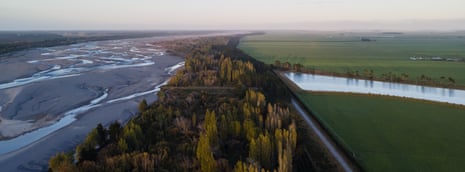
A study of nine of Canterbury’s rivers showed they had narrowed by 50% on average, and more than 90% in some segments.
Landowners are legally allowed to move in on braided riverbeds when the water retreats, but scientists and river advocates want that changed.
Deliberate narrowing is a problem for species, and it is setting people up for disaster from flooding, Hoyle says, adding that managed retreat should be explored.
“The land on either side is really valuable day-to-day, but it is really vulnerable to big floods,” she says.
‘You don’t even see fish’
Problems beneath the surface of braided rivers are also emerging, as communities report plummeting fish populations and pollution in their nets.
Rakaia River has built a reputation around its salmon fishing, so much so that an 11-meter-high statue of a salmon has become a town landmark. This year, the annual salmon fishing competition went ahead with a surprising caveat: no fishing allowed.
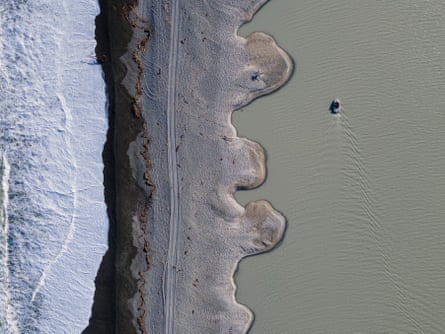
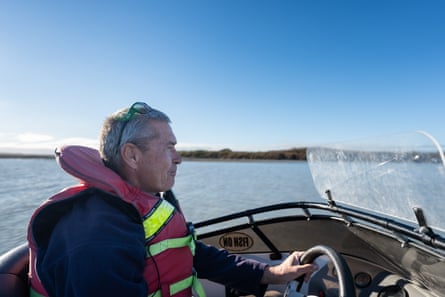
“There are less and less fish,” Chris Agnew, the competition’s president, tells the Guardian, steering his jet boat up the river mouth, while shags, silhouetted against the golden sky, crisscross above.
According to Fish & Game, there were just 608 salmon in the Rakaia during the 2024-25 season. In 1996, they counted more than 20,000.
Scientists are still trying to understand the population slumps, but there are theories: warming oceans and changes to the river, including sediment buildup, pollution and altered water flow, could be affecting breeding habits and behaviour.
River birds are also declining, says Frances Schmechel, biodiversity manager at Environment Canterbury. Introduced weeds create cover for predators, while exotic willow trees, which were planted to prevent riverbanks from eroding, are now “exploding” in some areas. Their dense root systems stop rivers from flowing and behaving naturally.
Stokell’s smelt, a tiny, once-abundant native fish, is now classified as nationally critical.
Bruce Kelly, a local angler has fished the Rakaia for 40 years. “At least before when you didn’t catch a fish, you would see a couple. Now you don’t even see them.”
Agnew worries about the community’s identity. As for the famous salmon statue: “Maybe it will become a monument to the past,” he says.
Braided rivers ‘fundamental’ to tribes
There are also deep concerns about the water quality of New Zealand’s rivers. Environment Canterbury found nearly a third of Canterbury’s lakes and rivers – especially near urban and agricultural areas – were deemed unsafe to swim in due to E coli and pathogens in 2025.
The decades-long decline of rivers and fresh water compelled South Island iwi (tribe) Ngāi Tahu to take a landmark case against the Crown in 2017, seeking to have their rangatiratanga – governing authority and self-determination – recognised over South Island’s waterways. A high court decision is imminent.
“Braided rivers are fundamental to how we exist as a tribe,” says Gabrielle Huria, the chief executive of Ngāi Tahu’s freshwater strategy, adding the tribe has watched the rivers change with horror.
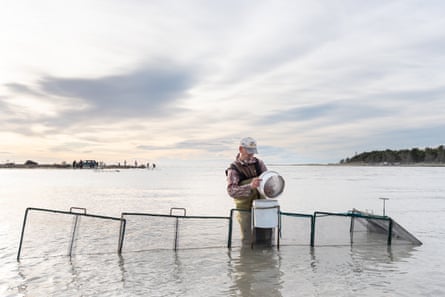
The tribe have long practised traditional food gathering along braided rivers. But Huria, like others, stopped when she discovered cow faeces in her fishing nets.
Managing rivers requires a rethink, Huria says, calling for a system that supports public health, river quality and business, while preventing further encroachment.
“We have a saying: ‘the river goes where it will’. We need to be a lot smarter.”
The minister for resource management, Chris Bishop, told the Guardian he was looking forward to seeing a select committee’s recommendations on the law allowing landowners to move in on riverbeds, while the minister for conservation, Tama Potaka, said the government was “committed to protecting and restoring” braided rivers.
Back at the Rakaia, Hoyle turns a river stone over in her hand. For years she has paid close attention to the rivers, but she fears the community has become detached from their plight.
“Having those discussions … around how we want to live alongside our rivers needs to happen,” she says. “The only way we will get change is making the community more aware of what the risks are and what we stand to lose.”