‘Sacrificed for the rich’: South America’s lithium fields reveal the human cost of electrification
Electrification has been hailed a “planetary ice pack” with the potential to ease global warming. How that electricity should be generated is a subject of fierce debate – but that’s not the only...
Electrification has been hailed a “planetary ice pack” with the potential to ease global warming. How that electricity should be generated is a subject of fierce debate – but that’s not the only concern.
Behind every electric car, wind turbine and battery are critical minerals mined from the ground, often in vulnerable nations far from the people who use them.
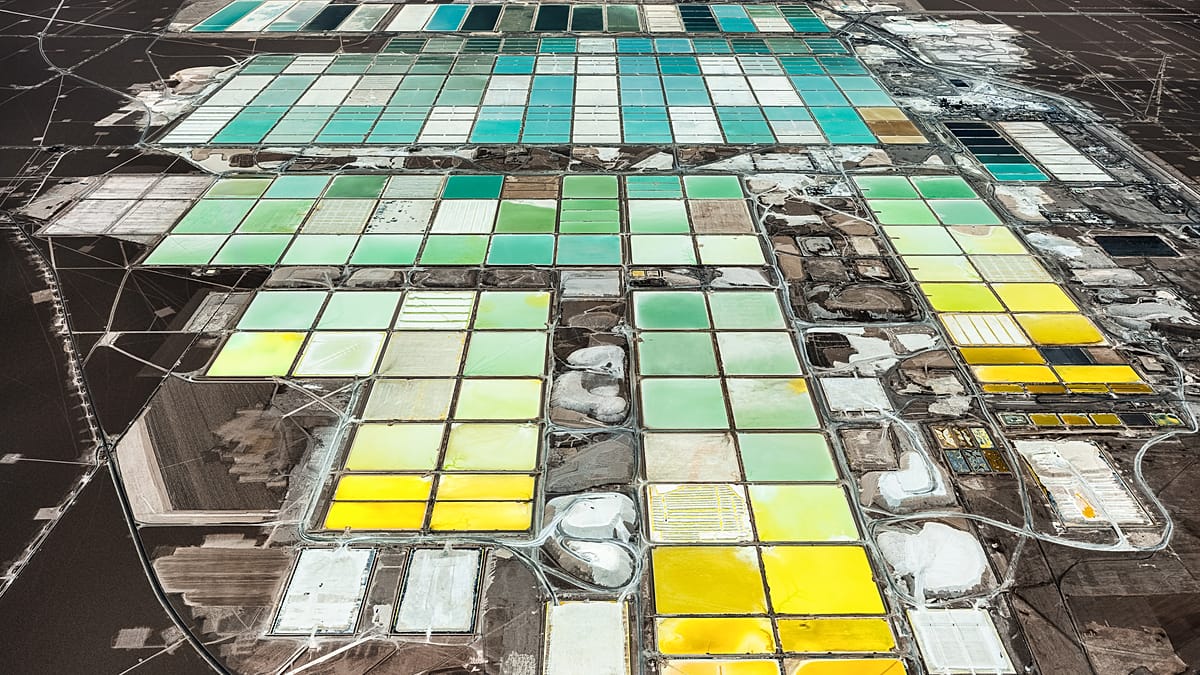
German aerial photographer Tom Hegen has documented the energy transition from the skies since 2021, from Chile’s lithium-rich Atacama Desert to the nickel-processing complexes of Sulawesi, Indonesia.
His new book, ‘The Mineral Age’, aims to close the gap between the products we buy and the places they come from, and to draw attention to human rights abuses that underpin the energy transition.
“From the ground, you can’t really see much. They’re fenced off, and it’s such a huge area you don’t get the overview… When I’m up in the air, the entire landscape opens up,” Hegen tells Euronews Earth in an exclusive interview.
What are critical minerals used for – and where are they found?
Critical minerals are essential raw materials used in modern technologies and defence.
Electric vehicles (EVs) and energy storage batteries wouldn’t work without lithium, nickel, cobalt and graphite.
Bolivia, Argentina and Chile – known as the ‘Lithium Triangle’ – together hold more than half of the world's estimated lithium reserves. Indonesia is currently thought to hold the largest recoverable nickel reserves at 42 per cent, while the Democratic Republic of Congo is home to around half of all cobalt, with one in six children in DRC mining communities victims of child labour.
EV motors and wind turbine generators also rely on rare earths for their powerful magnets. Rare earths refers to a group of 17 chemically similar metallic elements that are abundant in Earth’s crust but rarely found in concentrated, mineable deposits. China has the world’s largest reserves of rare earth elements at 50 per cent and plays a major role in their processing, at 76 per cent.
Copper, valued for its electrical and thermal conductivity, is used to carry energy through wiring, circuit boards and chips.
As clean technologies gain pace – alongside missile construction, AI data centres and consumer electronics, which also rely on critical minerals – demand for these materials is soaring.
The International Energy Agency (IEA) expects it to almost double by 2040 under current policies, with demand for lithium more than tripling. The ‘35-by-35’ Global Electrification Pledge being debated at COP31 could push those numbers yet higher.
According to forecasts by Benchmark Mineral Intelligence, at least 384 new mines will be needed globally by 2035 to meet demand for electric vehicles and energy storage batteries alone.
One 2022 study found that more than half of energy transition mining projects were on or near Indigenous peoples’ lands. Often, the places richest in critical minerals are also those most vulnerable to climate impacts like extreme weather, compounding the risks for local communities.
‘The legacy is forever’: The human impact of critical mineral mining
For those living in the shadow of South America’s lithium fields, the DRC’s cobalt and copper mines, and Indonesia’s nickel and tin operations, the dark side of our electric future is all too clear.
On the sidelines of COP31, Indigenous leaders are sounding the alarm: “They want to accelerate new technology and mining, but not at the speed of rights,” Indigenous activist Edson Krenak tells Euronews Earth.
“One of the doctrines created to lead this energy transition is called ‘just transition’, but it is not ‘just’ on the ground,” says Krenak, who is an advocacy coordinator at Indigenous-led nonprofit Cultural Survival. “We are seeing the rights of communities sacrificed, violated, for the rights of the rich… to have their so-called clean energy.”
Krenak’s people, from Minas Gerais in Brazil, are still living with the fallout of the deadly 2015 Mariana and 2019 Brumadinho disasters. When these iron ore tailings dams collapsed, they killed hundreds of people, unleashed heavy metals-laden toxic sludge that continues to poison survivors, destroyed livelihoods and dismantled traditional ways of life.
Now lithium mines are moving in: Krenak says communities in the Jequitinhonha Valley have reported dust, water contamination and blasting near schools and villages for years, while investors and authorities rely on impact assessments submitted by the mining companies themselves.
“The legacy is forever, because it usually takes 200, 300 years to recover the environment,” says Krenak. He adds that communities are rarely made aware that tailings dams, which store the waste leftover after minerals are extracted, remain and must be managed indefinitely after mining operations end. Hegen documents these human-made landforms in his book, with examples from the US to Spain to Chile.
‘We are part of the problem with our consumption’
Thousands of kilometres away, Europeans are shielding themselves from the energy crisis with solar, wind power and EVs. While this has helped to curb planet-heating emissions, moving from a fuel-based to mineral-based energy system comes with its own fallouts.
Krenak says he “fully supports the energy transition” – “There’s no doubt we need transformation,” he says, “but we also need transformation on the demand side”.
“Everyone who uses a phone, a laptop, an EV, whatever it is, we are part of the problem in a way with our consumption, and we should be aware that people in other countries suffer from mining these metals,” says Hegen, who hopes to spark discussion and rethinking through his photography.
How can we handle critical minerals more responsibly?
Hegen believes the energy transition is “the only way forward” but he urges against “repeating the mistakes we made in the past, where we exploited other countries for resources and other people suffered from it”.
While we can all play our part in curbing demand for energy and products, greater oversight and accountability is needed on the ground.
Although international governance of transition mineral mining has made strides in recent years, including through the G7’s 2025 Critical Minerals Action Plan to advance standards-based markets and the EU’s Critical Raw Materials Act, it remains fragmented and non-binding.
Intense pushback from China and Russia saw language on transition minerals excluded from the final COP30 text last year, leaving scant hope for this year’s deal.
“We need reinforcement of the regulations and the laws that exist in Brazil and many other countries to keep our community safe,” says Krenak, emphasising the need for independent assessments separate from the mining companies’ own reports.
Financial institutions with mineral investments could also add pressure by setting requirements on deforestation, hazardous waste management, social protections and remedying harms.
“There is no doubt: we must decarbonise our economies and the way we live,” Hegen writes in his book. “This requires a shift away from consumable fossil fuels, extracted and burned once, toward a system based on durable metals that can, and should, be reused.”
As well as stronger regulation, better enforcement and more transparent supply chains, the solution lies in improving product longevity and circular design.
“A phone is really hard to recycle. Batteries are really hard to recycle,” Hegen tells Euronews Earth. “Products should be designed today, even more so, so they can be recycled, because all these metals have been mined already.”
Hope may also rest in future innovations such as synthetic lab-engineered alternatives for critical minerals and specialised plants that naturally extract metals from the soil.