Israel escalates attacks on medics in Lebanon with deadly ‘quadruple tap’

When they received the call to respond to an Israeli airstrike in the city of Mayfadoun in southern Lebanon, most of the paramedics held back, having previously seen colleagues killed by double-tap attacks...
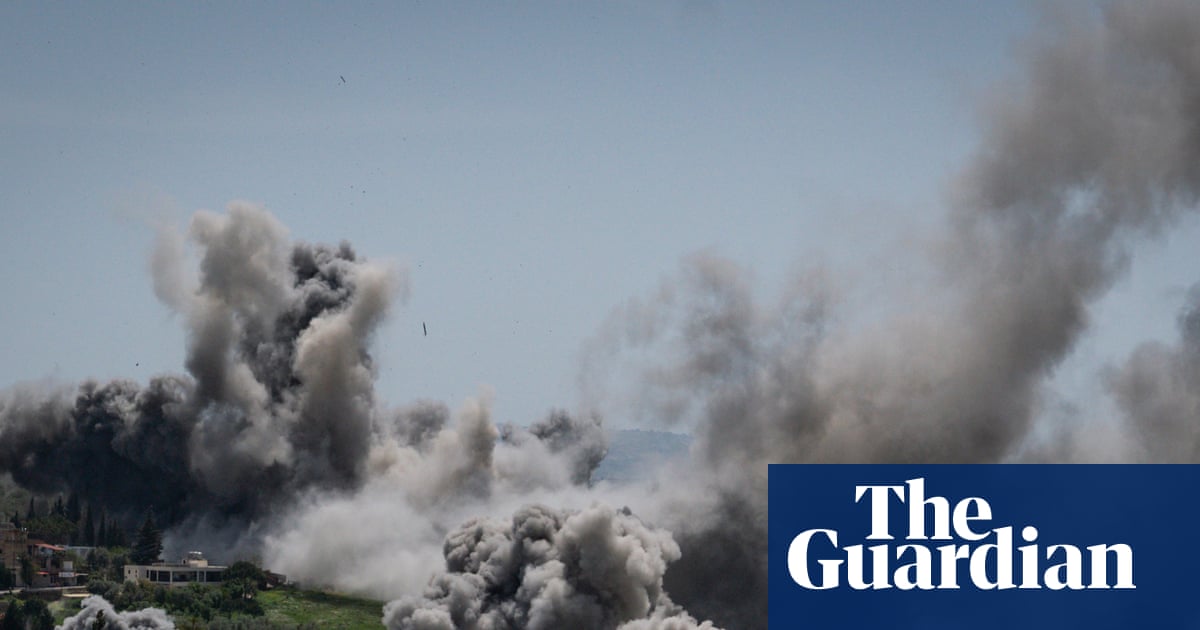
When they received the call to respond to an Israeli airstrike in the city of Mayfadoun in southern Lebanon, most of the paramedics held back, having previously seen colleagues killed by double-tap attacks targeting rescuers. But the medics from the Islamic Health Association (IHA) rushed to the scene.
By the time the other emergency workers arrived at the site, they found the IHA medics had indeed been caught in a second strike. They started evacuating their wounded colleagues, when their ambulances were in turn hit in two further attacks.
One of the paramedics covered his ears and screamed, convulsing in pain as shrapnel shattered the back window of the ambulance.
The rescue mission on Wednesday afternoon had turned into a nightmare as Israel carried out three consecutive strikes on three sets of ambulances and medical workers.
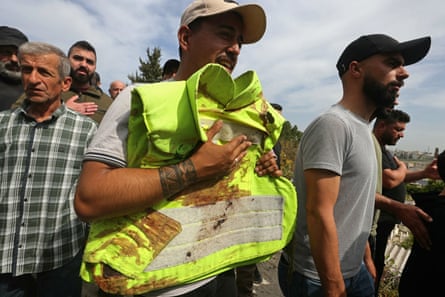
In total, the attacks killed four medics and wounded six more, from three different ambulance corps, according to medical sources. Three of the medics were from the Hezbollah-affiliated IHA and Amal-affiliated medical corps, while one was from the Nabatieh emergency services organisation. Under international law, all medics are protected and are considered non-combatants, regardless of political affiliation.
Rescuers in Lebanon have long grown wary of the double-tap attack, when Israeli forces target a location, wait until people gather to help survivors – and then strike again. Wednesday’s three-wave attack prompted the coining of a fearsome new term: the quadruple tap.
In a video taken by one of the first responders at the site, rescuers are seen loading two wounded people into their ambulances when a bomb lands next to their car.
Paramedics rushed to extract the driver, who is motionless and limp as they pulled him from the ambulance, which is splashed with blood. “Oh God, oh God,” the man filming can be heard saying. They carry two more blood-covered medics out of their vehicle and on to stretchers.
Among the paramedics killed was Fadel Sarhan, 43, who is survived by his eight-year-old daughter.
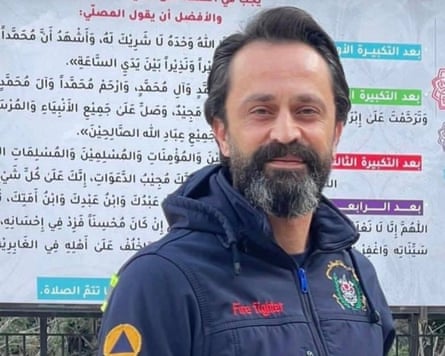
“Fadel was a very loved person. He had a bold personality, but at the same time, he was emotional. He was well liked and responsible,” said Ali Nasr al-Deen, the head of the Mayfadoun civil defence centre who grew up with Sarhan.
“He used to feed the cats and dogs. He would bring pet food from Beirut so they wouldn’t go hungry. He was that kind of person, caring and attentive. It’s a huge loss for us,” said Nasr al-Deen.
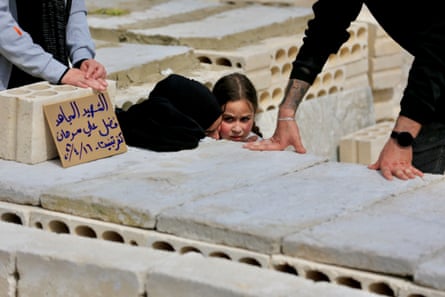
Medics mourned their colleagues on Thursday at funerals in Nabatieh, a city near Mayfadoun. Such events have become an increasingly common occurrence, with healthcare workers killed by Israeli bombings on a near daily basis.
Mohammed Suleiman, whose 16-year-old son, Joud, was killed while on duty as a first responder by an Israeli strike weeks earlier, joined his peers in burying another one of his friends on Thursday. A few hours after the funerals, Israel carried out another wave of airstrikes on Nabatieh.
Israel has so far killed 91 healthcare workers and wounded 214 more in Lebanon since the Israel-Hezbollah war started on 2 March. It has given little justification for its repeated attacks on medical infrastructure and workers, besides accusing Hezbollah of using ambulances and hospitals to transport fighters and weapons – without providing evidence for the claim.
Double taps have become an increasingly common tactic, with medical bodies in Lebanon documenting how Israel will wait for first responders to show up to the site of a bombing before attacking again.
The Lebanese ministry of health accused Israel of deliberately targeting ambulance crews and condemned its attacks against medics. “Paramedics have become direct targets, pursued relentlessly in a blatant violation that confirms a total disregard for all norms and principles established by international humanitarian law,” the ministry said in a statement.
The Israeli military did not immediately respond to a request for a comment.
In the video taken of the quadruple tap on Wednesday, the frame was frozen on the interior of the ambulances, as the Nabatieh emergency servicea highlighted that the vehicle clearly contained no weapons.
A few hours after Israel bombed the ambulances outside Nabatieh, it also bombed the vicinity of the governmental hospital in Tebnine, south Lebanon. It was the second time in two days that Israeli bombings damaged the healthcare facility – the only remaining public hospital in the area. The strikes injured 11 workers in the hospital, as well as damaging the emergency department, according to the World Health Organization (WHO).
A video of Tebnine hospital showed workers trying to clear the emergency department from shattered concrete and debris after a strike on 14 April blew in the windows of the facility.
“I reiterate the call for the immediate protection of health care facilities, health workers, ambulances and patients. There must be safe, sustained and unhindered humanitarian access across Lebanon,” said the WHO head, Tedros Adhanom Ghebreyesus, commenting on the strike in Tebnine.
An ambulance in Tebnine was also struck on Thursday, leading to the critical injury of two medics, according to the Lebanese ministry of health. As healthcare workers watched their colleagues and friends being killed by Israel, the mental toll was becoming almost too much to bear.
“We have to go to places to rescue people, but then we get double tapped,” said Abbas Atwi, the head of the IHA’s emergency department in Nabatieh, shortly after a medical centre was targeted in March, killing his friends and colleagues. “But we will stay and keep going, we will not leave.”