EU deployed its biggest wildfire response. Is it what Europe needs?
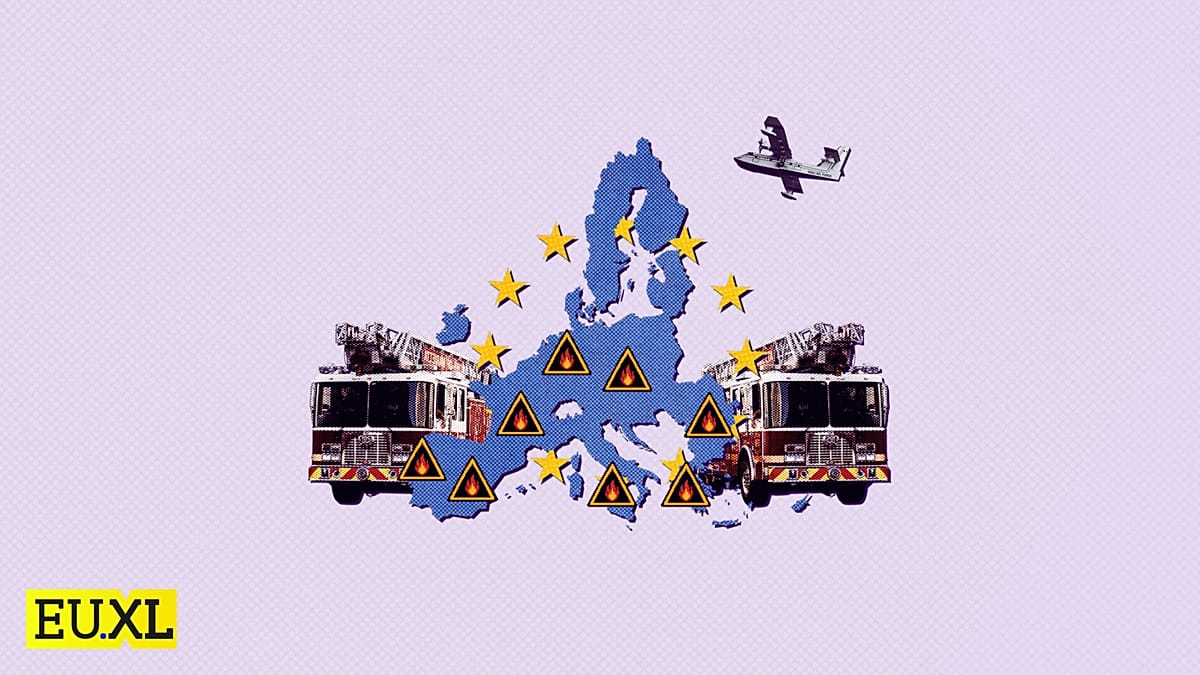
As wildfires rage across southern Europe, the EU has deployed its largest shared firefighting force. But the crisis exposes a growing gap between emergency response and wildfire prevention. Watch the video.
Published on 05/08/2026 - 8:30 GMT+2
Europe is burning again, exposing the limits of the EU's emergency response system. Although firefighting capacity has grown, progress on reducing wildfire risk by making landscapes less flammable has been slower.
EU countries like Portugal and France activated the EU Civil Protection Mechanism. France received four rescEU planes from Sweden and Cyprus, while Portugal was reinforced with 118 firefighters and 45 vehicles from Spain, plus three rescEU aircraft from Italy and Spain.
“We have regular wake-up calls, but this one is the biggest since couple of years" said Commissioner for Equality, Preparedness and Crisis Management Hadja Lahbib, adding that "Europe stands together."
According to the European Forest Fire Information System (EFFIS), the EU had recorded 1,407 wildfires by 30 July 2026, burning almost 435,000 hectares and releasing an estimated 17.98 million tonnes of CO₂, below last year's record season, but still above the 20-year average. Forecasters warn the risk isn't over, with "very extreme conditions" flagged across Portugal, Spain, France, Italy and Greece.
The Commission says this summer's response is its largest yet: 777 firefighters from 14 countries, 22 planes, and 5 helicopters pre-positioned before fires broke out, the highest participation since the programme launched in 2022.
Still, Brussels can only coordinate and fund; the frontline response remains national.