Fire tornadoes have reached Europe: What makes them so dangerous?
Published on 05/08/2026 - 10:26 GMT+2 Europe's record-breaking hot and dry summer is fuelling major wildfires, with France and Greece among the countries battling large...
Published on 05/08/2026 - 10:26 GMT+2
Europe's record-breaking hot and dry summer is fuelling major wildfires, with France and Greece among the countries battling large blazes. Scientists say some of these fires are producing an unusual and dangerous phenomenon known as a fire whirl, or fire tornado, in which intense heat and wind combine to create spinning columns of flames and smoke.
According to wildfire researcher James Urban, assistant professor at Worcester Polytechnic Institute in Massachusetts, this extreme fire behaviour has been observed across Europe in recent days.
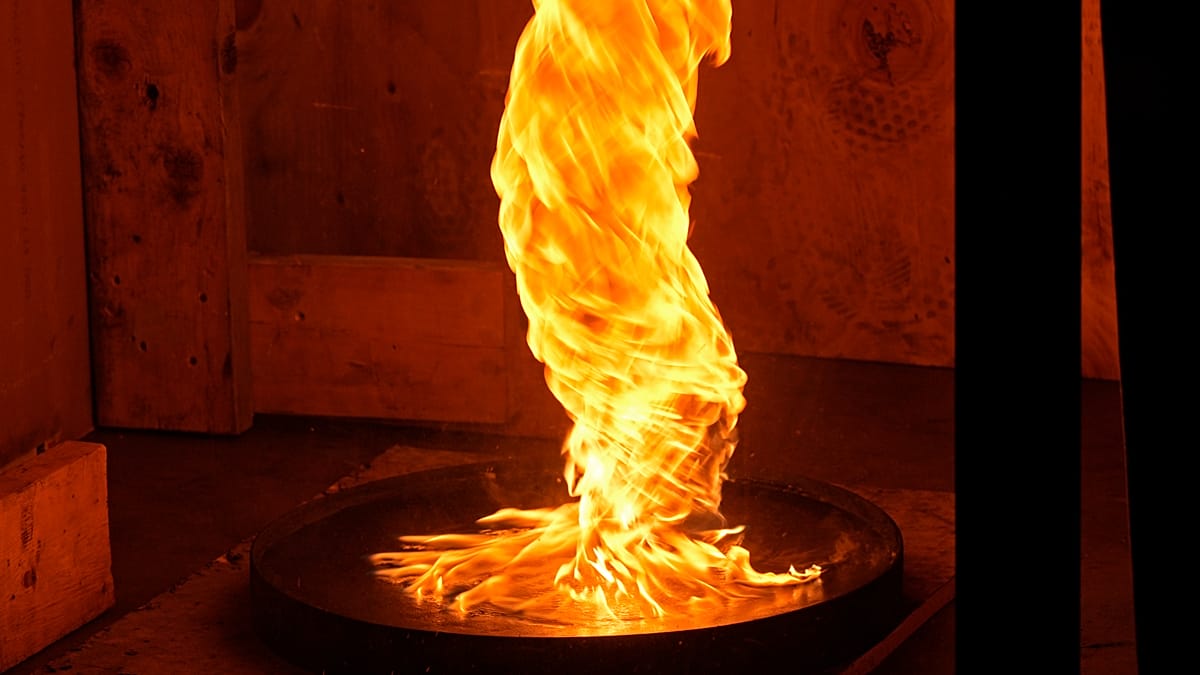
To better understand the phenomenon, researchers at Worcester Polytechnic Institute in the US recreated fire whirls under controlled laboratory conditions. Urban says the spinning motion develops when wind interacts with the terrain and the shape of the fire.
How do fire tornadoes form?
"So, fire tornadoes, or as we call them, fire whirls, are a scenario in which a fire has a strong rotational flow around it, and sort of a strong rotation flow around it. And that can be caused by the wind and interactions with the local topography, as well as the shape of the fire line itself. These fires are associated with extreme fire behaviour because they can allow the fire to burn more intensely and then also change direction rather quickly, which can be a major hazard to the fire service responding to the fire."
Urban explains that fire whirls form when air is drawn into a fire from different directions. Obstacles such as vegetation, nearby fires or geographical features can force that airflow into a spinning pattern, increasing the fire's intensity.
"In a fire whirl, or commonly called a fire tornado, the fire entrains in air from the sides. And what can happen is through obstructions with, you know, other fires or obstacles such as vegetation or local geographical features, the flow can become constrained and create a recirculation pattern, causing it to circulate and sort of spin and that can allow the fire to burn more rapidly and get the fire ... the flames closer to the ground – allowing them to burn the vegetation more quickly – resulting in more intense heat release and a more intense fire."
What makes fire tornadoes so dangerous?
One of the greatest dangers is the ability of fire whirls to throw burning debris far ahead of the flames, allowing fires to spread unexpectedly and potentially trapping firefighters.
"Fire whirls can lead to a phenomena called firebrand spotting, where burning debris is launched ahead of the fire front and this can lead a very rapid fire spread, which is hazardous to the fire service, as well as nearby communities. But also, it can cause the fire to jump, essentially, over the fire service, increasing the chances for them to be trapped. And so when firefighters are operating in conditions where there are fire whirls occurring, they have to be very careful."
Urban believes these events reflect a broader shift in wildfire behaviour as climate conditions become more favourable for extreme fires.
Authorities across southern Europe continue to battle major wildfires as prolonged heat and dry conditions increase the risk of further outbreaks. Extreme heat, driven by human-caused climate change, increases the likelihood and intensity of wildfires.