Tuesday briefing: What challenges would Ed Miliband face as chancellor?
Good morning. Does anybody else remember Reasons to Be Cheerful? The podcast was hosted by radio presenter Geoff Lloyd and Ed Miliband, during what has been unkindly described as his wilderness years, after...
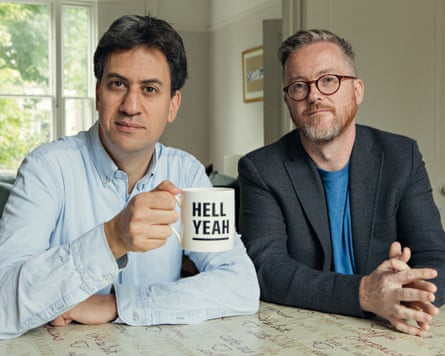
Good morning. Does anybody else remember Reasons to Be Cheerful? The podcast was hosted by radio presenter Geoff Lloyd and Ed Miliband, during what has been unkindly described as his wilderness years, after he stepped down as Labour leader in 2015.
I flipping loved that podcast. It started in 2017, soon after my son was born, and I have fond memories of driving across the country with a pooping infant, listening to Ed and Geoff discuss ideas to fix the world. It gave me hope my kid might grow up into a half-decent future.
Barely a decade later, Miliband is back on political centre stage. Everywhere you look there’s a briefing from this former chief adviser, or that union leader, or an ally of Larry the Cat saying that Andy Burnham must make him chancellor, or that, if he does, it will bring unmitigated disaster to the country.
But here on First Edition we thumb our noses at conventional Westminster reporting. Instead, I’ve gone back through the Reasons to Be Cheerful archive, and asked a few regular podcast guests about the challenges facing the next occupant of No 11 Downing Street. First, this morning’s headlines.
Five big stories
-
UK politics | Nigel Farage has been accompanied by his friend George Cottrell, a convicted fraudster, to numerous Reform events and fundraisers and on a trip to Abu Dhabi, raising questions about the claim that he has no official role in the party.
-
World Cup | Donald Trump said he personally asked Fifa president Gianni Infantino to review the red card shown to USA striker Folarin Balogun, saying he believed the dismissal was unfair but insisting he did not pressure football’s governing body to overturn the suspension.
-
UK news | One of the UK’s most horrific and shocking child custody scandals was collectively ignored for decades because the victims were working-class boys from the north of England, a government minister has said.
-
Immigration | A Jamaican man who has lived more than half his life in the UK is facing deportation to his home country in one of the first cases since new anti-immigration measures were announced in last week’s immigration bill.
-
Israel | A British charity is funding a religious school at the heart of expansion plans for the illegal Israeli settlement in the Palestinian city of Hebron.
In depth: ‘The idea he’s going to be fiscally irresponsible is just stupid’
No wonder Andy Burnham prefers a Reddit AMA when every Westminster political reporter is gripped by feverish speculation about who the next prime minister might pick as his dance partner.
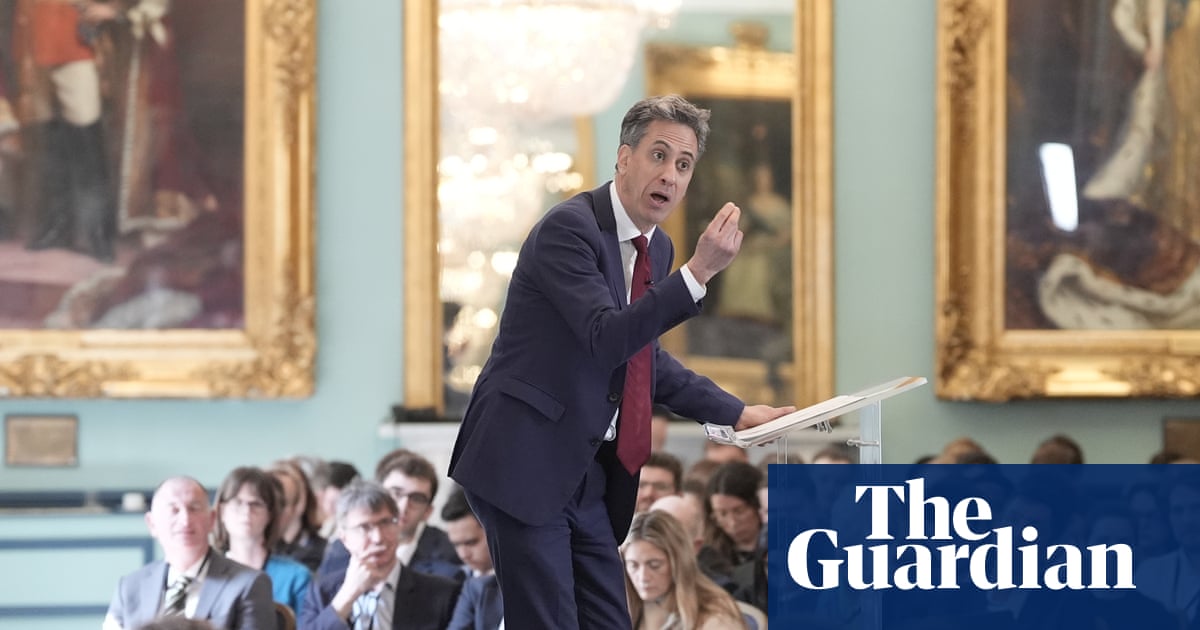
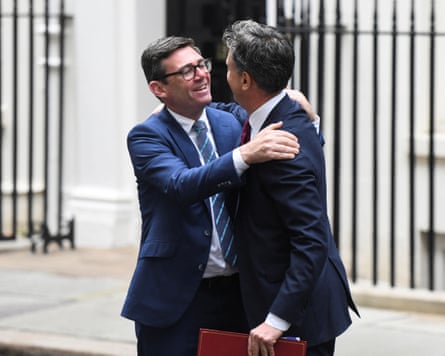
Energy secretary Ed Miliband remains the clear frontrunner – indeed he’s already understood to be developing economic policy for Burnham, a close ally. Shabana Mahmood has been touted as Miliband’s closest rival, although she’s apparently keen to remain in the Home Office (we considered her asylum reforms last week); New Labour veteran Pat McFadden and foreign secretary Yvette Cooper have also been mooted.
But the Treasury is a department not an individual – and one of near-mythic status across Whitehall, notorious for rigid orthodoxies and short-term bean counting. That’s precisely the point that my esteemed colleagues on the leaders desk made last week, when they endorsed Miliband for the role: “A government that wants to reshape the country needs a powerful finance minister whose instincts are to repurpose the Treasury, not just reassure it.”
Take on the Treasury
I went first to Jonathan Portes, a professor of economic and public policy at King’s College London, who joined Reasons to Be Cheerful in 2018 to talk about shaping a 21st-century welfare state. Like Miliband, Portes is a former Treasury adviser.
There are two reasons why the department is unusually powerful in the UK, he argues: many other countries separate out the budgetary function from longer-term planning and growth strategy; and, second, “we’re exceptional in the weakness of No 10.”
“The centre of government ends up, in many respects, being the Treasury,” Portes tells me, “because No 10 is a glorified prime minister’s office, rather than a department.”
Portes accepts the criticism of the “institutional mind” of the Treasury but says the department is also very political. “And if it has a strong chancellor who tells them what to do, it is much better at delivering than other departments.”
The important question is whether Miliband and Burnham are sufficiently aligned to have a good partnership. Looking at other successful teams that “worked until they didn’t” – such as Lawson and Thatcher, or Blair and Brown – Portes thinks this is not necessarily a left-right political question. “Those partnerships all worked because you had people who were strong-minded, they didn’t agree about everything, but they were aligned enough.”
There have been briefings aplenty that Miliband is insufficiently pro-business; that his radicalism will spook the City. “Obviously nonsense, rightwing propaganda,” says Portes. “He is clearly capable. The idea that he’s some sort of communist or that he’s going to be fiscally irresponsible is just stupid.”
The notion that Miliband’s appointment would send the bond markets into a tailspin (my First Edition colleague Michael Segalov wrote on the bond vigilantes here) is “not a serious argument”.
“The government has a bunch of fiscal rules, and they’ve said they’re going to stick to them. If you want to know what the markets are saying, you look at actual money, prices, interest rates … And we can see that there’s no sense of panic.”
Look north
It’s become a recent irritation of mine that London Town Media keep talking about Manchester as The North, as though it’s Lerwick, when for the likes of us living in Glasgow, it’s Down South.
Sarah Longlands, chief executive of the Centre for Local Economic Strategies, and based in Manchester (AKA The Middle) indulges my moan. She gently explains that The North is “a state of mind”, reflecting what Burnham calls his “place rather than party” approach. No wonder she was invited back after she first appeared on the pod in 2020 to talk about why Westminster doesn’t always know best.
“One of the big questions for any incoming chancellor is how to work better with devolved regions and the nations,” she tells me. The funding frameworks for, say, Manchester or the West Midlands comes with “a huge burden of accountability, as they rightly should”.
“But that burden is set by central government,” she says. “More care needs to be taken with how we manage the relationship between the centre and those devolved nations and regions to make sure that we’re not putting such a burden on the process that you can’t actually deliver.”
That relationship was tested to breaking point during Covid; we all remember Burnham himself raging on the steps of Manchester Central Library at the UK government’s lack of financial support. “A future chancellor has to rebuild that,” says Longlands, “because the Treasury has taken such a role dictating the terms of devolution”.
With the prospect of No 10 North shifting the dynamic, Longlands says, “they need to decide what kind of relationship they want to have. That can’t just be about collecting receipts.”
Green growth
Much of the opposition to Miliband as chancellor has focused on his commitment to net zero; specifically, his moratorium on additional drilling licences for oil and gas in the North Sea.
Although a number of union leaders have endorsed him, Unite’s Sharon Graham has said his fierce adherence to climate targets would put a “noose around the neck” of job creation. Over the weekend, senior figures in the Trump administration reportedly cautioned against appointing Miliband. (The US president has previously described net zero as “stupid”.)
The Guardian’s energy correspondent, Jillian Ambrose, was invited on the podcast in 2022 to chat about clean energy. “First, the nagging issue of the North Sea must finally be agreed between the energy department and whoever moves into No 11,” she tells me. “A greenlight for the Jackdaw and Rosebank fields would not be a breach of the Labour party’s manifesto, but it would be viewed by many in the climate movement as a betrayal. Rachel Reeves was reportedly in favour of the extra billions of tax revenue and economic productivity that these projects offer, but Miliband may be willing to wring more from other areas of the economy to do without the green backlash.”
She references that other byelection on the same night as Makerfield – in Aberdeen South, when the Scottish Tories enjoyed a surprise win after deliberately turning the contest into a “referendum” on oil and gas. “Voters across Britain’s former industrial heartlands have already turned against Labour’s net zero agenda, but alienating Labour’s progressive base too by failing to be ‘green enough’ could spell electoral disaster”.
And there’s a wider green dividend from a Miliband chancellorship. “The economic debate over ‘green v growth’ could finally be put to rest by a minister who believes that there needn’t be a choice,” she argues.
“A green economic agenda is a ‘growth agenda’, in Miliband’s view, and the opportunity to prove this on an economy-wide scale will be irresistible, especially to a politician so keenly aware of their climate legacy, developing in real-time”.
What else we’ve been reading
-
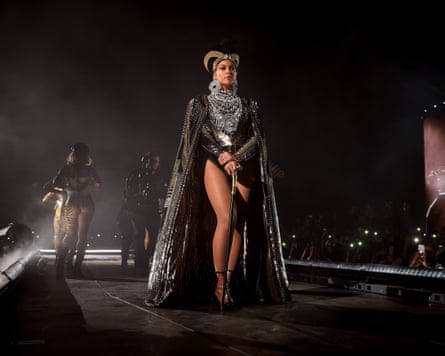
From Britney to Oasis, Guardian writers have been remembering what it was like to see legendary performances in the flesh. Patrick
-
I enjoyed Bethan McKernan’s canny analysis of how Burnham’s devolution promises have landed with the nations beyond England. Libby
-
Amelia Gentleman interviews Jane Ouartsi, who was seriously injured after being hit by a Lime bike, about how to improve e-bike safety. Patrick
after newsletter promotion
World Cup 2026

On the pitch
Portugal 0 – 1 Spain | Mikel Merino’s goal in the first minute of second-half injury time earned Spain a well-deserved 1-0 win against Portugal and a place in the quarter-finals.
USA 1-4 Belgium | The USA are out of the World Cup after a comprehensive defeat at Seattle Stadium, which prompted a gleeful response on the Belgian team’s official social media channels.
Off the pitch
Donald Trump | USA striker Folarin Balogun’s reinstatement on the pitch wasn’t enough to see them through. But ahead of the game, there was growing outrage that Balogun’s ban for a red card was waved after Donald Trump repeatedly lobbied Fifa to let him play the knockout tie. Uefa said it was “incomprehensible and unjustifiable”, and “crossed a red line”.
England | Thomas Tuchel called the standard of refereeing at the World Cup unreliable and erratic as he insisted England are capable of going all the way after their dramatic 3-2 victory against Mexico. If you want to relive Sunday one last time, Jonny Weeks has put together a photo essay on the thrilling game in the Azteca.
Brazil | The oblivion of defeat is always hard to swallow – particularly if you have already won the World Cup five times. Leander Schaerlaeckens has been picking through the aftermath of Brazi’s last-16 defeat to Norway and what it means for a country with such a proud footballing tradition.
Today’s fixtures
Argentina v Egypt, 5pm on ITV
Switzerland v Colombia 9pm on ITV
Sport
Tennis | British wildcard Arthur Fery continued his amazing run with an astonishing 7-5, 3-6, 4-6, 6-4, 7-6 (7) win against Bulgarian Grigor Dimitrov in the battle of two wildcards.
Cycling | Tadej Pogacar won stage three of the Tour de France near Barcelona, which took place without spectators due to the wildfire threat.
Cricket |With yet another heatwave on the way, Tanya Aldred has written the Guardian’s Hotspot newsletter about how trees can be used to keep cricket grounds protected from extreme temperatures. (Sign up here for our free newsletter covering sport and the climate crisis.)
The front pages
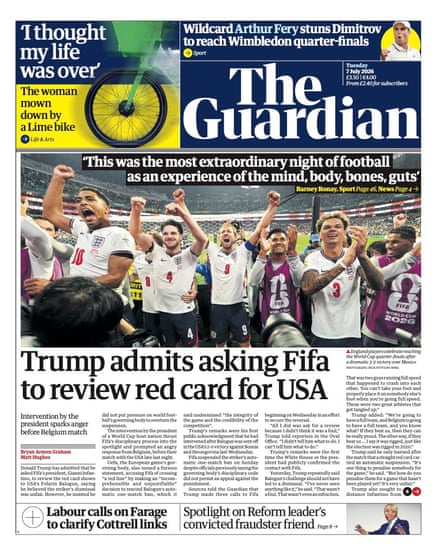
“Trump admits asking Fifa to review red card for USA”, is the Guardian’s front page today. The same story dominates other papers including the Mail, which says “Bend it like Trump: Fury over red card foul play”, the i Paper writes “Global outcry as Trump forces Fifa to change football World Cup rules to help the USA” and the Mirror’s take is “Foul”.
The Times leads with “No need to seek work for 100,000 with ADHD”, and the FT has “‘Battle in the sky’ will decide course of Ukraine war, Zelenskyy warns Putin”. The Telegraph has “King puts foot down to block Harry stay”, the Express writes “Harry turned away from Palace”, and the Sun says “Kings snaps at Harry”.
The Latest
.gif?width=445&dpr=1&s=none&crop=none)
Farage under pressure over gifts from convicted fraudster
As Nigel Farage awaits the findings of a standards watchdog investigation into a £5m gift he received from the cryptocurrency billionaire Christopher Harborne, fresh allegations about his finances have emerged related to benefits received from the crypto entrepreneur George Cottrell, who has previously been convicted of fraud. The Reform UK leader says he is the victim of an ‘establishment hit job’ and that he has ‘done no wrongdoing’. Lucy Hough speaks to senior political correspondent, Peter Walker.
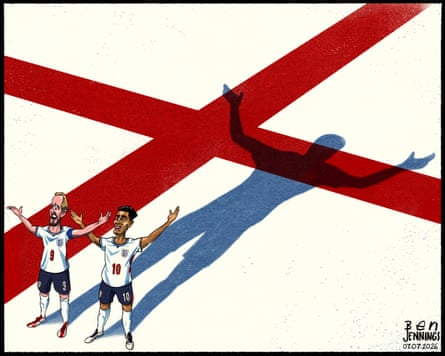
Cartoon of the day | Ben Jennings
The Upside
A bit of good news to remind you that the world’s not all bad
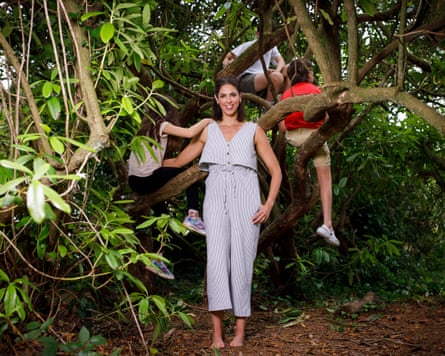
Many of us struggle with putting our phones down. Anna Mathur was no different – until she banned herself from social media and saw her relationships thrive. By placing time limits on how much she scrolled, installing an app to block email and social media at certain times of the day, and using her laptop instead of her phone for work, she was present for the moments that matter the most.
“What I didn’t expect was how much calmer I would feel,” she writes in The one change that worked. “The low hum of overstimulation I had normalised turned out to be costing me more than I knew … I was less irritable, more present, in a way that didn’t require effort.
Sign up here for a weekly roundup of The Upside, sent to you every Sunday
Bored at work?
And finally, the Guardian’s puzzles are here to keep you entertained throughout the day. Until tomorrow.