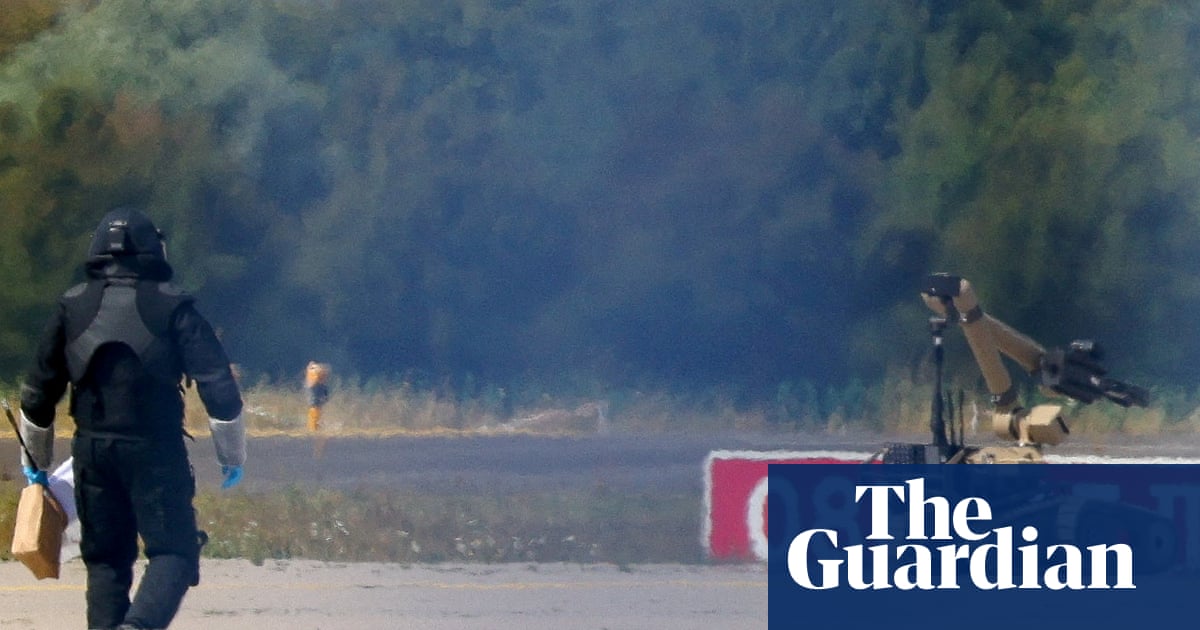
Coral trafficking ring exposed on Aegean island: What is red coral used for and how big is the threat?
Greek authorities have arrested members of an Italian coral smuggling ring apprehended on the Aegean island of Skopelos. The Italian nationals are believed to have removed red coral from the seabed at an...
Greek authorities have arrested members of an Italian coral smuggling ring apprehended on the Aegean island of Skopelos.
The Italian nationals are believed to have removed red coral from the seabed at an estimated value of around €800,000, with the cargo destined for Italy.
The case is under investigation, and officials are also examining the exact route the coral would have followed after leaving Greece.
The recent operation by Greece's General Directorate of Financial Transactions Control Forces (DEOS) is just a small piece of a much larger story. Red coral has been harvested for centuries in different parts of the Mediterranean and is the subject of an international trade in which Italy has historically played a central role. The town of Torre del Greco, near Naples, has become Europe's main centre for coral processing and jewellery making.
Coral from different areas of the Mediterranean is channelled to the Italian market, where the raw material is turned into jewellery and other, higher value products. This activity is legal when the coral has been collected in line with the rules in force in each country. The problem begins when the raw material comes from illegal harvesting and then enters the same commercial chain.
Red coral is a highly prized raw material
The value of red coral varies greatly, depending on its quality, size and stage of processing.
A report by the Food and Agriculture Organization (FAO) on the future of precious red coral in the Mediterranean notes that top-quality coral can fetch up to €5,000 per kilo.
Demand has risen in recent years, as red coral has made a comeback in the collections of major international fashion houses. Its presence in contemporary collections of luxury jewellery, clothing and accessories, including from houses such as Van Cleef & Arpels and Dolce & Gabbana, has put a material with a long history back at the centre of the luxury market.
This development is particularly significant for a raw material that is by nature limited: red coral grows extremely slowly and large colonies take decades to form.
Its high value has spawned a parallel, illegal market, with smuggling routes from countries in southern Europe and North Africa into Europe. In Algeria, according to research by the Earth Journalism Network, up to three tonnes of coral are believed to be trafficked illegally to Europe every year, with Italy among the key destinations.
One of the biggest problems is traceability. Once raw coral reaches processing workshops and is turned into jewellery, it becomes far more difficult to determine where it came from.
What we know about Mediterranean red coral
This is one of the reasons why the General Fisheries Commission for the Mediterranean (GFCM) of the UN Food and Agriculture Organization (FAO) has carried out a dedicated research programme on red coral.
Seven Mediterranean countries took part in the programme, which ran from 2020 to 2023, including Greece through the Hellenic Centre for Marine Research (HCMR). The aim was to improve knowledge of the status of coral populations and to strengthen management and traceability mechanisms.
In Greece, however, significant gaps in knowledge remain. "The seabeds of Greece have not been mapped", explains Maria Salomidi, HCMR researcher and lead investigator.
Researchers have identified areas with coral formations, but they do not yet have a full picture of the extent of the populations. At the same time, the seabed is under pressure from different activities. As Salomidi points out, both professional and recreational fishing can affect coral ecosystems, even when the coral itself is not the target.
The GFCM has warned that red coral populations may be in a state of overexploitation.
And the Skopelos case, according to Salomidi, is unlikely to be an isolated incident:
"The only thing I could safely say is that if one incident has been detected, many more have certainly occurred."
An animal, a myth, thousands of years of history
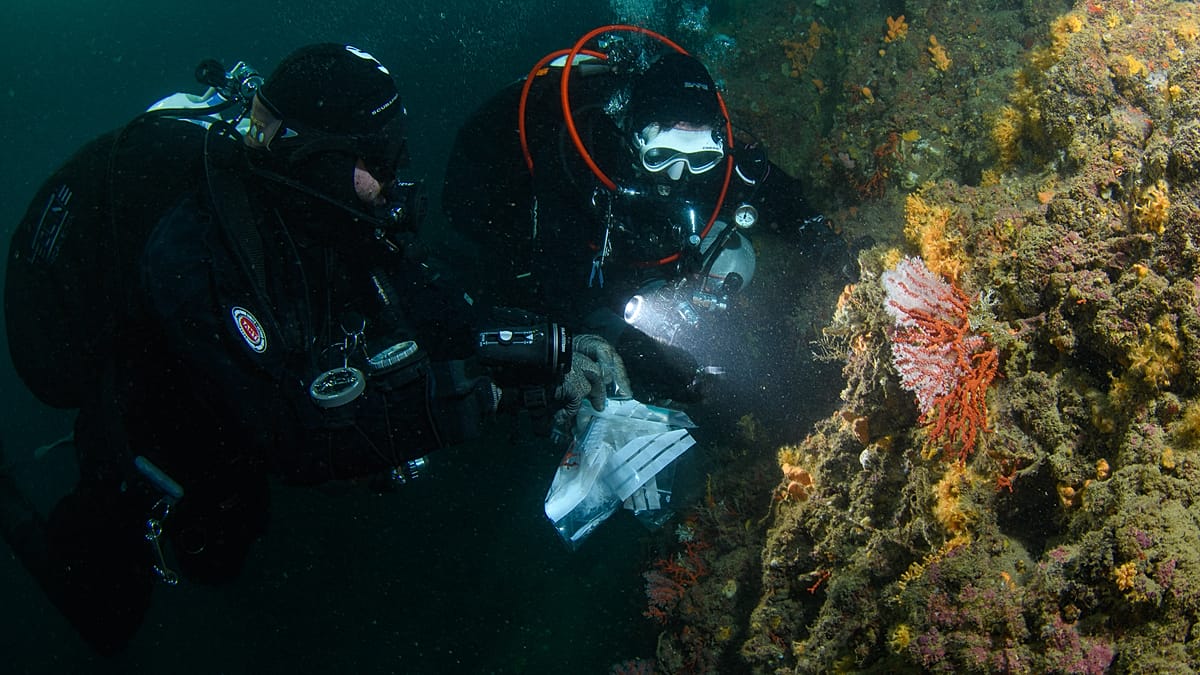
Red coral (Corallium rubrum) is not a plant but a marine animal that forms colonies in the deep sea. With a hard calcareous skeleton, it grows extremely slowly, and a large, mature colony can take up to 100 years to form.
Humanity's relationship with coral long predates the modern jewellery market. Traces of it have been found at prehistoric archaeological sites, and since antiquity it has been prized for its beauty and rarity and credited with protective and healing properties.
Its story is even intertwined with one of the Mediterranean's best-known myths.
In Ovid's Metamorphoses, Perseus, returning after beheading Medusa, stops to rest and lays her head on the seaweed. The Gorgon's blood drips onto it and, according to the myth, the soft plants turn to stone and take on a crimson colour. This, the ancient tale says, is how coral was born.
Almost 2,000 years later, the myth still features in international scientific presentations on red coral. Its real story, however, has become far more complex: an organism that needs decades to grow has been turned into a valuable raw material for an international market, while scientists are still trying to record how much of this natural wealth remains in the Mediterranean.