

Catnomics: global cat market exceeds €100bn and drives pet economy
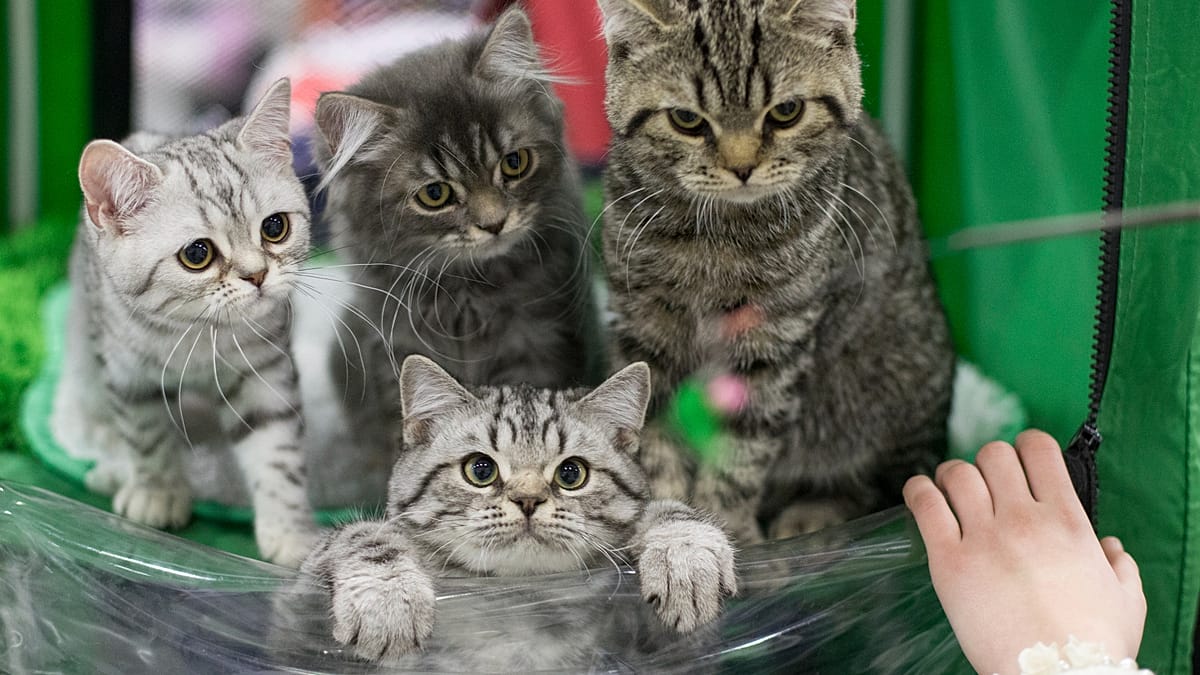
Worldwide, more and more families are choosing to adopt a cat, and the global market for food, gadgets and merchandising is worth over one hundred billion euros, driving the pet economy.
A market worth more than one hundred billion euro, millions of new owners and rising consumption. No longer just pets, cats have become the driving force behind a global economic phenomenon known as Catnomics , which stretches from the United States to Japan and also includes Italy.
To give an idea of the scale of the phenomenon, it is enough to note that these felines alone account for 38.5% of all spending in the pet economy, according to a report by PW Consulting and data from the monitoring carried out by the Schesir Respect My Nature Index.
From Japan to Italy, more and more families are choosing to adopt a cat
In Japan alone, where the trend is known as "Nekonomics", the market in 2026 almost reached a value of 17 billion euro (3,000 billion yen) in cat cafés, gadgets and other products, according to Professor Katsuhiro Miyamoto of Kansai University.
In a survey, the Japan Pet Food Association reports that in 2025 Japanese people owned 8.8 million cats compared with 6.8 million dogs. According to the same report, over the lifetime of a cat a family spends on average almost 10,300 euro (1.8 million yen).
"The growth of Catnomics reflects a profound change in the way people experience their relationship with their cats: on the one hand they are increasingly seen as full members of the family, while on the other hand knowledge of their specific physiological needs, especially from a nutritional point of view, is often lacking," explains Giorgio Montefusco, Marketing & Trade Marketing Director at Schesir, "particularly in Italy, demand is rising for products able to combine quality, palatability and respect for the cat's physiological and behavioural needs".
Cats are also driving the pet economy in Europe
Europeans in general tend to prefer cats. According to the 2026 "Facts & Figures" report by FEDIAF EuropeanPetFood, in Europe in 2024 around 149 million households, 49%, had pets, for a total of 306 million pets, including 111 million cats and 91 million dogs.
Cat food generates the highest market value at 50%, followed by dog food at 46%, even though 58% of the pet food produced in Europe is for dogs and only 41% for cats.
Statista also appears to confirm this trend, noting that "in Europe overall, the number of cats has increased significantly since 2010. In 2024, the European Union alone was home to a large cat population, making them the most popular companion animals. The population of pet cats in the European Union also reflects the size of the pet products sector in this region".
France and Germany top the ranking of European countries with the most pet cats, followed by Italy, where the presence of felines is growing, with a 4.7% increase in adoptions from 2022 to 2025, bringing the total number of cats in households to eleven million, compared with 10.2 million three years earlier.
Annual spending on cat food in Italy is around 2.35 billion euro, according to the ASSALCO-Zoomark 2026 report, which stresses that this segment accounts for 56% of the pet food market for dogs and cats, with annual growth of 4.3%, reports Agi.
In the US it is Gen Z men who are driving the rise in cat adoptions
The sector is also booming in the United States, where the rise in the number of adopted cats is driven by Gen Z men, according to a report by the American Pet Products Association. Men account for 43% of cat owners in the US, and among Gen Z the number of adopted cats has increased by 27% in just one year.
The number of US households that have chosen to have a cat has reached 53 million, about 39% of the total, a 5% increase between 2024 and 2025. The report also notes that since 2018 the share of households with at least three cats has risen, with an increase of 45%.
This trend has taken hold in China as well, where the cat market is growing much faster than the dog market and individual spending on cats has risen. In urban centres there are 72.9 million cats compared with 53.4 million dogs, with the economic value of the cat market increasing by 5.2% compared with 3.2% for dogs.
But the market linked to cats is not only expanding, it is also undergoing several transformations. Beyond spending on food and veterinary visits, more and more money goes towards the ageing of cats, an area known as the "Silver cat economy" that is growing rapidly in Hong Kong.
There are more and more cat owners choosing to invest in the longevity of their pet, a development that confirms that the bond with cats is taking on an increasingly important role in the international pet market.