Drug monopoly extension splits EU ministers in Biotech Act debate
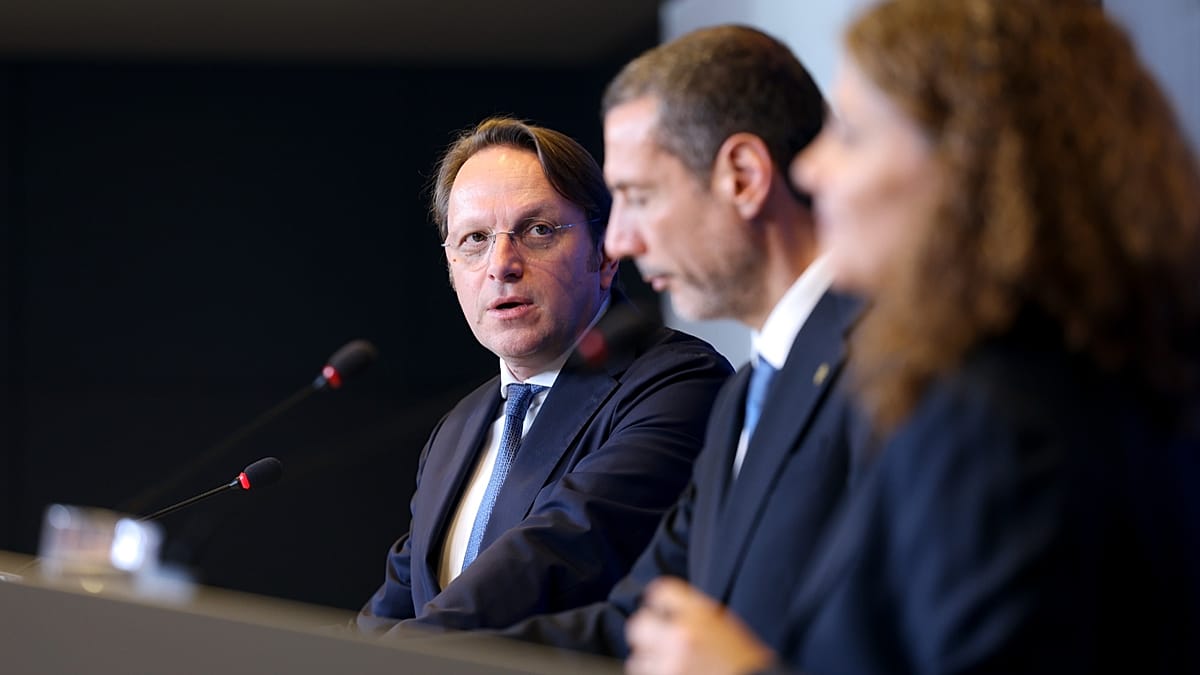
EU health ministers split over a proposal to give certain innovative medicines an extra year of market protection, with EU Health Commissioner arguing the incentive is needed to keep biotech investment in Europe. Incoming Irish presidency, in the meantime, says it will work as quickly as possible.
Cypriots — who hold the rotating presidency of the Council of the European Union until the end of June — tested the waters on what countries aim to achieve through the Commission’s proposed Biotech Act — and, unsurprisingly, an additional year of monopoly rights for certain treatments divided countries.
In the meantime, EU health chief, Várhelyi, said this is the way to have access to new therapies.
The Commission’s proposed additional year of protection — known as Supplementary Protection Certificates — would be granted for treatments that contain a new active substance, have a different mechanism of action from existing treatments, have conducted clinical trials in more than two EU countries and carry out at least one manufacturing step — such as packaging or quality testing — in the EU.
The measure is intended to encourage biotech companies to invest, manufacture and conduct research in Europe.
“We support the idea of incentivising technology in Europe and we support the idea to extend the protection certification system,” Spain’s health minister, Mónica García Gómez, told fellow ministers.
However, not all ministers were as optimistic.
Several countries questioned whether extending exclusivity would ultimately benefit patients, warning that it could delay competition from biosimilars and increase pressure on healthcare budgets.
“We are … reluctant to direct taxpayer money into an industry which refuses to supply small markets or that expects us to pay substantially higher prices than large member states with a higher GDP,” Christopher Farrugia, Valetta’s deputy representative in the EU, said, underlining that the country has “reservations” on the extension of the supplementary protection certificate.
The concern reflects longstanding inequalities in access to medicines across Europe. According to industry data, Malta had access to only 17 innovative medicines approved between 2020 and 2023, compared with 156 in Germany and 142 in Italy.
Estonia voiced similar concerns.
“We want to be very clear about the need for balance,” Estonia said, urging that discussions on the protection periods for innovative medicines must take into account affordability, access to medicines, and the sustainability of health care systems.
Several delegations also questioned whether there is sufficient evidence to justify the measure. The proposal was not accompanied by a dedicated impact assessment, relying instead on analysis carried out for pharmaceutical legislation.
“It is still not clear whether this instrument will be fit to the goals of the industrial and biotech policies of the EU,” Katarzyna Kacperczyk, deputy minister of health, said.
“The Commission's analysis shows that the solution may have significant economic effects and consequences, may affect competition, public spending, and may affect medicinal products availability.”
The health commissioner, Várhelyi, asked about countries’ concerns at the press briefing, said that “if we don't do it, it means most likely these products will never enter Europe, only once the patents have expired.”
As for the costs of such a mechanism, he is “not worried about the funding,” urging countries to focus on prevention to top up their budgets.
“If we push for prevention, it means that we can make significant savings in care; if we do that, it means we will have more funds available for the latest therapies,” Várhelyi told journalists.
Despite disagreements on the extension of protection, ministers were largely aligned on the need to simplify multinational clinical trials, streamline processes, reduce administrative burdens, ensure no overlaps with existing legislation — all this to keep biotech on European soil without compromising patient safety or the quality of products.
Multiple countries — such as Hungary, Czechia, Poland, Estonia, Greece, France, Latvia and Malta — highlighted the need to strengthen support for biosimilars.
“The support measures for biosimilars should, in our view, be reinforced,” Cyril Piquemal, France’s deputy permanent representative at to the EU, said. Kacperczyk, in the meantime, called biosimilars “key for the security and safety of patients in the EU.”
Ireland to shift Biotech Act negotiations into high gear
The incoming Irish Presidency of the Council of the European Union had a message for other countries: negotiations on the Biotech Act need to move fast.
“Because of the external environment, [we] need to move speedily on this particular Act. And ahead of the upcoming Presidency, I'd urge all of you to take your positions as early as possible with that urgency in mind,” Jennifer Carroll MacNeill, Irish health minister, said.
Advancing Europe's biotech environment is “time sensitive for industry, time sensitive for patients,” she said, adding that Europe’s competitors are already gaining ground.
Therefore, she has already appointed the Irish presidency team to work “in an expeditious and streamlined manner with a view to negotiating the Act as quickly as possible.”
The presidency will first focus on the clinical trials, MacNeill said, adding that the incoming presidency wants to “progress measures aimed at strengthening the EU's industrial bio-manufacturing capacity and simplifying procedures to create legislative frameworks that are conducive to innovation.”