Hungary’s €5.4bn defence loan approved as EU wraps first SAFE round
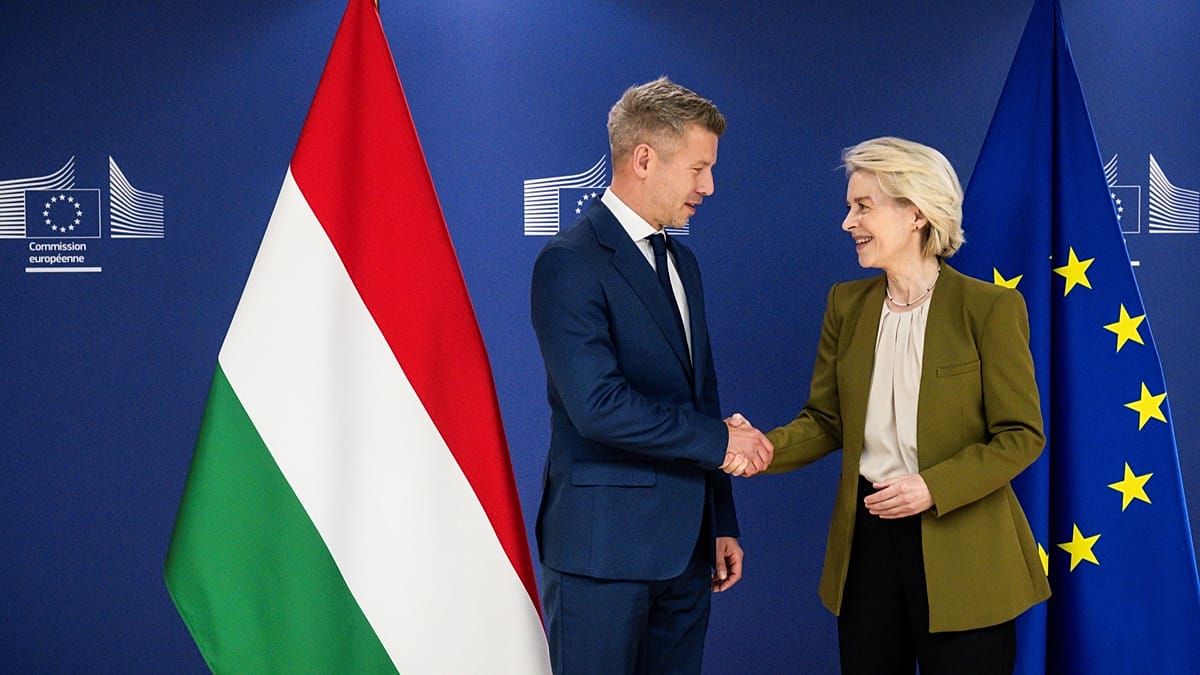
The European Commission has approved Hungary’s €5.4 billion defence loan application, completing the first round of SAFE allocations and leaving just over €21 billion available for a new funding round.
Published on 28 October 2026 - 16:51 GMT+1
The European Commission has approved Hungary’s €5.4 billion Security Action For Europe (SAFE) defence loan application, officially concluding the first round of Brussels' landmark financing programme to bolster Europe’s military readiness.
Hungarian Prime Minister Péter Magyartrimmed the application amount from €16.4 billion to €5.4 billion after he took office in April, with the official application revised and lodged late September.
Magyar is understood to have wanted to reassess the original proposal over alleged corruption risks linked to the previous government.
Before the funding can be dispersed, it must be approved by the EU governments, with a loan agreement subsequently signed by representatives from Brussels and Budapest.
European Commission spokesperson Thomas Reginer confirmed over €21 billion remains in the €150 billion funding envelope.
Member states will be invited to express their interest to take on additional loans or totally new loans by December, after which the Commission will assess potential fresh plans.
Countries like Ireland, which did not take out an initial SAFE loan, have expressed interest in potentially taking part in the next round.
Ireland's Defence Minister Helen McEntee said in October she would like Dublin to take part. “I’ve made that ambition very clear,” she said.
In total, 19 member states submitted SAFE loan applications for strategic defence investments, comprising a total of €129 billion. There was €150 billion available in the pool of funding.
SAFE is a key pillar of the European Commission’s ReArm Europe 2030 plan, which aims to accelerate orders, secure supply chains, and boost manufacturing by supporting countries pool procurement in certain capabilities seen as priorities.
This includes ammunition, drone and anti-drone systems, air defence, military mobility, and electronic warfare capabilities, among others.
The year 2030 has been identified by various intelligence agencies as the year for when Russia could launch armed aggression against NATO.
The programme encourages joint procurement, stronger industrial cooperation and greater interoperability across Europe.
At least 65% of the component costs must originate from the EU, Ukraine and certain countries from the European Economic Area and European Free Trade Association.
The remaining 35% can come from any third country.
Poland secured the largest loan of €43 billion, while Denmark took on the smallest SAFE loan of €46.8 million.