Far-right praise for shah’s secret police puts Reza Pahlavi on the spot
For decades, the Savak was seen as the most hated symbol of repression that kept Iran’s last shah, Mohammad Reza Pahlavi, in power – and a main driving force behind the revolutionary fervor that toppled him...
For decades, the Savak was seen as the most hated symbol of repression that kept Iran’s last shah, Mohammad Reza Pahlavi, in power – and a main driving force behind the revolutionary fervor that toppled him in 1979.
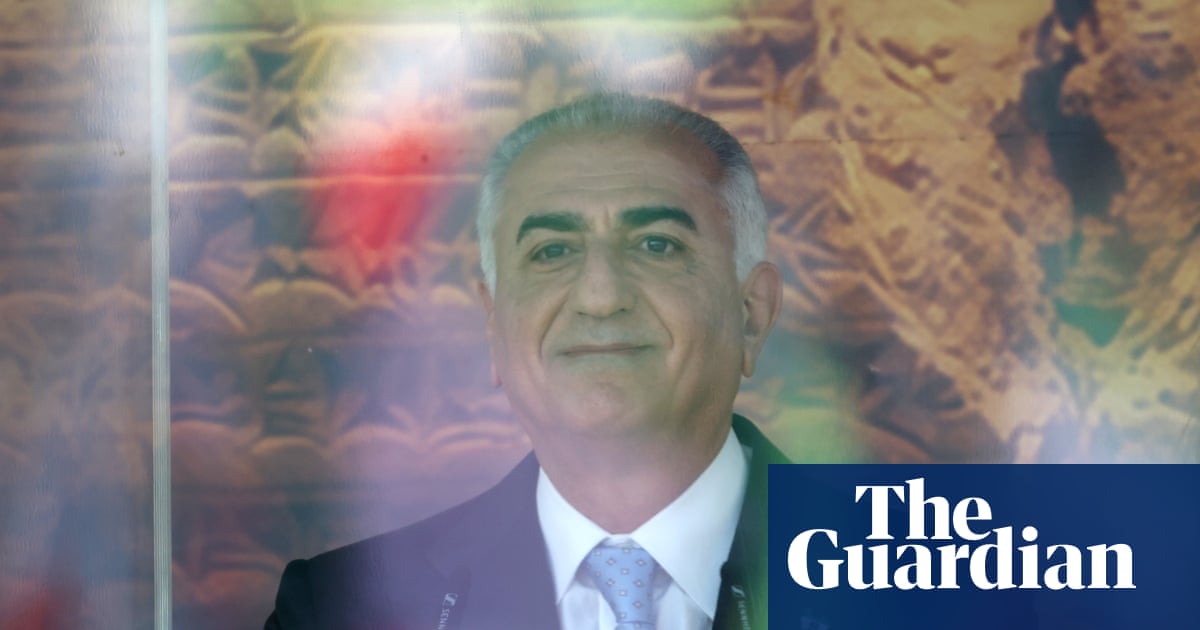
Now the deposed monarch’s son, Reza Pahlavi, has been forced to distance himself from the once-dreaded security agency after some of his most vociferous supporters glorified it as the defining emblem in their drive to install him on the throne in a royal restoration.
Washington-based Pahlavi, 65, who has not been in Iran for 48 years, has portrayed himself as “uniquely positioned” to lead a transition to democracy to replace the current Islamic theocracy, which has been fighting for its survival since February when the US and Israel embarked on a campaign of military strikes, currently stalled amid a current shaky ceasefire and Pakistani-mediated negotiations.
He thrust himself forward as a potential leader after protesters chanted his name and “javid shah” (long live the shah), in reference to the Iran’s long history of monarchical rule in mass demonstrations that gripped Iran last January before being brutally crushed by regime security forces.
But former Pahlavi allies say his credentials have been undermined by “fascistic” supporters who have staged rallies at which they have flown banners and worn T-shirts emblazoned with the emblem of the Savak. Trained by the US and Israel, the Savak was widely seen as instrument of despotism which sustained his father’s rule by ruthlessly torturing and surveilling opponents.
Following criticism that he had stayed silent, Pahlavi has belatedly denounced the displays in an awkwardly worded video message, calling the issue “relatively urgent”.
“I don’t know where it is coming from,” he said.
“I don’t want to get into a historical analysis of whether that organisation acted correctly or incorrectly, what it was not.
“I will only say that it is a controversial issue. This is precisely the type of behaviour that gives an excuse to those that want to launch attacks on our movement.”
Pahlavi’s denunciation was aired after his standing appeared to suffer a blow following revelations that the US and Israel had identified the former Iranian president, Mahmoud Ahmadinejad, as a likely replacement in the event of the Islamic regime collapsing. The scheme to install Ahmadinejad is believed to have fallen through.
Nevertheless, Pahlavi’s erstwhile supporters say the Savak displays have also eroded his status by mocking the values he once proclaimed.
“I interviewed him in 2012 about Savak and he was clearly against torture or against anything that undermined human rights,” said Nik Kowsar, a US-based Iranian journalist and caricaturist who abandoned his former support for Pahlavi amid disagreements over hardline advisers.
“The sad thing is Savak was seen an organization that was known to torture political activists or anybody criticizing [his father], as well as censoring the media. It wouldn’t represent democracy or liberalism, but that’s what a number of his avid fans are presenting right now.”
Critics say the celebration of the Savak is consistent with others signs intolerance and authoritarianism in Pahlavi’s camp.
At a rally in Munich in March, one supporter displayed a banner bearing the slogan “one nation, one flag, one leader” – closely evoking Nazi language supporting Hitler.
Followers have also attacked journalists. Footage widely shared on social media showed the Iran-born CNN journalist, Christiane Amanpour being verbally abused by acolytes enraged at her description of Pahlavi as a “pretender to the throne” during an interview.
Supporters – who commonly refer to him as “crown prince Reza” – have also complained about reporters addressing him as “Mr Pahlavi”.
Pahlavi has himself been confrontational in his personal interactions with journalists. In a press conferences in Berlin in April, he abruptly cut off a female journalist who sought to ask him a follow-up question and became involved in a heated exchange with another who asked if he was “an agent of Israel”.
He vented his anger in a subsequent video, accusing journalists of “silencing” the voices of the opponents of the Islamic regime.
Pahlavi, has supported the US and Israeli strikes against Iran, and criticized European governments – notably Keir Starmer, the British prime minister, who he has accused of “appeasement” and compared to Neville Chamberlain.
But he has also lately criticised Donald Trump, accusing him of sending “mixed signals” by threatening to destroy Iran’s civilisation.
Some Pahlavi supporters have been accused of threatening his critics, creating an atmosphere of “fear and dread”, according to one.
Canada-based Masood Masjoody, a former Pahlavi supporter who had broken with him, was found dead in Vancouver in March this year after claiming that a group of activists were plotting to kill him. Investigators later determined that he had been killed and charged two anti-regime campaigners, Mehdi Ahmadzadeh Razavi and Arezou Soltani, with first degree murder. (There is no suggestion that Pahlavi was involved or complicit.) Neither of the accused have as yet entered a plea.
Some expatriate Iranians reported being tagged in a threatening social media post after Masjoody’s death.
“A bunch of us received this threat online, and that really shook all of us up,” said Alireza Nader, a Washington-based analyst on Iranian affairs, who reported the threat to the police.
Pahlavi, who has been ambiguous on whether he seeks to inherit his father’s throne, was challenged on the issue in a recent appearance at a conference hosted by Politico.
He blamed “a well-orchestrated campaign” by the Islamic regime aimed at discrediting him for some acts attributed to his supporters, who he called “a very diverse group”.
“I always condemn any behavior that is based on violence or insult or [aggression] of any kind to anyone that is active. [But] I let my own supporters define themselves and describe themselves,” he said.
“Are there extremists every now and then in the mix? Of course they are. This is something that is unavoidable”
However, Nader – a former ally who broke with Pahlavi over what he says is an increasingly authoritarian posture – believes Pahlavi has been tolerating far-right extremists among his supporters.
“I really do think they’re fascistic, if not fascist – and I rarely use that word to describe anyone,” he said.
“He has taken the persona of this far-right, Maga, pro-Israel figure. That’s not who he was when I met him. He was just this very docile, polite, liberal, democratic man.”
Pahlavi has generally not identified himself as “far right”, instead depicting his movement as a broad tent. But he did attend this year’s Conservative Political Action Conference in Grapevine, Texas, bolstering the impression that he was attempting to woo Trump’s Maga base.
However, Trump is said to be sceptical over his abilities having reportedly referred to him as a “loser prince”, according to the New Yorker.
Pahlavi has previously been quoted as saying he has no desire to return to Iran, telling one interviewer that all his friends and family were now in the US. Kowser said the former prince – a keen and talented photographer – once told him that his only wish was to take pictures if he was ever allowed back.
Some have attributed his transformation into a presumptive leader to the influence of Israel, which Pahlavi visited in 2023, when he was received by the country’s then intelligence minister, Gila Gamliel, and Benjamin Netanyahu, the prime minister.
“During the 12-day war last June, Netanyahu openly called on the Iranian public to rise up – and Reza Pahlavi also supported that war,” said Vali Nasr, a professor of international relations at Johns Hopkins University. “Six months later, you have the January uprising and again, the Israelis were knee deep involved, both with Reza Pahlavi, as well as having people on the ground.
“But at the end of the day, Pahlavi doesn’t have a single person in Iran of whom he could say, ‘This is my representative.’ You need to have a ground game, people who can organize for you. This takes months to set up.”
Nasr compared Pahlavi’s persona to The Last Emperor, Bernardo Bertolucci’s 1987 film about Puyi, the final head of the Chinese Qing dynasty, who collaborated with Japanese occupiers in the hope of regaining his throne in the 1930s before ultimately dying in obscurity after China fell to communism.
“Like the last emperor, he’s gone to Manchuria under the support of the enemy who is trying to destroy Iran and it’s going to be very difficult for him to extricate himself from there,” said Nasr. “The longer this war has gone on, the more irrelevant he has become.”