‘Coalition of the willing’ to build shared European anti-ballistic programme
Ukraine and nine other countries including the UK, Germany and France are to build a shared protection programme for Europe against ballistic missiles, using Kyiv’s experience in fighting Russia’s full-scale...
Ukraine and nine other countries including the UK, Germany and France are to build a shared protection programme for Europe against ballistic missiles, using Kyiv’s experience in fighting Russia’s full-scale invasion for more than four years.
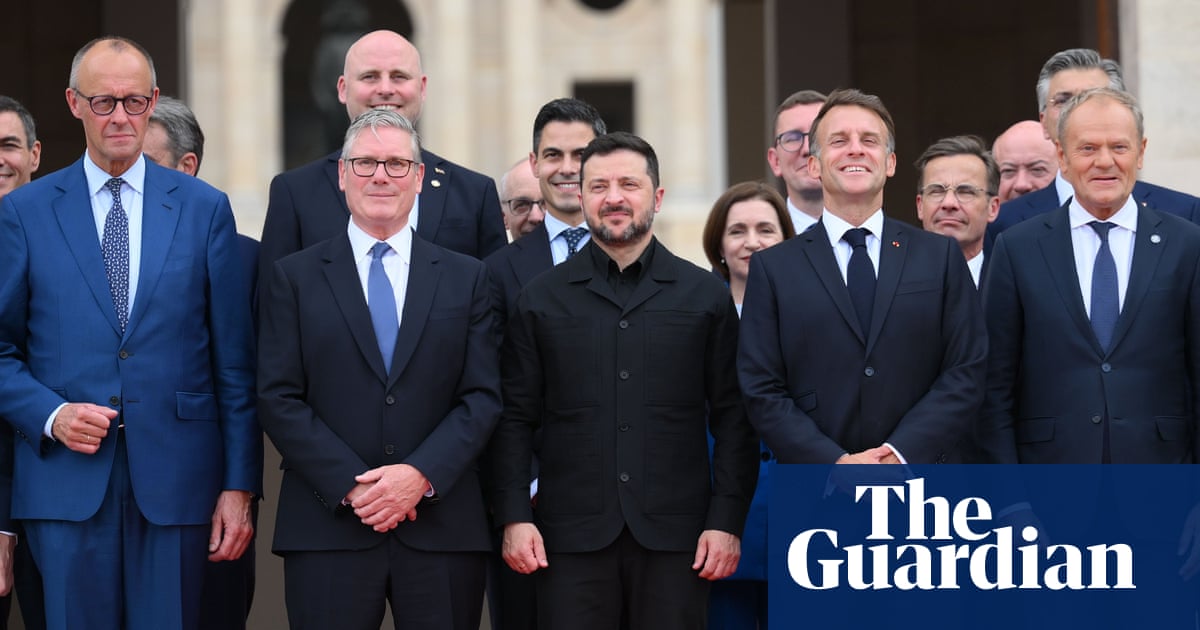
“Our goal is to build a shared ballistic missile defence capability for Europe,” the 10 nations said in a statement on Monday as leaders met the Ukrainian president, Volodymyr Zelenskyy, for talks in Paris.
The announcement came as the UK also signed up to participate in the EU’s €90bn (£77bn) support loan for Ukraine, meaning UK firms will be able to provide more weapons paid for by the funds. The move is the latest push by the EU and Britain to work more closely together after Britain quit the bloc in 2020 following the Brexit vote.
Zelenskyy arrived in Paris on Monday keen to accelerate efforts with European countries to develop Ukraine’s air defences ahead of winter, when Russia usually intensifies its attacks to deny Ukrainians electricity, heat and water.
He asked the leaders of several European countries to join in developing measures against Russia’s missile attacks that have pummelled Ukraine and made the rest of Europe wary of Moscow’s wider ambitions on the continent.
The coalition, which also includes Denmark, Italy, the Netherlands, Sweden and Spain, said it recognised “the growing threat posed by ballistic missiles”, which are harder to stop than cruise missiles or drones.
The anti-ballistic programme would involve “an integrated missile defence architecture, to deter and neutralise future missile threats”, the statement said. “We recognise Ukraine’s unique experience, gained through its defence against the war of aggression waged by Russia.”
But no timeframe for the anti-ballistic programme was given. Zelenskky was also expected to meet national security advisers and defence companies that might take part.
The British prime minister, Keir Starmer, said the UK’s move to join the EU support loan for Ukraine was crucial.
“This agreement will help ensure Ukraine gets the support it needs to defend itself against Russian aggression, while backing British defence companies, supporting skilled jobs and strengthening our national security,” he said in a statement.
Brussels and London said that Britain will provide “a fair and proportionate contribution to the costs arising from borrowing, commensurate with the value of contracts awarded to UK companies”.
after newsletter promotion
Last month, the EU started paying out the large two-year loan to Ukraine that will go towards buying weapons for its forces and plugging budget black holes.
An initial €6bn from the loan will go towards helping bolster the production of drones for Kyiv’s forces.
The desperately needed funds come as Ukraine appears to be turning the tide in the four-year war by stabilising the frontline and striking deep inside Russia.
Meanwhile, the French president, Emmanuel Macron, warned European countries against go-it-alone national defence policies, as governments ramp up military spending in response to Russia’s threat and pressure from the US to increase military spending.
His comments came a month after the collapse of a Franco-German project to develop a next-generation fighter jet after months of deadlock between defence companies, underscoring the industrial rivalries that risk undermining Europe’s drive to rearm together.
“Every time we create fragmentation, we may feel good in the moment, but we are creating the delays of tomorrow. Every time we pander to nationalism, in France or elsewhere, we misunderstand our own history. Patriotism, yes; nationalism, never,” Macron said in his annual address to the French armed forces on the eve of Bastille Day, France’s national day.