Can the Mounties regain Canada’s trust after race, sexism and public safety scandals?

With their bright red tunics, dark blue breeches and beige Stetsons, the officers of the Royal Canadian Mounted Police offer a globally recognised symbol of Canada.The Mounties, as they are colloquially...
With their bright red tunics, dark blue breeches and beige Stetsons, the officers of the Royal Canadian Mounted Police offer a globally recognised symbol of Canada.
The Mounties, as they are colloquially known, have been featured across popular culture for decades, from Hollywood films to the Simpsons.
But the RCMP is now facing an increasingly uncertain future amid questions about its core role and because of a string of scandals that range from systemic racism to sexual harassment and public safety failures.
“We need to modernise and transform the RCMP, but we are a very long way away … unfortunately, the future doesn’t look particularly bright,” said Kent Roach, a law professor at the University of Toronto, who this week published a book about the pressures on the RCMP.
On a national level, the RCMP handles security, including foreign interference and terrorism, but also offers local policing in 150 municipalities and 600 Indigenous communities, which cover eight of the country’s 10 provinces and all three territories.
Those local policing contracts are set to expire in 2032, and even though the date is six years away, provincial leaders have called on the federal government to “urgently begin negotiations” for “new police service agreements”.
“The federal government must provide a clear decision on the future of RCMP contract policing,” provincial premiers said in a joint communique following a meeting in Prince Edward Island last month.

The request for clarity on the contracts appears to have been prompted in part by the resignation of Justin Trudeau and his replacement as prime minister by Mark Carney. As one of his last acts in office, Trudeau argued in March 2025 for widespread reform of the RCMP, recommending the force abandon boots-on-the-ground policing to focus on national security.
But the Carney government has bucked Trudeau’s suggestions and instead has increased pay for RCMP cadets and has committed an additional $1.8bn in spending over four years to the RCMP’s policing budget.
One of the reasons for the investment in the RCMP is pressure from the US Donald Trump administration to crack down on supposed border issues, said Roach.
But Roach argues that it is unfeasible for the RCMP to continue in its current form because of structural issues: Mounties typically operate in small, often temporary detachments in Canada’s rural communities and territories where they do not speak local Indigenous languages.
That language gap feeds a historical lack of trust among First Nation communities, due to the force’s colonial roots as a force of repression. Canada’s first prime minister, John A MacDonald, created the North-West Mounted Police in 1873, which eventually became the RCMP in 1920. From its inception, the force enacted government rules that restricted the movement of Indigenous people and, from the 1930s, RCMP officers were used to force Indigenous children to attend abusive residential schools, according to the force’s own records.
The strained relationship between the RCMP and Indigenous peoples has been exacerbated by a series of high-profile cases. The deaths of the Indigenous men Dale Culver in 2017 and Jared Lowndes in 2021 after violent interactions with RCMP officers led to a public outcry. And after the 2016 murder of Colten Boushie, the official watchdog for the RCMP found that the force discriminated against his family.
The Mounties are also accused of systemic sexual harassment: a 2021 class action lawsuit resulted in the federal government paying more than $125m to 2,304 female RCMP members who said they had experienced sexual assault and harassment while on duty.
In the past decade, the RCMP has contended with two mass killings that led to wider criticisms around the force’s abilities to keep the public safe.
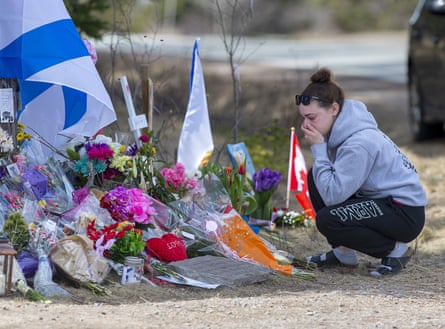
In April 2020, a man dressed as a Mountie killed 22 people in a rampage in Nova Scotia. A government inquiry found that a string of RCMP missteps worsened the attack, as the force failed to share information with the public and with its own officers.
Then, in September 2022, the RCMP came under further criticism over its slow response to a stabbing attack which killed 11 people in the James Smith Cree Nation community in Saskatchewan.
In recent years, several scholars have called on the RCMP to be disbanded and replaced with a national service better equipped to confront 21st-century security threats, including cybercrimes.
Roach argued that Canada should be looking to other models rather than the RCMP’s “one size fits all” approach to all jurisdictions.
“The way the RCMP trained … is very much out of touch,” he said. “The RCMP seems stuck in a very paramilitary and frankly colonial approach,” he said.
Public Safety Canada, the federal agency responsible for national security, said Ottawa was in discussions with provinces and territories on “policing needs beyond 2032”. It said community protection would be achieved through hiring more RCMP officers and investing more in the force.