No electricity, no gas, no sleep: Cubans on edge amid endless outages
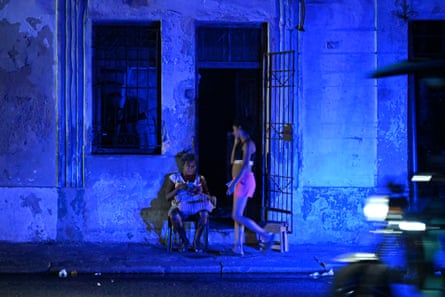
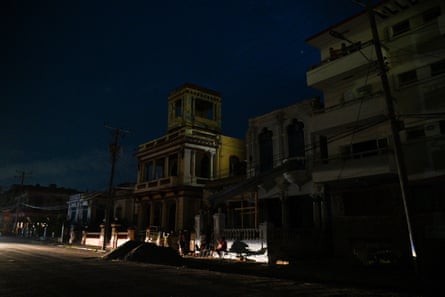
The doctor called from the darkness, a shadowy figure sitting on the stoop of his apartment building. “I want to tell you we’ve been four days without light,” he said. “And without electricity, water is also...
The doctor called from the darkness, a shadowy figure sitting on the stoop of his apartment building. “I want to tell you we’ve been four days without light,” he said. “And without electricity, water is also a problem. And there are mosquitoes everywhere.”
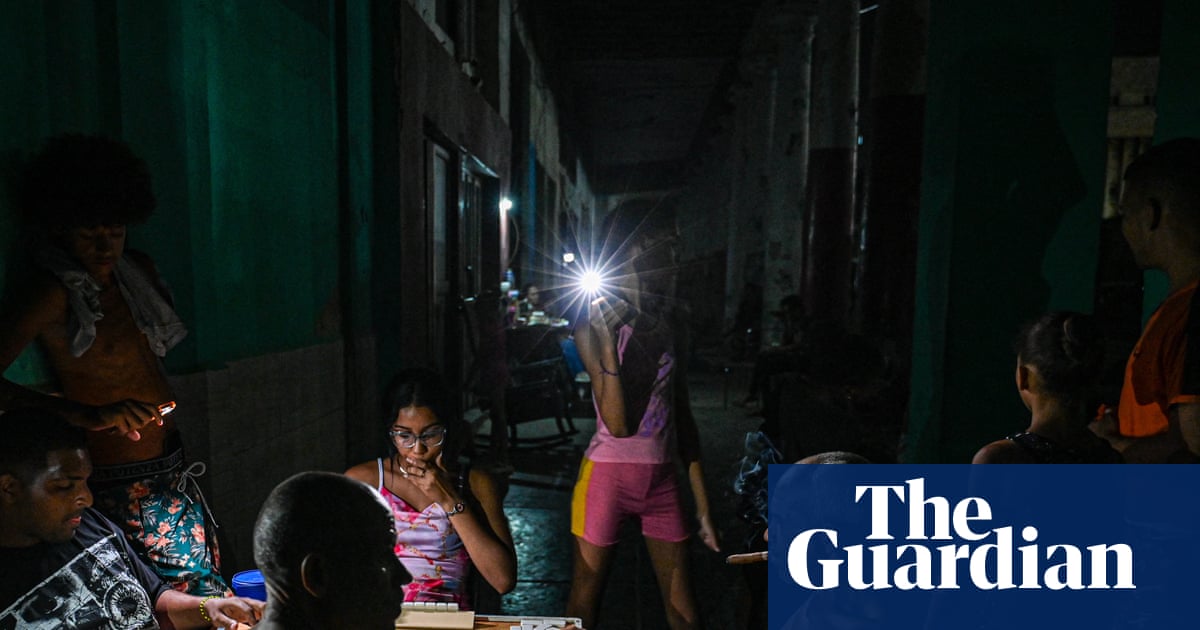
From the buildings around came a cacophony, as beyond dark windows people smashed pots against pans. It was a cacerolazo, a traditional form of protest which has now become commonplace in Cuba amid seemingly endless rolling blackouts.
Two months ago, Habaneros talked about how the situation was far worse in the countryside. No longer: the doctor was sitting in the heart of the capital, just a 100 yards from the stage opposite the US embassy, where, just a few weeks ago, the former president Raúl Castro celebrated International Workers Day.
Cuba is now four months into a US oil blockade that has seen the island drained, in almost every way. Three weeks ago, energy minister Vicente de la O, told the public: “We have no fuel, no more reserves.”
The state electric company is fighting to provide even a few hours of power a day. Petrol stations have been empty for months. And for those who use gas canisters to cook, charcoal and even wood are now the only options.
Martha Pérez is a resident of the poorer Havana neighbourhood of Bahía. “I can buy gas in an online supermarket,” she said. “But the price is US$29 a bottle when it used to be just a few cents when I bought it from the state.”
Her monthly pension, destroyed by hyper-inflation, is worth less than $10. Some of her neighbours had take to the streets in protest, she said; some of them were later taken away by police. Meanwhile, temperatures are creeping into the mid-30s, with 75% humidity. Without power to drive fans, few are sleeping.
In Washington, meanwhile, there is increasing frustration that Cuba’s government refuses to crumble in the face of such pressure. After 1 May, the 95 year-old Castro was charged with murder, opening up the opportunity of an abduction like the one that removed Nicolás Maduro from power in Venezuela on 3 January.
On Thursday, new sanctions were imposed on prominent Cubans, including current the president, Miguel Diaz-Canel, his family and several Castro family members. ICAP, the institute that works with solidarity groups around the world, was also targeted, to the delight of right wing activists.
The USS Nimitz, an aircraft carrier, has arrived in Jamaica just south of Cuba. Surveillance aircraft circle the island. John Ratcliffe, the CIA chief flew into Havana to meet Cuban intelligence leaders, and according to US broadcaster CBS brought the “operator” responsible for killing 32 Cuban security guards in the Venezuelan operation.
Cubans try to make sense of it all. They share news of the effects of new sanctions imposed by Washington. Major hotel operators such as Iberostar, Blue Diamond and even Melia, which has operated in Cuba for 30 years, have severed relations or drastically reduced their presence, an off-switch on the life support system of a once prosperous tourism sector.
Sherritt, a Canadian nickel miner, initially pulled out under the new sanctions, but has since said it is seeking to sell a majority stake in its operations to Ray Washburne, a former adviser to Donald Trump.
Cuba’s state bank has announced that Visa and Mastercard will no longer work, although this will affect businesses more than the average Cuban. “Now they don’t want us communists to use credit cards,” said an old man drinking rum on a street corner in Habana’s Vedado neighbourhood. “His friends started laughing. “What are you talking about?’ one said. “You don’t have a Mastercard.”
Felix Capote, a businessman, was buying supplies in Canalita, a small grocery store. It is one of the new private enterprises called Mipymes (the Spanish acronym for micro, small and medium enterprises) that are a lifeline to those with money. He’d heard the news that two shipping companies that carry 60% of the goods entering the island have suspended all new orders. “I am worried that soon Mipymes won’t have food,” he said.
Much gloom stems from the belief that negotiations between the US and Cuban governments are going nowhere. “Both sides just seem dug in as all hell,” said Michael Bustamante, chair of Cuban and Cuban American studies at the University of Miami.
Bustamante believes the only hope is for the Cuban government to make big concessions. “Otherwise Washington may bring about their exit by force anyway, with untold consequences,” he said.
“In either scenario, Washington looks primed to sweep up assets for its friends in a nakedly imperial way,” he added. “If Sherritt, then why not Melia?”
Meanwhile, the Cuban government is preparing for an attack which Díaz-Canel said “will cause a bloodbath with incalculable consequences”. Anti-aircraft radars have been spotted around Havana, while national television shows images of soldiers training.
In theory, Cuba’s response to a US attack would be a “war of all the people”, in which the entire population joins armed resistence without waiting for orders. Even sympathetic voices say that’s no longer realistic, given the antiquated nature of the military equipment.
“The most surprising thing is that morale is still high within the very small regular force,” said Hal Klepak, professor emeritus at the Royal Military College of Canada. “But the reserve forces have been atrophying, because there’s no new equipment, no money, and not even any petrol.”
In truth, the exhausted people now seem more likely to protest against their own government, which is widely believed to be what the US is hoping for if a deal fails to materialise.
The World Meteorological Organisation (WMO) announced it expects an extremely hot and dry summer in the Caribbean, potentially deadly on an island without electricity.
Asked who he blamed for the situation, the Doctor in Vedado simply held out his hand, and said: “Thanks for listening to me.”