El Niño: Almost everywhere will face above average summer temperatures, WMO warns
El Niño will hit this summer with 80 per cent certainty, according to the latest forecast by the World Meteorological Organization (WMO) – and Europe should brace for more extreme heat, with some areas at...
El Niño will hit this summer with 80 per cent certainty, according to the latest forecast by the World Meteorological Organization (WMO) – and Europe should brace for more extreme heat, with some areas at heightened risk of drought and flooding.
Over the past week, parts of Western Europe suffered record-breaking spring temperatures as a powerful heat dome formed. Spells like this are likely to become more intense, longer and more frequent as El Niño takes hold – and scientists warn it could stretch all the way to 2028.
Although the strength of the weather phenomenon is still uncertain, WMO models suggest it will be at least moderate, and possibly strong, with a 90 per cent chance of it continuing until at least November.
“The world must treat it as the urgent climate warning it is. El Niño conditions will pour fuel on the fire of a warming world,” says UN Secretary-General António Guterres.
‘Prepare for hotter than normal temperatures’
Fuelled by unusually warm ocean waters in the tropical Pacific, El Niño is expected to leave virtually nowhere untouched, with above-average temperatures forecast around the globe for June to August.
“We need to prepare for a potentially strong El Niño event – which will exacerbate drought and heavy rainfall and increase the risk of heatwaves both on land and in the ocean,” says WMO Secretary-General Celeste Saulo.
The most recent El Niño, in 2023-24, was one of the five strongest on record and contributed to 2024 becoming the world’s hottest year on record. According to the European State of the Climate 2024 report, published jointly by the Copernicus Climate Change Service and the WMO, Europe experienced dramatic and contrasting conditions that year: while the east faced dry, scorching heat, the west endured heavy rainfall and flooding.
This year, “impacts will hit even harder, travel even farther, and cross borders with devastating speed,” Guterres warns.
The UN has previously cautioned that there is an 86 per cent chance the coming years will smash 2024’s heat record, with climate scientists warning that a “whole range of extreme weather events” are brewing as a strong El Niño collides with accelerating global warming.
While climate change is not thought to increase El Niño’s frequency or intensity, it can amplify its effects. A warmer ocean and atmosphere increases the availability of energy and moisture for extreme weather events such as heatwaves and heavy rainfall.
How long could El Niño last?
Sea-surface temperatures began approaching El Niño thresholds in late April to mid-May this year, according to WMO observations. Subsurface temperatures across the tropical Pacific are running more than 6°C above average, providing a substantial reservoir of heat feeding the surface warming.
The powerful naturally-occurring weather pattern typically forms every two to seven years and lasts around nine to 12 months. It usually reaches its peak intensity between November and February, with impacts on global temperatures often strongest in the second year after development.
Its effects vary depending on intensity, duration, the time of year it develops, and how it interacts with other climate variables.
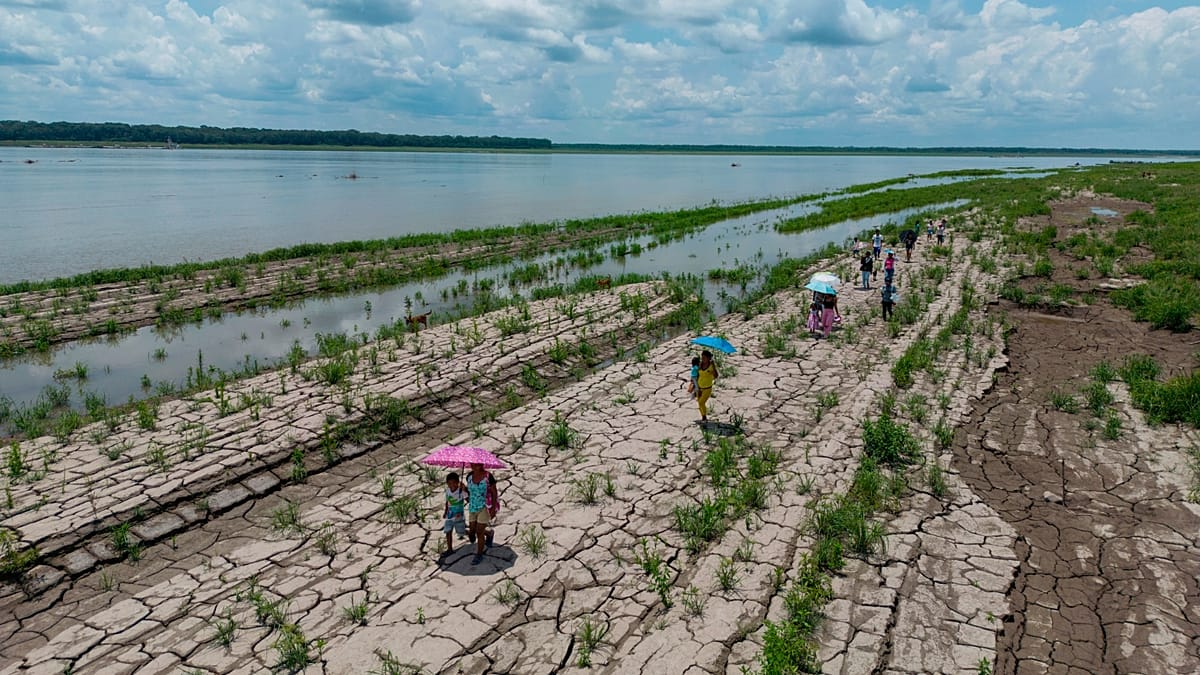
This year, above-average temperatures are forecast by WMO nearly everywhere in June, July and August. Below-average rainfall is expected across South Asia, the Greater Horn of Africa and Central America, where drier and warmer conditions are anticipated during critical growing and rainy seasons.
“Advance seasonal forecasts and early warnings are vital to save lives and cushion the impact on our economies and our communities,” says Saulo. The time for informed decision-making, planning and preparedness is now, the WMO adds.
Guterres urges action on the human-caused elements of climate extremes, calling for “ending the addiction to fossil fuels and accelerating the shift to renewables”.