Safe glasses to watch Spain's total eclipse: where to get them for free
Published on 05/08/2026 - 5:58 GMT+2 Make a note of this number for the eclipse that will cross the Iberian Peninsula on 12 August. With that date in mind, the ISO number...
Published on 05/08/2026 - 5:58 GMT+2
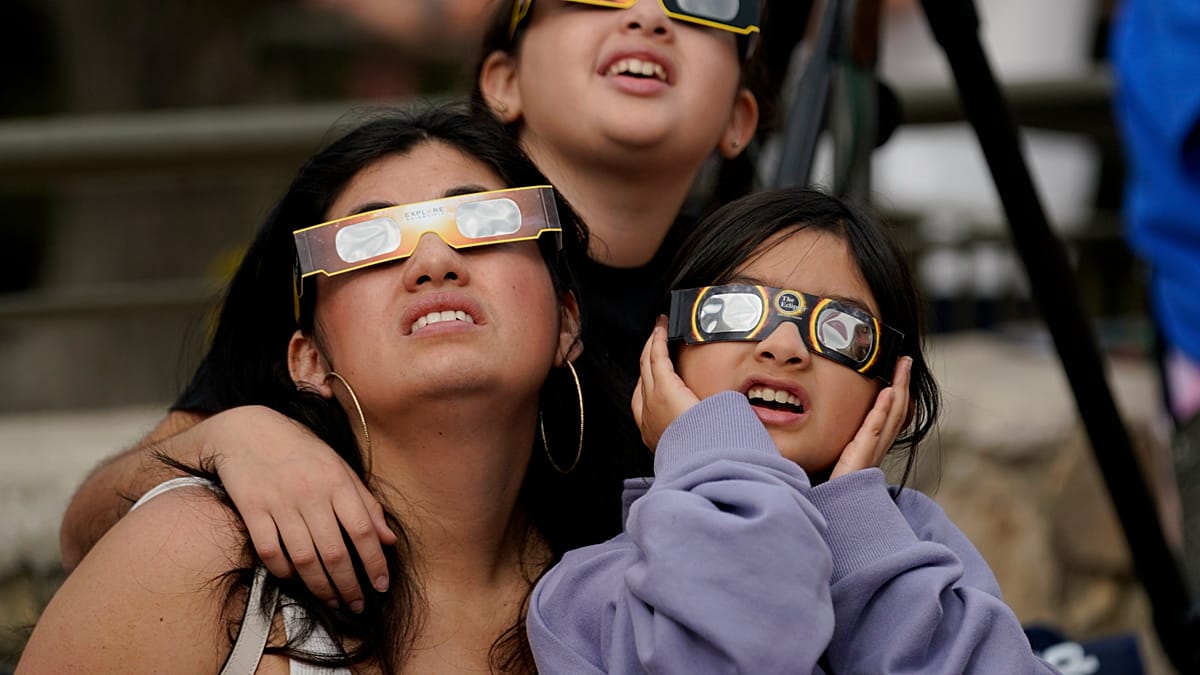
Make a note of this number for the eclipse that will cross the Iberian Peninsula on 12 August. With that date in mind, the ISO number (International Organization for Standardization) of the special glasses that must be used to view this unique event of the century safely should be easy to remember: 12312-2015.
Without them, ultraviolet radiation will damage the eye’s photoreceptors (cones and rods), while infrared energy will have a direct thermal effect on the retina, causing solar retinopathy. The symptoms of this condition, which may take some time to appear, can include blurred vision, spots or scotomas at the point of greatest visual acuity, metamorphopsia (distorted perception of shapes) and reduced tolerance to light, or photophobia, which can trigger headaches.
The total phase of the eclipse will not exceed one minute and 48 seconds anywhere along its path across Spain, and the closer you are to the line of totality, the longer you will be able to enjoy the spectacle. Only during that brief moment will lucky observers be able to take off their certified glasses.
The ISO 12312-2 standard applies only to certain products designed for direct observation of the Sun, or what astronomers call the photosphere: the bright face of the Sun. These glasses ensure that no more than 0.00032% of visible sunlight gets through. The Ministry of Science explains that "you must put the glasses on before looking at the Sun, look briefly for a few seconds and then look away, repeating observation of the eclipse always with pauses". You must not take them off until you have stopped looking at the Sun.
The standard applies only to glasses without adjustable power or focus. It does not apply to ordinary sunglasses (ISO 12312-1), which let through hundreds or thousands of times more light than is safe for looking directly at the Sun, nor to solar filters designed for devices such as telescopes or binoculars. Nor does it apply to solar filters designed to be placed over the (front) aperture of optical devices such as camera lenses, binoculars or telescopes.
The key requirements are transmittance (the ratio between transmitted and incident light) at ultraviolet, visible and infrared wavelengths that reach our retinas; the uniformity of that transmittance; and the appropriate quality of the material. The Scientific and Advisory Commission of the Eclipse Trio adds that, if they are sold in the European Union, the glasses must also bear the CE mark.
The Ministry and ONCE are to distribute two million certified glasses free of charge at ONCE stands and at research centres, science museums and other public institutions. Several regional governments will also hand out approved viewing equipment at sites set up to watch the astronomical event. Here is the list of places where you can obtain the glasses free of charge (source in Spanish).