Kazakhstan enters a new political era after historic parliamentary reform
Kazakhstan implemented a major parliamentary reform, replacing the former bicameral Parliament with a new unicameral legislature, the Kurultai. The new Parliament consists of 145 seats, with five parties securing representation.
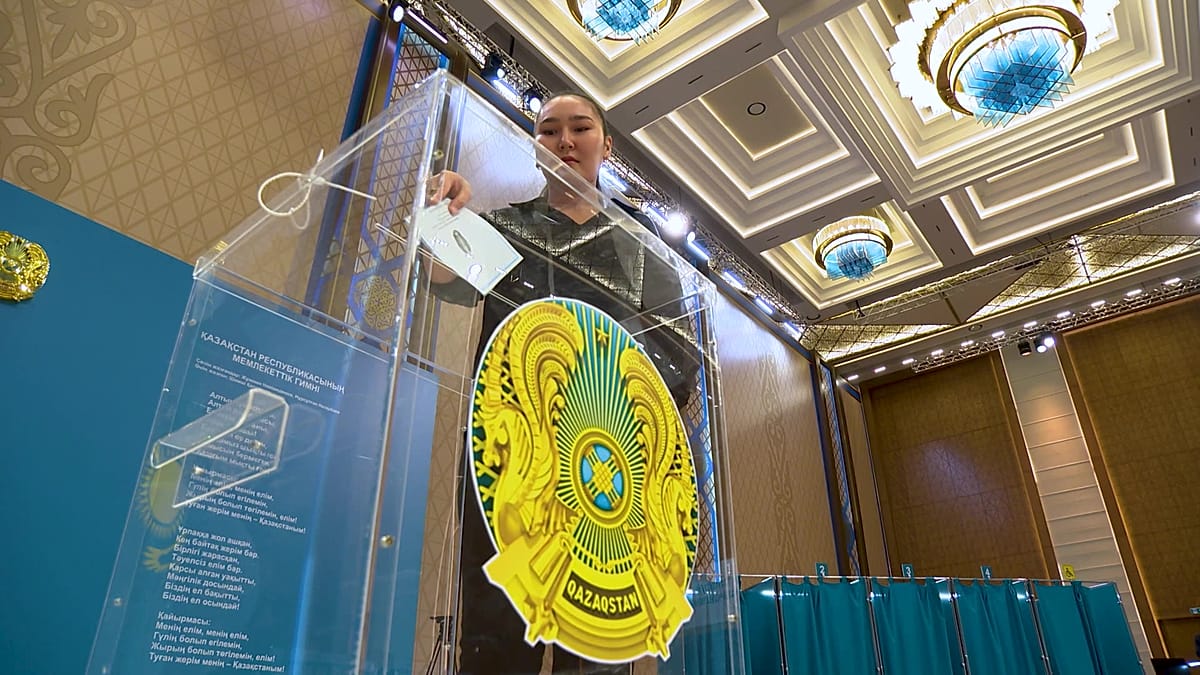
Kazakhstan held its first parliamentary election on 23 August, electing 145 deputies to the country’s new Parliament, the Kurultai. The election followed a nationwide referendum in March, which approved a new Constitution that replaced Kazakhstan’s bicameral Parliament with the Kurultai. The new Constitution came into force on 1 July.
The name of the new Parliament also had historical significance.
“Kurultai is a concept and a name that is characteristic of the steppe culture and Turkic civilisation. It reflects our national identity and shows respect for history,” said Nurgazy Anuarbekov, Expert at the Kazakhstan Institute of Public Development.
Under the new electoral system, voters cast their ballots only for political parties, which nominated candidates for the Kurultai.
Independent candidates could run for local Maslikhats, Kazakhstan’s equivalent of city and regional councils, but could not stand for the Kurultai.
According to the Kazakh Central Election Commission, five parties secured seats in the new legislature after crossing the 5% threshold.
The Adilet party won 71.17% of the vote and took 110 seats. Auyl received 6.26% and secured 10 seats, while Respublica won 5.56% and nine seats. Aq Zhol received 5.21% and the Nationwide Social Democratic Party 5.11%, with each securing eight seats.
All members of the Kurultai were elected for five-year terms.
“Over 127,000 people were added to the number of voters, meaning those who had reached voting age. This younger generation is also reflected in changing values and dynamics,” said Indira Aubakirova, Doctor of Law, Associate Professor at Maqsut Narikbayev University.
“We should not forget that Kazakhstan is located next to major powers such as Russia and China, as well as the Islamic world,” she added.
What happened at the first sessions of the Kurultai
Kazakhstan’s newly elected Kurultai held its first sessions on 28 and 31 August, as President Kassym-Jomart Tokayev appointed the country’s first vice president and nominated a new Speaker of Kurultai.
During the first session, Tokayev nominated Aibek Dadebai as Speaker of the Kurultai.
On 31 August, during the second session of the Kurultai, Tokayev appointed Erlan Karin as Kazakhstan’s vice president.
Karin, a former State Adviser and Deputy Head of the Presidential Administration, was one of two candidates proposed for the post.
The second candidate was Prime Minister Olzhas Bektenov, who retained his position as Head of Government.
The vice presidency had returned to Kazakhstan’s political system following the constitutional changes that introduced the new post.
Tokayev also announced that the Kazakhstan People’s Council would be formed in the second half of September.
“Already in the second half of September, the Kazakhstan People’s Council will be established. This will be the first higher consultative body in the history of Kazakhstan to embody the ethnic, regional, social and socio-political diversity of our country,” the President said.