‘I felt my spine and body split’: the woman who was hit by a child on a Lime bike – and denied compensation
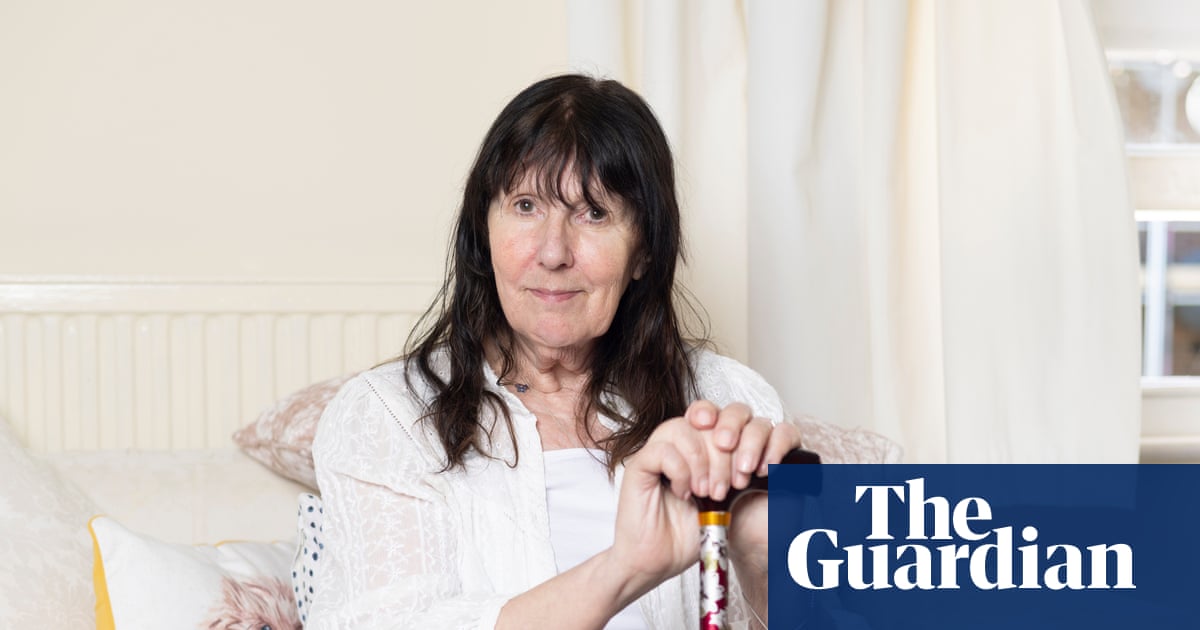
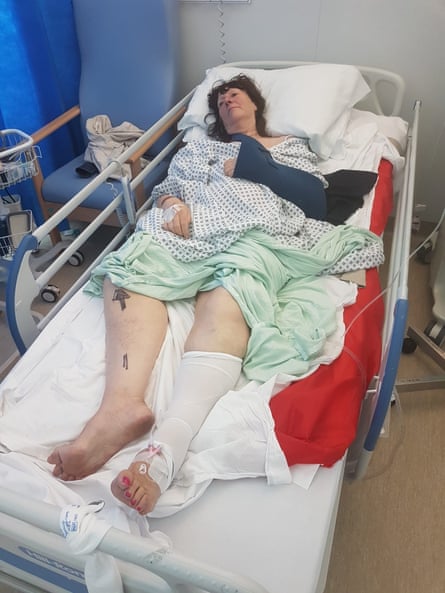
The collision was catastrophic. Jane Ouartsi suffered a fractured collarbone, two spinal fractures, a broken femur that took three operations to fix, and she had to learn to walk again like a baby. Why has no one taken responsibility for her life-changing injuries?
As Jane Ouartsi walked across a pedestrianised square in central London, on a Friday evening in early August three years ago, she linked arms with her partner, Dave Mathias, and told him how much she had enjoyed the afternoon they had spent together, eating pizza in Soho and visiting an art installation. It was the last time she can remember feeling properly happy and relaxed.
“We were walking quite slowly, talking about the art. It’s hard to remember exactly, but I think I was saying what a lovely lunch, and then all of a sudden there was a horrific impact,” she says. “I felt my spine and body split and I thought my life was over.”
Ouartsi, who is in her late 60s, can’t bear to watch the CCTV recording of the Lime bike accident that left her with such severe injuries that she spent a total of 36 days in hospital and 18 months learning how to walk again. Mathias flinches each time he sees it, tracking the progress from the left of the screen to the right of a young rider, possibly around 10 years old, as he speeds across the empty square and knocks Ouartsi over. He has had to study it repeatedly over the past three years as he has tried, and failed, to persuade staff at the bike rental company Lime to acknowledge the life-changing consequences of the incident.
Last week, the clip of the collision went viral as it emerged that the company has not paid compensation to the couple and has not responded to their calls for more to be done to stop rogue underage cyclists using the electric bikes illegally, flouting all traffic rules, cycling on pavements and jumping red lights.
“It has become like the wild west,” Ouartsi says, sitting on a pile of cushions in her west London flat, arranged for maximum comfort in the face of continuing stiffness and pain caused by the incident. She suffered a fractured collar bone, two spinal fractures and a badly broken femur that required three operations to fix. She says the medical staff at the central London hospital where she was treated had not previously seen such severe injuries, but were becoming used to treating patients with ebike-related damage. “They said it was happening more every week, that it was a drain on their time, fixing people’s arms and legs when they could be doing other work.”
The footage has attracted attention because it chimes with the ambivalence provoked by the rising presence of Lime bikes in the capital. Although there is warmth for the arrival of alternatives to cars, there is also unease that some of the bikes are ridden and parked irresponsibly.
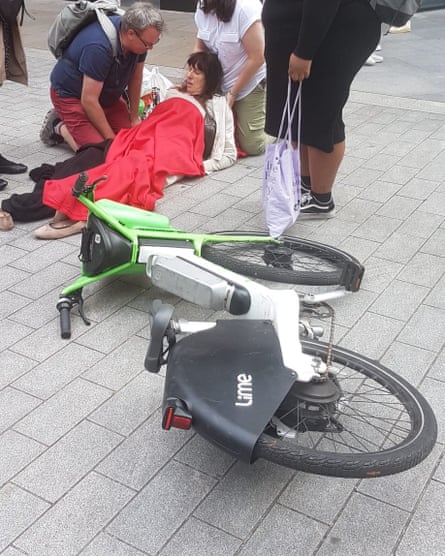
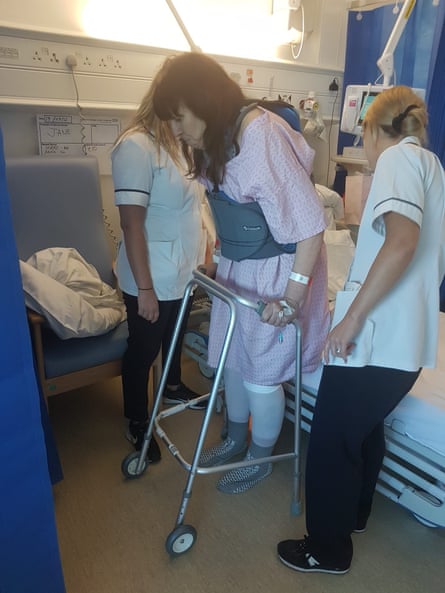
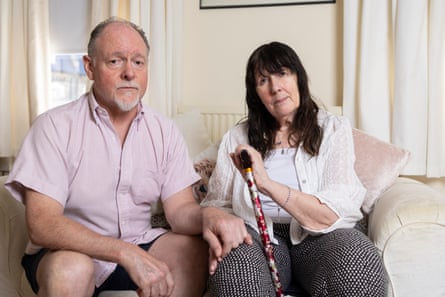
Ouartsi, a retired Marks & Spencer shop worker, says she has become a different person since being hit. When she was discharged from hospital, ambulance staff had to carry her up to her first-floor flat and, for a year, she was unable to walk upstairs to her bedroom or to the bathroom – she had to have a single bed and a commode installed in the sitting room. “I almost forgot what it looked like upstairs,” she says. She spent weeks practising walking up steps, and Mathias, a joiner, had to take an extended period off work to help her recover, installing grab handles around the flat so she was able to manoeuvre herself into a standing position. It took months before she felt confident enough to take a bus, she still relies on a walking stick and the couple, who loved travelling to Scotland, do not envisage making the journey again.
“I’m made up of nuts and bolts and screws. I had to learn to walk again like a baby,” Ouartsi says, as Mathias pulls out an A4 file of X-ray photographs revealing different attempts by doctors to mend the complicated break in her femur. The titanium inserted into her leg buckled and failed, so it needed to be replaced. “I’m very scared of falling. I don’t want to go back to hospital again. It has been a horrendous time.”
Ouartsi wants the company to rethink the weight and the speed of the bicycles and impose stiff penalties on people who cycle irresponsibly. “I honestly don’t know how I survived. I was a broken china doll – it’s amazing how the doctors put me back together.”
In the abstract, Ouartsi and Mathias support the idea that cities should have more bicycles and fewer cars. A few years ago, Ouartsi enjoyed hiring Santander Cycles, which are not electric, and cycling around the perimeter of Hyde Park with her grandson. But their experience has hardened a sense that Lime and the owners of other ebikes need to take more decisive action to promote the safety of pedestrians and riders. They support the principle of making life easier for cyclists, but not at the expense of people who prefer to walk.
“People need to use them sensibly, on the road. I’d also rather they weren’t electric so that people could get more exercise,” says Mathias. “People zoom on the pavements because it’s dangerous on the roads,” Ouartsi adds.
Mathias still doesn’t understand why Lime has not done more to prevent children from riding ebikes. In the seconds after the impact, he shouted at the child, who went to sit by himself on a bench nearby and cried. He tried to take a photograph of the boy, but was prevented by a woman, who he thinks was the boy’s mother, who arrived some time later. When the paramedics were transferring Ouartsi into an ambulance, they disappeared before police were able to speak to them or take down their names.
“Neither of us want to prosecute a 10-year-old or his mother, but we needed a name on the form to claim on Lime’s insurance,” says Mathias. Without a name, securing any payment of damages has proved complex. The police closed the case, and an attempt to work on a no win, no fee basis with solicitors ended because, the lawyer said in an email to Mathias, the rider had not been identified, so it was not possible to make a claim.
In October 2024, Mathias was at a well-attended meeting in Kensington town hall, where representatives from Lime, and other ebike firms such as Forest, were there to listen to residents’ complaints about the rising number of poorly parked hire bikes. Charities representing blind residents and people with limited mobility have detailed how difficult chaotic parking has made navigating parts of London with looser regulations about returning ebikes. Mathias took the opportunity to tell Lime publicly about his partner’s injuries. “Mostly they were elderly people there complaining about the bikes being strewn all over the pavement,” he says. “When I got up and said my piece, people gasped.” Two Lime representatives came to speak to him afterwards and offered to help.
“We were really sorry to hear of your experience and we want to do everything we can to support you,” a senior public affairs manager emailed him the next day. Another email from Lime promises: “We are dedicated to ensuring that your concerns are properly addressed.” But somehow, this help has not materialised. A message sent via the Lime Claims Management System in January of this year offers “deepest regrets regarding what your wife Jane and yourself have been through as a result of this incident” but states that the firm has again reviewed its records and been unable to find details of who rented the bike or the identity of the rider.
“This vehicle was not being used as part of an active ride. As the rider was using the vehicle illegally, we have no record of the trip having occurred and no information on the rider,” the message notes. “Without any further details regarding the user’s identification we are unable to provide any further support on the incident at this time.” At one point, Lime told Mathias that they were willing to make a financial gesture, with no admission of liability, but this offer has not materialised.
Robert Goodsell also experienced difficulties securing compensation for his wife, Helen, 79, after she was struck by an underage rider, also riding on the pavement, as she stepped out from her front garden on to the street in north London in 2024. The video of the collision, filmed from their doorbell camera, gives a sense of the speed of the impact.
Her injuries were minor, but she still feels stressed when she sees Lime bikes on the road. When Robert tried to make an insurance claim on her behalf, he discovered that Lime’s insurers were unable to settle because the rider was underage, which was an exclusion under the terms of the insurance policy. Lime later offered a modest ex-gratia payment, without admission of liability.
He suggested that safety rules should be stencilled on to the bikes, setting out that bicycles must not be ridden on pavements and riders should not go through red lights, but although Lime expressed polite interest in the idea, it was not implemented.
“The challenges I would like to put to Lime are: why do they refuse to put basic safe riding guidance and rules visibly on their bikes? Why do they not visibly number their bikes so that the public can report bad behaviour?” he says. He also believes it would be helpful if the company was able to limit the bicycle’s speed in pedestrian areas.
The solicitor Sam Collard, the head of cycling accident claims at Osbornes law, says that for the past 18 months his firm has been receiving about 10 inquiries a month, with the vast majority involving Lime bikes, although there were also people wishing to claim damages against other ebike providers. Claims are divided between pedestrians hurt by cyclists, riders who have been injured by defective bikes while cycling and riders with fractures caused by the sheer weight of the bicycle falling on them, a phenomenon known as “Lime bike leg”. “It ranges from cuts and scrapes to more serious issues – brain injury, fractured skull. We’re in the process of settling a number of cases, with payments of between £20,000 and £100,000.”
Collard acknowledged it was more complicated to receive an insurance payout when the identity of the rider was unknown. “But certainly, morally, they have questions to answer about how a 10-year-old came to be riding their bike,” he says.
A private briefing prepared for Transport for London’s safety panel, and seen by the Evening Standard, showed that hire bikes, such as the battery-powered cycles provided by Lime, Forest and Voi, accounted for 32% of cyclist v pedestrian crashes attended by police in the capital in 2024, up from 3% in 2017. TfL figures also show that there was an 8% rise in serious injuries to people cycling in 2024 (the last period for which records are available), but notes that this increase is heavily outweighed by the 39% increase in cycling journeys recorded since a 2010-14 baseline, suggesting serious injury per cycle journey has reduced.
A spokesperson for Lime said: “Our thoughts are with Jane and her family, and we are sorry for the distress this incident has caused. We take incidents like this extremely seriously. This situation has been carefully reviewed and handled in line with our policies. We are also sorry to hear about Helen’s incident. Safety informs everything we do – from how we design and maintain our vehicles, to our rider education, and how we work with cities.”
The firm said the bike involved in Ouartsi’s accident was stolen and ridden illegally, not rented, and added that more than 99.99% of Lime trips in London last year ended without a reported incident. Lime launched a redesigned, smaller rental ebike, with batteries repositioned towards the back of the vehicle, earlier this year, rolling out 1,500 new cycles, in addition to the fleet of up to 50,000 dockless ebikes it already operates in the capital.
Lime fines riders who end their journeys in unauthorised places, with fines ranging between £2 and £20 and repeat offenders can be banned. The firm slows bikes down when they enter “go slow” areas, such as Regent’s Park or Hyde Park in London.
Mathias wants to be positive about these improvements, but is frustrated that the significant impact of the accident on their lives has not been recognised.
“The psychological impact of what happened is far reaching,” he says. “Jane and I had hopes and dreams for retirement and our future together which have been blighted.”