Monday briefing: How the new phase of confrontation at al-Aqsa signals a challenge to the status quo
In today’s newsletter: Jerusalem’s most volatile site has again become a flashpoint, with Arab states and former Israeli officials sounding the alarm over Benjamin Netanyahu’s complicity
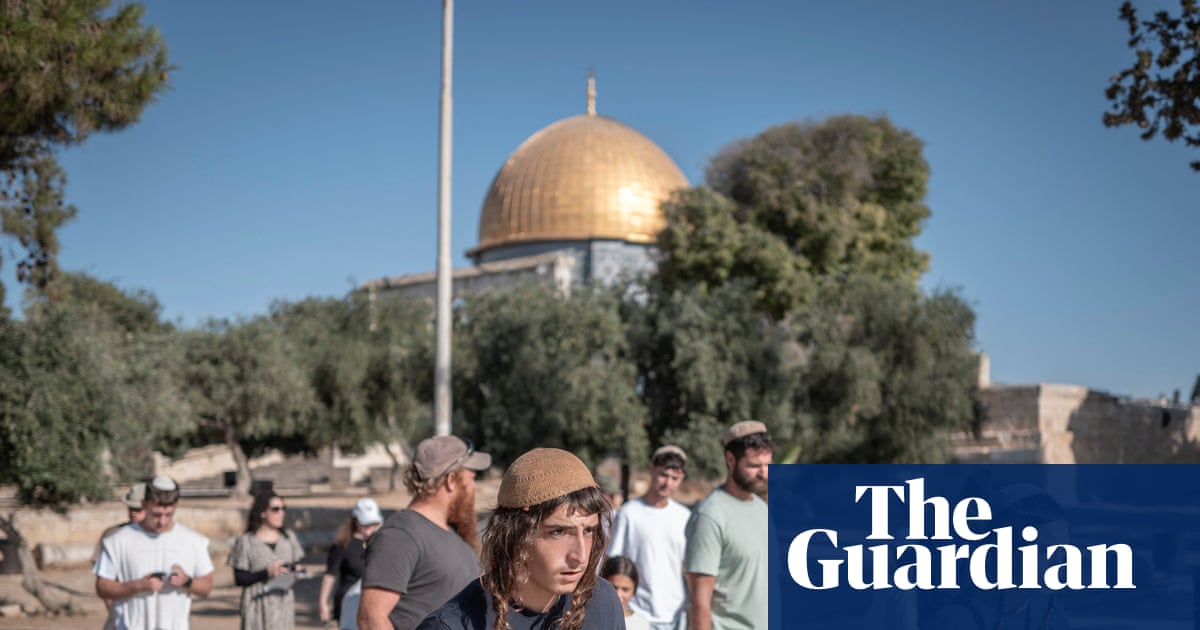
Good morning. In late July, Itamar Ben-Gvir, West Bank settler and far-right extremist minister of security in Benjamin Netanyahu’s government, joined a group of more than 2,000 Jewish extremists to storm al-Aqsa mosque compound, Jerusalem’s most sensitive holy site. The far-right group has been doing this for years. Ben-Gvir has made series of visits to the site over the last three years, eroding norms and inflaming tensions. Jordanian officials have recently warned that it could be at risk of an “imminent” Israeli takeover.
With national elections scheduled in October, and many eyes still firmly on Gaza (this weekend, Netanyahu rejected a US-backed 15 point plan for peace), the Israeli government appears to be racing to expand Israeli settlements and accelerate ethnic cleansing of Palestinians in the West Bank and East Jerusalem before its mandate expires.
For this morning’s First Edition, I spoke to our senior international correspondent, Julian Borger, about the latest incursions, and how Israeli extremists are trying to create a new reality in Jerusalem. That’s after the weekend roundup.
Weekend roundup
-
UK politics | Sadiq Khan has called on the government to commit to revamped climate action and to reduce the UK’s reliance on oil and gas, as the UK endures a summer of drought, wildfires and heatwaves.
-
US politics | The US Senate voted to confirm Todd Blanche as attorney general in a win for Donald Trump, who will now have his one-time personal attorney sitting atop the nation’s law enforcement apparatus.
-
US-Israel war on Iran | Iran has issued tough new demands for reopening the strait of Hormuz, as a deal to open the strategic waterway remained out of reach on Saturday.
-
Russia-Ukraine | Up to 50,000 North Korean soldiers will be deployed in Russia, Volodymyr Zelenskyy has said. On Saturday, Turkey called for a “moratorium” on attacks by Russia and Ukraine in the Black Sea after a series of strikes on civilian ships there
-
World news | The alleged leader of the Kinahan organised crime group was extradited from Dubai on Sunday and met by a huge security operation in Dublin, marking the end of a global game of cat and mouse with European, US and Gulf authorities.
In depth: ‘To erect structures, even if they’re temporary, is a red rag to a bull’
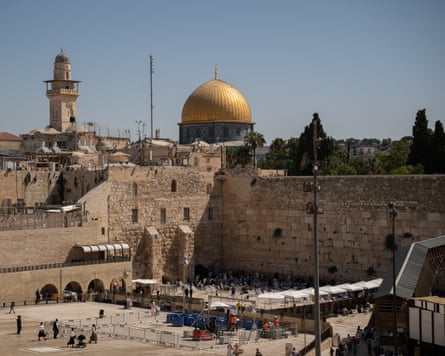
The al-Haram al-Sharif site in Jerusalem’s old city, known to Jews as the Temple Mount, is one of the most contentious places on earth. It’s governed by a fragile agreement that gives Muslims exclusive rights to pray and worship there, while Jews pray at the Western Wall below. But Israel’s messianic right, which has gained a powerful foothold in Netanyahu’s coalition government, is fixated on the site as a symbol of its political project. Their vision of building a new Jewish temple on one of Islam’s holiest sites – once a fringe idea – has become increasingly widespread.
Since 2023, Jewish religious extremists have made numerous visits to the 35-acre compound which is home to both al-Aqsa mosque and Dome of the Rock, the holiest sites for Muslims in Jerusalem and one of holiest sites for Muslims in the world. “At first, you had groups of perhaps 20 Jews, mostly settlers, who were escorted by the police to the far wall of the compound to pray discreetly,” Julian tells me. “If you were just a casual visitor, you wouldn’t necessarily see them”. Over the last two years, however, the groups have grown bigger and more audacious. On 23 July, they sang the national anthem, and prayed and performed rituals in the centre of the compound, while Israeli police – who report to Ben-Gvir, who was in attendance – set up tents to provide shade to the worshippers.
“To erect structures, even if they’re temporary, is a red rag to a bull,” Julian says. “The longstanding fear is that Israelis would knock down the Dome of the Rock or the mosque, or rebuild a [Jewish] temple on the site. And these tents were part of a gradual attempt to push the boundaries.” Eight Arab nations swiftly issued a joint statement condemning “mass incursions by settlers led by extremist Israeli ministers”. Last Wednesday, the Jordanian authorities, who administer the site, held an emergency meeting of Arab and Islamic nations to discuss these risks, and afterwards, the Jordanian authorities condemned Israeli violations and warned that they constituted a “blatant provocation” to Muslims worldwide.
“All they can do is issue strong statements, saying, ‘don’t do this’,” says Julian. The Waqf, the Jordanian-appointed foundation that manages the site, is “defenceless”, he explains. In the run-up to Ramadan this year, Waqf sources told the Guardian that five of its staff had been detained by the Shin Bet, Israel’s counterintelligence service. Meanwhile, Israeli police have begun actively recruiting extremist activists to serve in the Temple Mount Unit, the force responsible for policing the compound. According to Haaretz, the deputy commander of the police’s Temple Mount Unit published a callout to officers on social media and in WhatsApp groups associated with West Bank settlers. “Anyone who wants to take part in implementing sovereignty is welcome to contact me,” he wrote.
Why is the site so significant?
The site’s history is constantly enlisted in attempts to justify the present. Muslims know the raised compound in the south-east of Jerusalem as al-Haram al-Sharif (the Noble Sanctuary), or simply al-Aqsa, after the mosque located at its southern edge. Next to the mosque, at the centre of the compound, is the Dome of the Rock, one of the oldest surviving Islamic places of worship. It’s on this site the prophet Muhammad is said to have ascended to heaven.
At the base of the compound is the Western Wall, a section of retaining wall that survived the destruction of the second Jewish temple in 70CE. The Temple Mount is also the holiest site in Judaism, the site of two temples which were built and then destroyed by invaders in ancient times.
Access to the site has been delicately managed for centuries. After the six-day war in 1967, when Israel captured East Jerusalem from Jordan, the Israeli government agreed that Jordan would continue to be the site’s custodian. Since then, the “status quo”, as it is known, has sought to prevent violent conflict by circumscribing the rights of Muslims and Jews to access the compound. While Jews are permitted to visit the site at specific times, they cannot pray there. Many Jews opt not to visit the site, out of fear of treading on holy ground while ritually impure.
“The status quo represented a historic compromise. Jews got the Western Wall. Muslims got Haram al-Sharif,” Julian says. “But the site has always been a detonator, sitting right there in the centre of the old city, with strong religious beliefs crammed together in a small area.”
How has this erupted in the past?
It’s not uncommon in the region for holy sites to be carefully managed with intricate arrangements. Elsewhere in the Old City, the Church of the Holy Sepulchre is divided up between six Christian denominations, with its keys held by two Muslim families. At the Cave of the Patriarchs in the occupied city of Hebron, a mosque and synagogue share one building.
Past Israeli moves to challenge the status quo at al-Haram al-Sharif have been incendiary, sparking deadly violence. In 2000, then Israeli opposition leader and future prime minister Ariel Sharon made a visit to the site in an attempt to demonstrate Israeli sovereignty, sparking a chain of events that helped ignite the second intifada. More recently, Hamas gave the name “al-Aqsa flood” to its attack on Israel in October 2023 that killed 1,200 Israelis and triggered the war on Gaza, claiming it was provoked by Israeli violations at the Jerusalem mosque.
What’s the end goal of these incursions?
Some Jewish extremists have begun marching under the temple flag – a star of David overlaid with a picture of the (as yet nonexistent) third temple they hope to build. “You see these flags on the bulldozers that are flattening neighbourhoods in Gaza, and soldiers wearing patches with a picture of the third temple on them,” Julian says.
The rise of the third temple movement comes at a time of surging attacks on Palestinians in the occupied West Bank, with the scale of violence prompting urgent calls for intervention from the heart of the Israeli establishment.
Earlier this year, dozens of Israelis, including two former prime ministers, former heads of its security services and former judges, signed a “final warning” threatening legal action against their government over its support for “Jewish terrorism” in the occupied West Bank. They argued the actions of the government had isolated Israel internationally and put its security at risk.
“There’s a feeling that the far-right side of Netanyahu’s government is now creating unnecessary, long-term security problems for Israel,” Julian says. That extends to attempts to change the status quo at al-Aqsa.
Netanyahu has publicly backed Jewish prayer at the site, claiming that changes pushed by Ben-Gvir were coordinated with him. “This isn’t the stuff of radicals any more,” Julian says. “It has government approval.”
The week to come
-
Wednesday | A partial solar eclipse will be visible across the whole of the UK, with the south-west of England getting the best of British views. Parts of Greenland, Iceland and Spain will experience a total eclipse.
-
Thursday | Clacton-on-sea residents will vote in the byelection Nigel Farage triggered last month, with the Reform leader taking on 33 mostly novelty candidates. Results are expected early Friday.
-
Thursday | The Office for National Statistics will publish UK GDP figures for the second quarter of 2026.
What else we’ve been enjoying
-
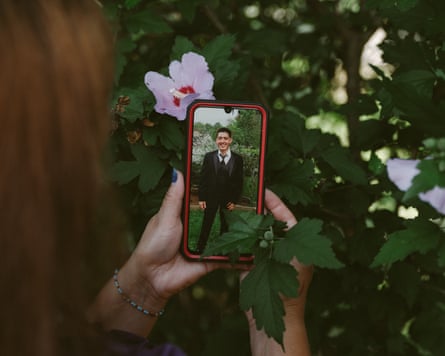
So many horror stories have emerged from ICE raids and arrests in the US. Alex Hannaford reports expertly on the ongoing nightmare for one young man snatched in upstate New York. Michael
-
Young people – particularly those who came of age during the pandemic – have had a pretty raw deal. I enjoyed this piece on what “Neets” need, by William Davies (£). Hettie
-
I was already looking forward to reading Symeon Brown’s new book, and this interview has confirmed it’ll be on my holiday reading list. Michael
after newsletter promotion
Sport

Cycling | Demi Vollering won the final stage to seal her second Tour de France Femmes title but runner-up Kasia Niewiadoma reiterated her unhappiness with her rival team’s tactics on the penultimate stage.
Football | London City Lionesses’ headline signing, Alexia Putellas, talks expectations, the lure of playing in England and the prospect of being kicked by her former teammates.
Football | Fifa last night issued a thinly veiled attack on Uefa and other leading figures in European football in a statement which alleged there is a “concerted and ongoing effort by some to undermine Fifa and its president”.
The front pages
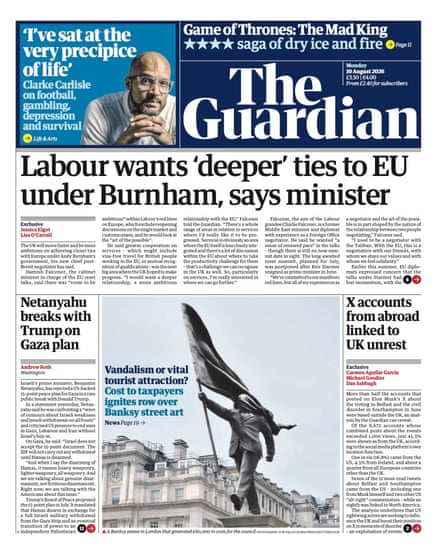
“Labour wants ‘deeper’ ties to EU under Burnham, says minister”, is the Guardian’s front page today. The Times writes “PM’s adviser ‘concerned’ over Labour wealth taxes”, Metro has “Andy wants a cancel culture” and the Mail says “Labour jail plan to spark 89,000 more crimes”.
The Telegraph has “Chinese spy cameras found on Navy drones”, while the Express leads on “You must keep our Fenella’s killer in jail”. On the heatwave, the Mirror says “Days of danger”, and the i Paper’s headline is “Car washes and swimming pools could face water bans in UK’s next heatwave”.
Today in Focus
The Gen Z investors
Are Gen Z the most financially savvy generation of them all? Economics correspondent, Richard Partington, charts the rise of investors like social media influencer James Beckett and those even younger, and explores why Gen Z are different from those who came before them when it comes to personal finance.
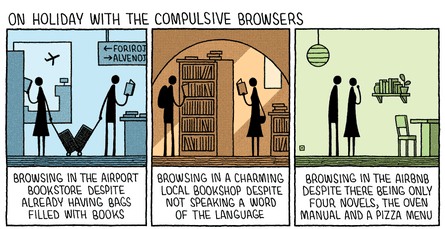
Cartoon of the day | Tom Gauld
The Upside
A bit of good news to remind you that the world’s not all bad
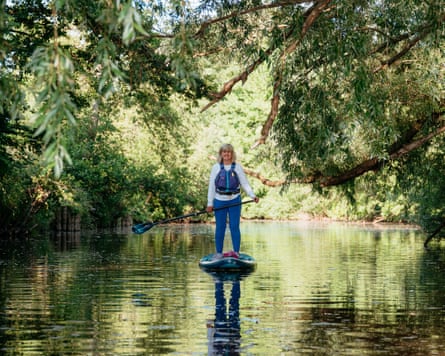
From paddleboarding the River Esk where you can experience tranquil wildlife and views of Whitby, to wild camping along the River Dart, a place which offers pristine moorland, oak-lined valleys and solitary swims in deep pools. There are many places to mess about on the river and find some peace and joy.
For more solo adventures you can relax with some fly‑fishing along the River Dove, a place which blends tricky casts, and pastoral beauty, where wild brown trout rise in crystalline, fast‑flowing pools. Something more strenuous might be a hike to find the sources of the Severn and Wye, a journey which blends scorching moorland with the wildlife‑rich upper Wye valley.
Or take it all in by canoe along the River Tay in Perthshire, and enjoy kingfisher spotting and the view of beaver lodges.
Sign up here for a weekly roundup of The Upside, sent to you every Sunday
Bored at work?
And finally, the Guardian’s puzzles are here to keep you entertained throughout the day. Until tomorrow.